


Scroll through photo archives of the world’s largest tech show and a clear trend emerges among all the robots on display at CES: they serve as examples of everything from performance art to practical utility. It captures humanoids vaulting into the headlines, robot pets stealing hearts, and workhorse machines quietly taking over dull, dirty, and dangerous jobs. The picture story is hype cycle and slow, steady progress in equal measure.
And that contrast sharpened once more as high-profile humanoids strode back onto the show floor—even as legged inspectors, warehouse movers, and cleaning bots kept notching real deployments.
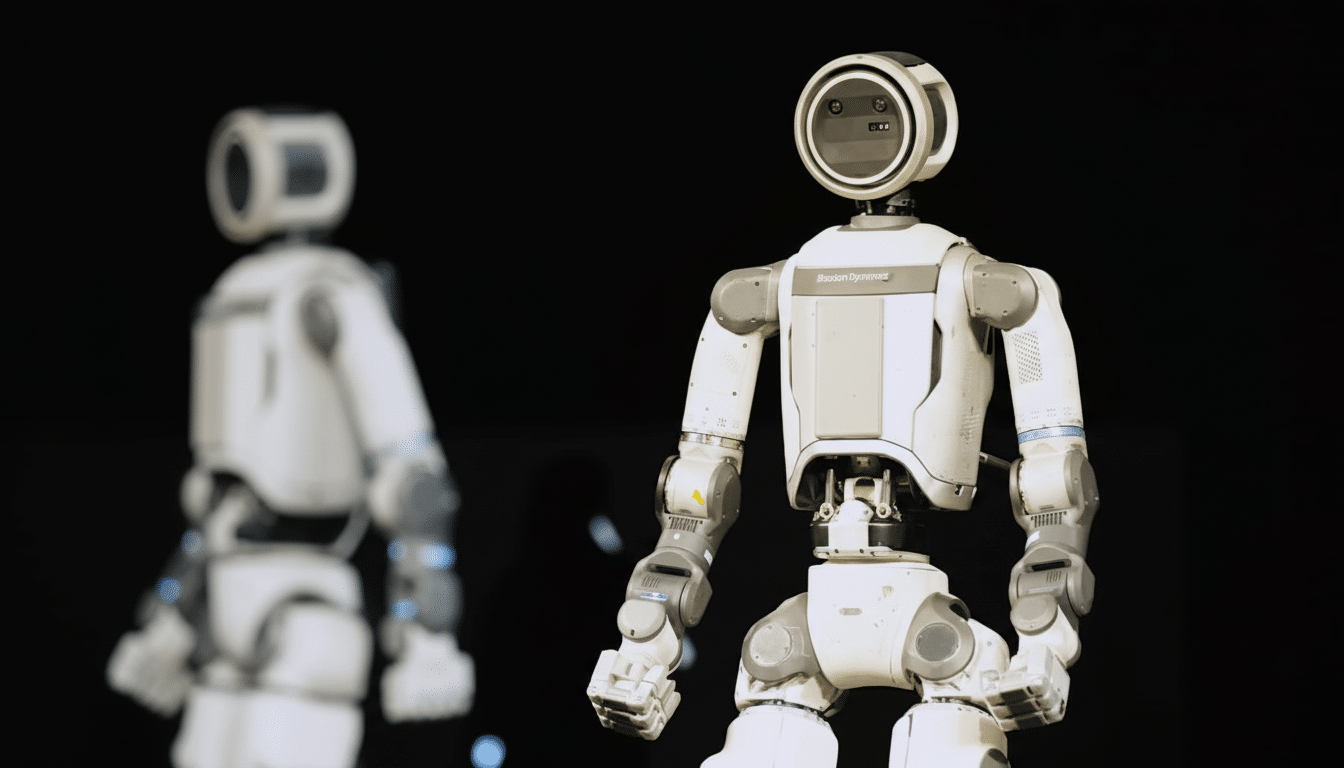
Industry organizations like the International Federation of Robotics speak in millions when estimating operational numbers of industrial robots around the world, but photos like these serve as a reminder that consumer-grade companions have yet to shake crude curiosity on their way to inevitability.
Early Icons And The First Humanoid Dreams
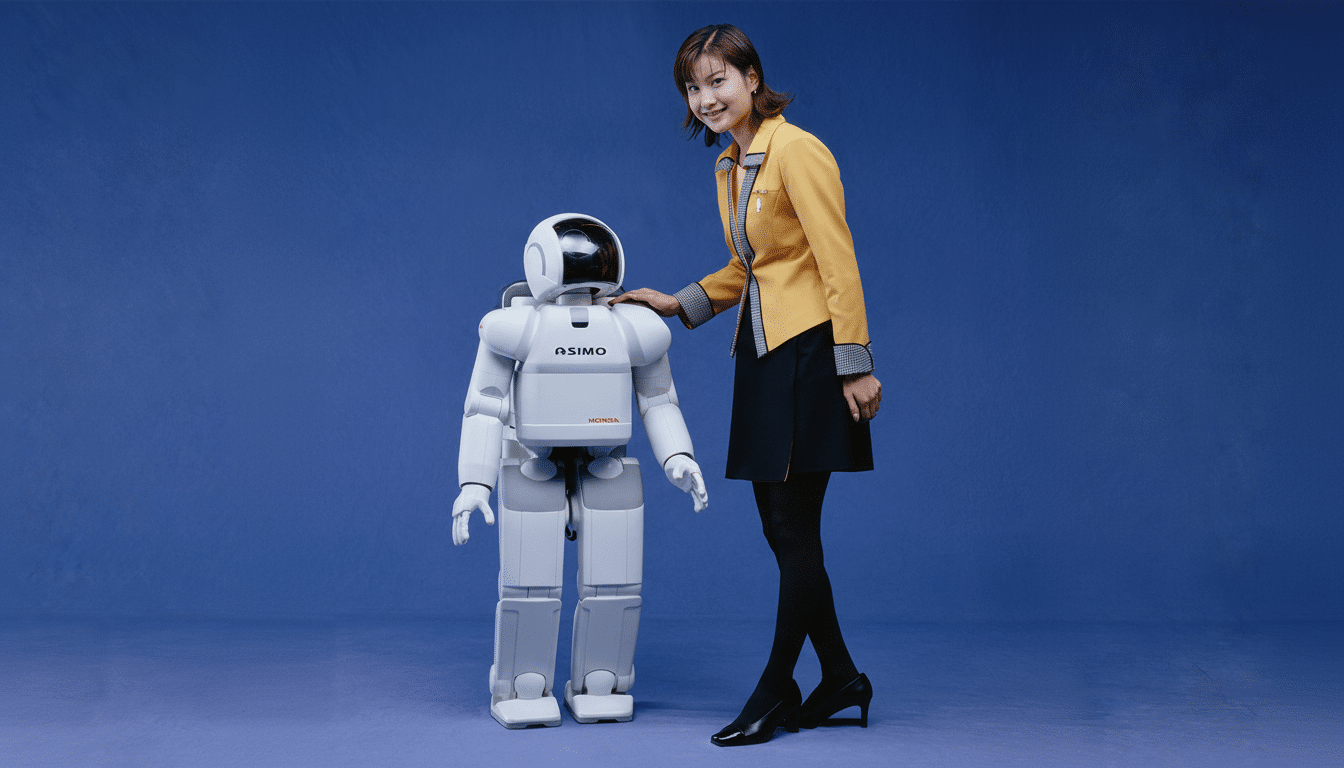
Years before the current parade of AI demos, CES showgoers first encountered these smooth-plastic pioneers that would define the look and feel of the category. Honda’s Asimo transformed bipedal motion into a thing of wonder—that is, until an ill-timed step became a viral pratfall. Sony’s Aibo offered the fantasy of a friendly robot pet, while Sony’s smaller Qrio teased a future filled with pocket-sized humanoids that never quite materialized.
The takeaway of those photos is blunt: cost, battery life, and maintenance trump charisma. Those who follow the products for firms like IDC and ABI Research have long pointed out that sales of home robots are overwhelmingly floor-care machines, not humanoid helpers. When a robot can’t even perform a one-minute demo without requiring a charge, no amount of anthropomorphic charm makes the price bearable.
Telepresence came next, with long-jointed scooters that sported faces in the shape of a tablet. Anybots and competitors promised remote presence in offices and factories, but they were limited by hallway glare and shaky autonomy. It was all the best of trade show vaporware: photogenic, plausible, and at odds with what buyers really wanted in volume.
Novelty Acts and the Booth Stoppers That Dazzled
CES has long been partial to a showstopper. The galleries are filled with robot dinosaurs nuzzling at supplicants, dancing speakers boogieing on command, and bathroom-brand concept bots sassing out recommendations. Those moments worked because they were crafted for cameras; they were meant to spur lines at booths and headlines postshow.
Humanoid faces that are deeper in the uncanny valley. Aiko Chihira from Toshiba and, later, Ameca by Engineered Arts nailed the eye contact and micro-expressions that impressed audiences. But they also reveal a recurring issue: scripted discourse and teleoperation bleeding into performativity. As predicted by Masahiro Mori’s theory, the closer to human these creatures look, the more every behavioral glitch is exaggerated.
When Robots Finally Found Real-World Work
Flip to another stack of images and you encounter robots that stuck. Robo-dogs, like something out of a nightmarescape, four-legged Spot from Boston Dynamics and ANYbotics’ camera-packed ANYmal transitioned from dazzling demos into site inspection, mapping, and safety patrols. Facilities managers and energy companies loved them because they reduced people’s exposure to dangerous spaces and recorded reliable, repeatable data.
In warehouses, Agility Robotics’ Digit represents a practical middle path for humanoids. Photos depict Digit lugging around totes and shuttling bins—unglamorous work that achieves a tangible ROI. The autonomy is limited, the workflow is restrictive, and the value proposition straightforward: less repetitive lifting, fewer injuries, more uptime. It’s the anti-sci-fi, and that is exactly the point.
Delivery platforms morphed too. Decade by decade, Segway’s brand pivot—recorded in overlapping CES snapshots—was from people movers to service and delivery robots. The picture’s evolution is one part of a more general market truth that IEEE Spectrum and others who track robotics note: the robots that win are those with sharp jobs, clear safety cases, and networks of service behind them.
The Return Of The Humanoid And The Quiet Restraints
New listings included humanoids, which have been rekindled in recent photos thanks to faster perception, stronger actuation, and foundation models that assist with planning and manipulation. Automotive partners are queuing up for splashy collaborations, and entertainment labs trot out expressive bipedal characters that can wave and jog and recover gracefully from a shove.
But the restrictions are still lurking in the shadows of those glossy images. Battery energy density limits runtime. Obtaining safety certification for machines that can be “around people” is still difficult under standards like ISO 13482. MTBF is improving, but field service and spares dictate TCO. Even many “autonomous” demos still have high degrees of remote supervision, a hidden cost that is pilot purgatory.
If there’s progress in the photos, it’s in the shift from general-purpose promises to domain-specific wins: mobile inspection, parcel induction, and dishwashing and bussing. Each task reduces perception and control challenges, which is likely to make success more feasible. That’s the same playbook that rendered industrial arms indispensable on factory lines.
What The Photos Tell Us About The Next Wave
Throughout decades of CES albums, one rule emerges: robots are successful when they disappear into workflows. Look for the next generation of home and service robots to ride on those platforms—or leapfrog directly from more specialized devices like vacuums that dock onto modular arms, or legged bases that patrol at night and scan inventory by day—not move straight into all-purpose household butlers.
They’re useful for buyers, and for the rest of us who just stand around watching as crowds gather to fawn over a beautiful demo:
- What job does this replace at this exact moment along the technological timeline?
- How long does it run on a charge?
- What about failures and field service?
- Can a person control lots of robots?
And, if the answers reach you crisp and clear, the photo you snap will then age into evidence of real progress, and not just another entry in the highlight reel of CES showmanship.
That’s what makes this visual history so stunning. It captures the optimism that propels robotics onward—and the pragmatism that keeps the winners working long after lights have dimmed on the show floor.
