


CES is back with a strong thesis in 2026: AI goes on-device, displays get faster and more colorful, and connectivity quietly improves. Look for PC makers to inundate the show with “AI PCs” refreshes, TV brands to optimize a new wave of RGB LED backlights, and early glances at the next Wi‑Fi standard — even if most of it ships later. The Consumer Technology Association’s exposition has forever jumbled hype with the like-bearing crop of reality; this year’s common thread is pragmatic performance improvements you will actually be able to perceive.
Behind the stalls, memory price points, power efficiency and interoperability standards are driving product decisions. There will be differences, with some categories rushing ahead and others playing it safe. This is where the action ought to be.
- AI PCs and Next‑Gen Chips in the Spotlight
- Monitors and graphics hardware evolve for speed and clarity
- Storage and connectivity speed up across devices
- Wi‑Fi 8 on the horizon with steadier, smarter links
- TVs and home theater get ultra colorful with RGB
- Smart home leans into Matter and Aliro standards
- Wearables branch out from the wrist with rings and buds
- XR and automotive tech recalibrate, putting human experience first
- Bottom line: CES favors practical upgrades over moonshots
AI PCs and Next‑Gen Chips in the Spotlight
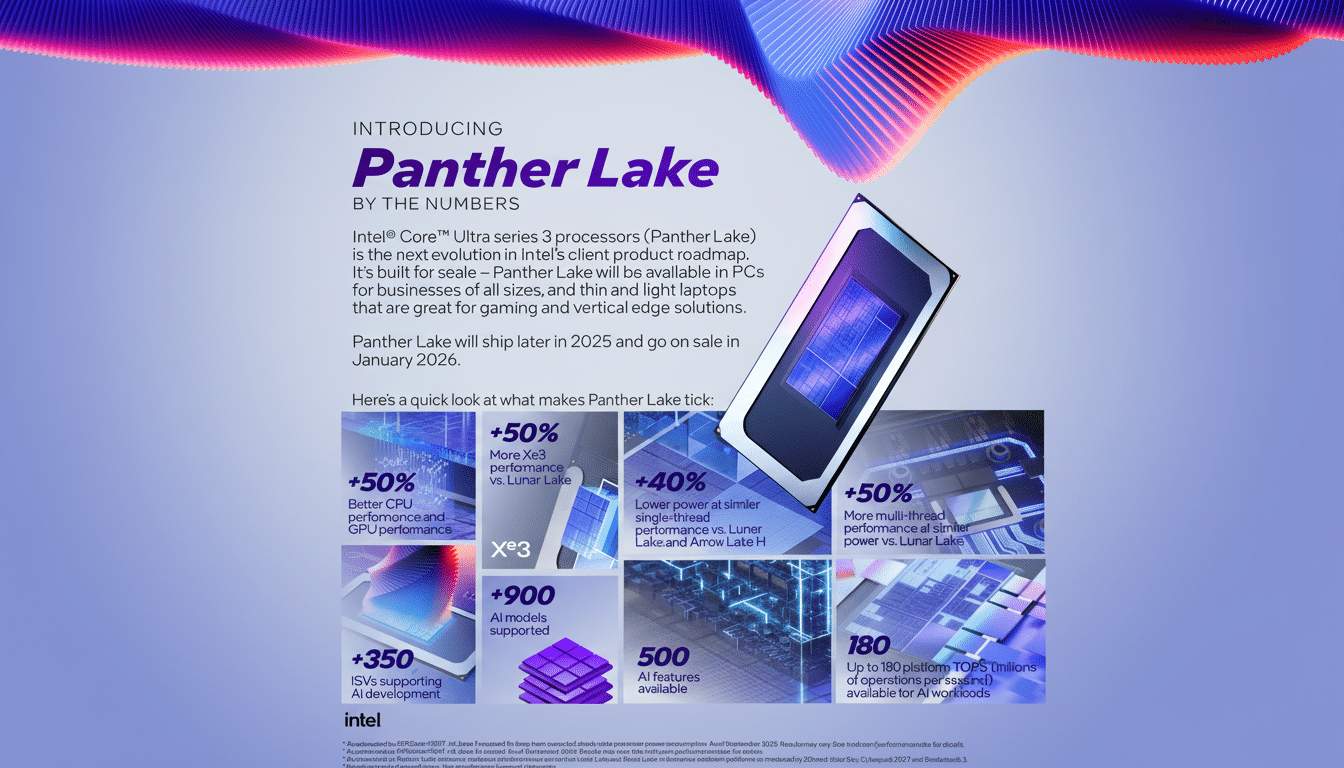
Intel’s Panther Lake notebook CPUs and Qualcomm’s next Snapdragon X‑series are expected to steal the show, with AMD responding predictably with new mobile silicon in order to further its Ryzen AI play. The common denominator appears to be beefier NPUs built directly into mainstream laptops. Microsoft has been straightforward regarding Copilot+ PC requirements with local AI acceleration, and OEMs are now optimizing thermals, battery life, and software around that basic concept instead of treating AI as an add‑on.
Translation: slimmer systems that go on‑device for transcription of voice, generation of images and background assistance without pegging the GPU or causing your battery to drain. “They’re trying to create space for themselves,” Mr. Mainelli added, referring to PC makers. Analysts from firms such as IDC and Gartner have said AI‑capable PCs will be a big part of the market mix in just a few years; we expect CES is where you’ll see that future codified across price tiers.
Monitors and graphics hardware evolve for speed and clarity
Gaming monitors will pursue speed and clarity in equal parts. Expect 1440p panels that touch 500Hz, with “effective” four‑digit refresh rates using strobing or scanning backlights, and increased prevalence of OLED and QD‑OLED for perfect contrast. New panel tech is also bubbling up, including RGB Mini‑LED backlights which combine the granularity of dimming control with deeper color volume than white‑LED LCDs.
On the interface front, HDMI Licensing Administrator has announced upcoming showings of next‑gen HDMI prototypes capable of delivering up to 96Gbps, a runway for 8K at extreme refresh rates. DisplayPort 2.1 is continuing to make its way into GPUs and monitors as well. Don’t be surprised, however, if in the end there’s not a lot of actual new desktop GPUs — TrendForce says memory supply is pinched and costs are higher, which can push vendors toward more incremental refreshes as opposed to clean‑sheet launches.
Storage and connectivity speed up across devices
NAND pricing will remain high based on AI data centers and that’s going to set SSD news. Look for additional DRAM‑less, QLC‑based models to allow MSRP on consumer drives to remain reasonable, as well as a new round of PCIe 5.0 models that swap monster heatsinks for clever power management. External storage gets faster: Thunderbolt 5 and USB4 Version 2.0, with the USB‑IF and Intel rallying for better labeling and higher sustained throughput for creators on the go.
Wi‑Fi 8 on the horizon with steadier, smarter links
Wi‑Fi 7 routers are finally here; now it’s time to move focus to draft 802.11bn, which will be the veritable cornerstone of Wi‑Fi 8. Product certification hasn’t happened yet from the Wi‑Fi Alliance, but silicon makers are prepared to show early chipsets. There are no wild headline‑grabbing speed leaps here; the pitch is steadier links in busy homes and offices, achieved through smarter multi‑link operation, better scheduling and resilience — things that most people will feel more than they’ll read on a box.
TVs and home theater get ultra colorful with RGB
RGB LED backlights are set to be the big story in large‑screen land as brands give sneak previews of sets that use red/green/blue clusters behind the LCD stack instead of white or blue LEDs.
Early demos have revealed more color volume and punchier highlights than even the best premium OLEDs can manage, with Micro LED still the aspirational halo. On audio, see Dolby FlexConnect gain adoption as TVs, soundbars and satellites self‑calibrate into room‑aware Dolby Atmos systems. The big question: cross‑brand interoperability versus vendor lock‑in.
Smart home leans into Matter and Aliro standards
Robot vacuums keep on sprinting, with more powerful mop modules, obstacle avoidance that finally tackles cables, and niche models that climb thresholds or extend helper arms. The Connectivity Standards Alliance will be front and center: Matter’s support expands, while its Aliro standard steps toward seamlessly enabling phone‑as‑a‑key access for smart locks with accurate proximity detection. Security cameras will follow the crowd with on‑device AI — better person/package/pet identification, say — reducing dependence on the cloud and reducing latency.
Wearables branch out from the wrist with rings and buds
Smart rings and hearables take the stage as big‑brand watch cycles decelerate. We’ll see pocketable gadgets that monitor recovery, temperature trends and AFib risk, with at least some companies seeking FDA clearances for the metrics. The exciting wrinkle is software: smaller players will tout AI‑guided coaching that can turn rawness into relevant insights, with battery life, comfort and too‑good‑to‑be‑true validation as talking points more so than yet‑another‑sensor.
XR and automotive tech recalibrate, putting human experience first
XR won’t transform itself over the course of a single night, but Google’s early Android XR development kits set the table for 2026 apps. Anticipate iterative headsets with better passthrough, brighter micro‑OLEDs and lighter frames; the true leap comes when developers have a full pipeline of content. For cars, it’s all about software‑defined vehicles and Level 2+ driver assistance — not flashy concept EVs. You’ll see more from platforms like Nvidia Drive and Qualcomm Snapdragon Ride, bidirectional charging demos and cabin AI that adjusts media and climate.
Bottom line: CES favors practical upgrades over moonshots
This year, the story at CES is less about moonshots and more about meaningful upgrades: local AI that feels fast, displays that look richer, networks that behave better and standards to make devices play nicely together. As always, beware the fine print — power draw, memory type, supported codecs, certification status — and the promised ship windows. The show floor will be loud; the wins will be those things that ship on time and make daily life better on launch day.
