


The CBD sleep gummy market has grown considerably in a short period of time. What started as a niche wellness category now fills entire sections of pharmacy shelves and health store websites. That growth has brought real innovation alongside a significant amount of noise, and for a first-time buyer the options can be genuinely difficult to navigate.
Not all CBD sleep gummies are worth buying. The quality gap between a well-formulated product and a mediocre one is large, and that gap shows up directly in how well the product works. Broad spectrum sleep gummies that combine CBD with melatonin and use verified, clean ingredients, like those in the Joy Organics sleep gummy range, represent what a quality product in this category actually looks like. Understanding what separates them from lesser options is the most useful thing a buyer can know before spending money.
Start With the Certificate of Analysis
The single most important thing to look for in any CBD product is a certificate of analysis from an independent third-party laboratory. A COA is a document that shows the results of testing performed on the actual product, confirming what cannabinoids are present, at what concentrations, and whether any contaminants were detected.
A COA should confirm three things. First, that the CBD content matches what the label claims. Underdosing is common in the CBD market, with some products containing significantly less CBD than advertised. Second, that THC levels fall within legal limits, below 0.3 percent for hemp-derived products in the United States. Third, that the product has been tested for pesticides, heavy metals, residual solvents, and microbial contaminants and passed those tests cleanly.
The COA should come from a laboratory that is accredited and independent, meaning it has no financial relationship with the brand whose product it is testing. Any reputable CBD brand makes its COAs easy to find, either printed on the packaging with a QR code or accessible directly on the product page. If you cannot find a COA for a product you are considering, that is a sufficient reason to look elsewhere.
Understand the Difference Between Full Spectrum, Broad Spectrum, and Isolate
These three terms describe what is in the CBD product beyond the cannabidiol itself, and they matter more than most buyers realize.
Full spectrum CBD contains all of the compounds naturally present in the hemp plant, including cannabinoids, terpenes, flavonoids, and trace amounts of THC within the legal 0.3 percent limit. Many researchers believe the various compounds work better together than in isolation, an idea referred to as the entourage effect. Full spectrum products tend to produce more complete effects for many users, but the presence of THC, even in trace amounts, is a consideration for people who are subject to drug testing or prefer to avoid it entirely.
Broad spectrum CBD retains the full range of beneficial hemp compounds while removing THC through an additional processing step. For most people buying CBD sleep gummies, broad spectrum represents the best balance: the benefit of multiple plant compounds working together without any THC exposure. This is the format most commonly used in quality sleep-specific products.
CBD isolate is pure cannabidiol with everything else removed. It is the most processed format and lacks the supporting compounds that give full and broad spectrum products their additional dimension. Isolate-based products are not necessarily inferior, but they do not offer the same complexity of effect and often require higher doses to achieve comparable results.
Check What Else Is in the Gummy
CBD is only one ingredient in a sleep gummy. What surrounds it matters considerably, both for how well the product works and for how clean it actually is.
Melatonin is the most common co-ingredient in CBD sleep gummies, and its presence is generally a positive sign. Melatonin is the hormone the body produces naturally to signal the onset of sleep. Taking a low dose in supplement form helps reinforce that signal, particularly for people whose sleep is disrupted by irregular schedules, travel, or excessive screen time before bed. Most quality CBD sleep gummies include between 1mg and 5mg of melatonin per serving. Doses higher than 5mg are not more effective and can cause grogginess the following morning.
Some products also include additional sleep-supporting ingredients such as L-theanine, an amino acid found in green tea that promotes relaxation without sedation, or botanical extracts like chamomile and passionflower that have a modest evidence base for supporting calm and sleep onset. These additions can be genuinely useful when present in meaningful amounts, but check that the dosages listed are therapeutic rather than symbolic.
On the other side of the ingredient list, look for what is not there. Artificial dyes, high fructose corn syrup, synthetic preservatives, and unnecessary fillers are common in lower-quality gummies. A cleaner ingredient list is a reliable signal of a more carefully made product. If the brand has gone to the trouble of obtaining organic certification for its hemp, it tends to apply the same standard to the rest of its formulation.
Look for Organic Hemp Sourcing
Hemp is a bioaccumulator, meaning it actively draws compounds from the soil it grows in as part of its natural growth process. This is useful in agricultural contexts where hemp is used for environmental remediation, but it creates a direct concern for products intended for human consumption. Hemp grown in contaminated soil or treated with synthetic pesticides and herbicides can carry those compounds through into the final product.
USDA certified organic hemp certification means the hemp was grown without synthetic pesticides, herbicides, or chemical fertilizers, and that the production process has been verified against federal organic standards by an accredited certifying agent. For a product you are taking regularly before bed, organic sourcing is worth prioritizing.
Not every quality CBD brand carries USDA organic certification, which is a rigorous and costly process. But brands that have pursued it have made a meaningful commitment to ingredient quality that goes beyond the minimum required to sell a legal CBD product.
Pay Attention to Dosing Transparency
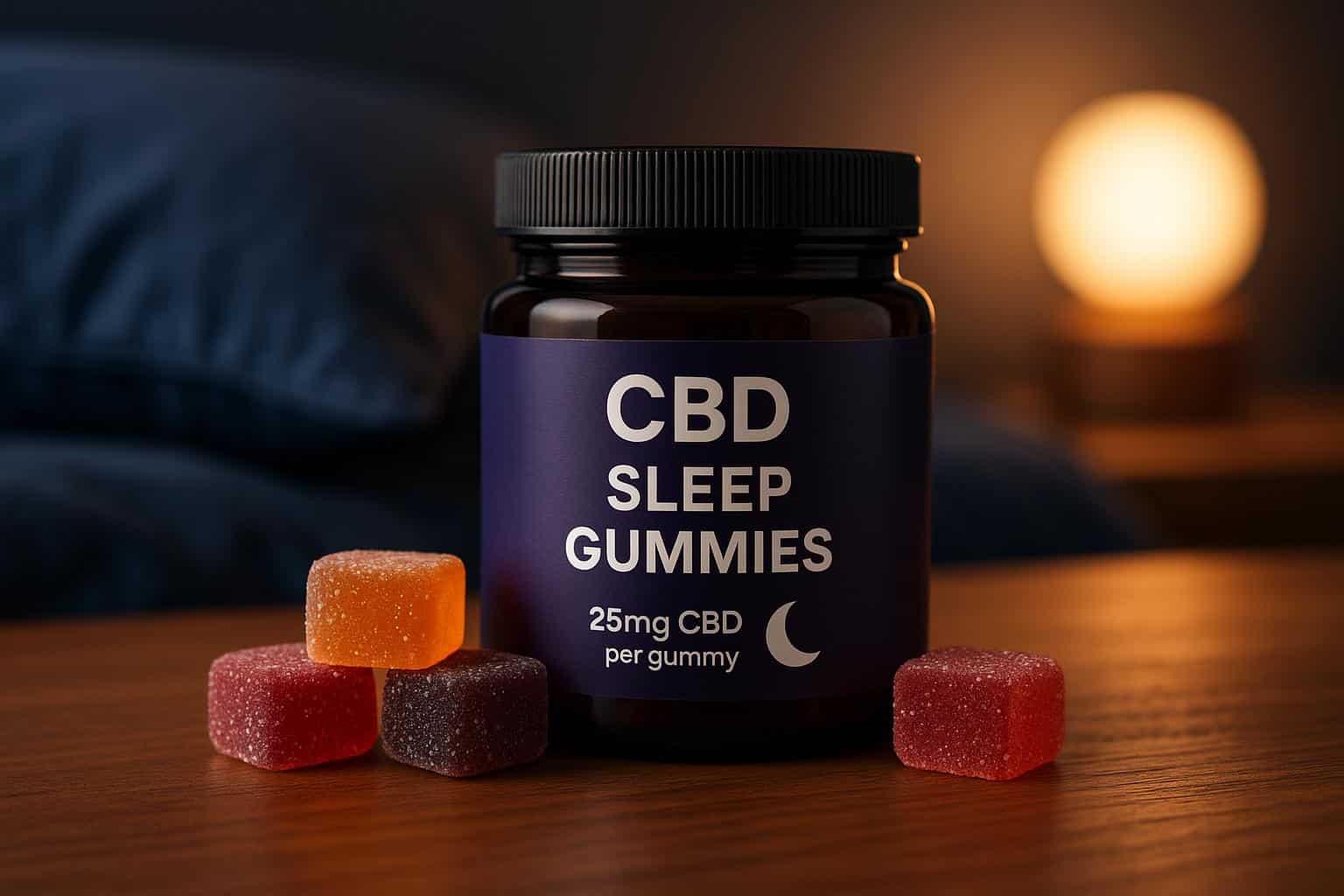
A quality CBD sleep gummy label tells you exactly how much CBD is in each gummy, not just in the whole bottle. This distinction matters more than it might seem. A label that says the bottle contains 750mg of CBD across 30 gummies means 25mg per gummy. A label that only states the total bottle content without per-serving breakdown makes it impossible to know what you are actually taking each night.
For sleep specifically, most adults find 15 to 25mg of CBD per serving a reasonable starting point. Some people respond well to lower doses and some require more, but this range covers the majority of users. Starting at the lower end of that range and adjusting gradually over two to three weeks gives you the information you need to find your effective dose without overshooting.
Melatonin dosing transparency matters equally. The research on melatonin consistently supports lower doses as more effective for most purposes. A product that lists exactly how much melatonin is in each gummy allows you to make an informed choice. One that buries it in a proprietary blend does not.
Consider the Brand’s Overall Transparency
The CBD market is largely self-regulated in terms of quality, which means the brand’s commitment to transparency is one of the most reliable proxies for product quality available to buyers. A few signals are worth noting.
Brands that publish all of their COAs publicly, make their sourcing information clear, explain their extraction and formulation processes, and respond directly to customer questions about their products are operating at a different standard than brands that obscure this information or make it difficult to find.
Customer reviews, when present in meaningful volume on the brand’s own site and on independent retailers, provide useful signal about real-world effectiveness. Look for consistent patterns in what people report rather than individual outliers in either direction.
The Joy Organics CBD sleep gummies combine broad spectrum hemp extract with melatonin, use USDA certified organic ingredients, and publish third-party lab results for each product. That combination of CBD type, sleep-supporting co-ingredients, organic sourcing, and verifiable testing represents the standard worth holding any CBD sleep product to before buying.
What to Realistically Expect
CBD sleep gummies work best as part of a consistent routine rather than as an occasional intervention. Taking them at the same time each night, as part of a genuine wind-down practice that also includes reduced screen exposure and a consistent sleep schedule, produces meaningfully better results than using them sporadically on particularly difficult nights.
Most people who find CBD sleep gummies effective report that the results build over one to two weeks of consistent use rather than arriving dramatically on the first night. The endocannabinoid system appears to respond better to regular input than to occasional doses, and the behavioral routine that builds around a consistent nightly practice contributes to the outcome as much as the CBD itself.
CBD is not a sedative and it is not a treatment for clinical sleep disorders. For people dealing with diagnosed insomnia, sleep apnea, or other medical sleep conditions, CBD should be part of a conversation with a healthcare provider rather than a replacement for appropriate care. For the much larger group of people who simply struggle to wind down, fall asleep at a reasonable hour, and wake feeling rested, a quality CBD sleep gummy used consistently is a practical and low-risk option worth trying.

