


As labor rates climb past $150/hour and modern vehicles grow increasingly complex, a digital revolution in automotive documentation is putting professional-grade repair information back in the hands of car owners.
The numbers tell a sobering story. According to the Bureau of Labor Statistics, car repair costs have surged 33% since 2021, with the Consumer Price Index for motor vehicle maintenance climbing 15% in the past year alone. The average trip to a repair shop now costs $838—and that’s before tackling anything major like transmission work or engine diagnostics.
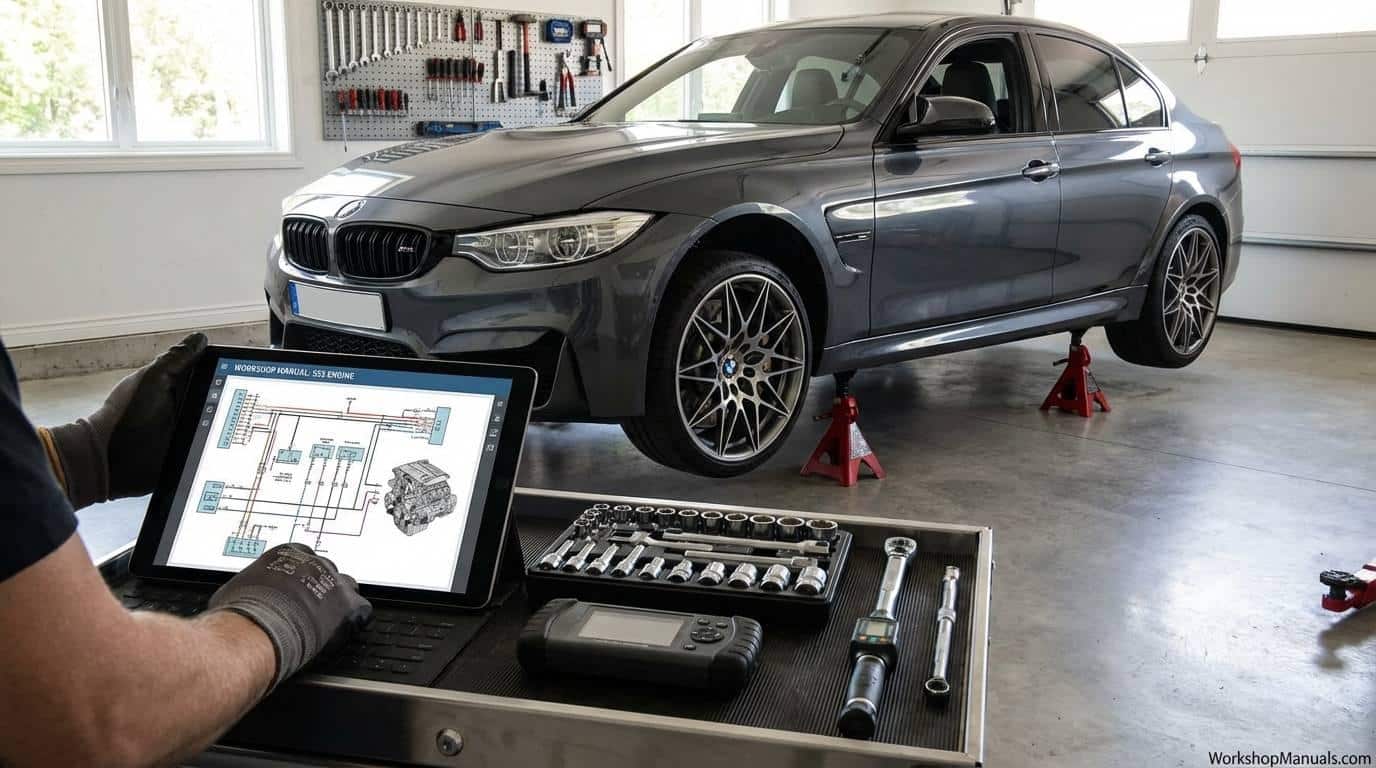
For millions of Americans, these rising costs are forcing difficult decisions: defer maintenance, take on debt, or simply hope nothing breaks. But a growing number of vehicle owners are discovering a third option that’s been hiding in plain sight—one that professional mechanics have relied on for decades.
The Perfect Storm Driving Repair Costs
Several converging factors explain why your mechanic’s invoice keeps getting larger.
Labor rates have reached historic highs. The 2025 PartsTech Report found that nearly half of all auto repair shops now charge between $120 and $159 per hour for labor. In high-cost states like California and New York, rates regularly exceed $160 per hour. A job that takes three hours—common for brake work, timing belt replacement, or suspension repairs—can easily run $500 in labor before a single part is installed.
Modern vehicles are exponentially more complex. Today’s cars contain between 1,400 and 1,500 semiconductor chips—more computing power than early space shuttles. Electronic components now represent 40% of a vehicle’s total cost, according to industry analysis from MOTOR Magazine. What was once a straightforward bumper replacement now involves recalibrating cameras, sensors, and radar units for advanced driver assistance systems.
Repair times have lengthened dramatically. Vehicles now take 60% longer to enter repair shops compared to pre-pandemic levels—not due to backlogs, but because of unprecedented technical complexity. Nearly 60% of all repairable vehicles now require scanning procedures, jumping to 70% for newer models.
The technician shortage compounds everything. Qualified mechanics are increasingly scarce, and those with expertise in modern vehicle electronics command premium wages. This shortage creates bottlenecks and drives up costs across the entire repair ecosystem.
The Information Advantage Mechanics Don’t Talk About
Here’s something most car owners don’t realize: when you bring your vehicle to a repair shop, the mechanic doesn’t work from memory. They consult detailed service documentation—step-by-step procedures, torque specifications, wiring diagrams, and diagnostic flowcharts created by the vehicle manufacturer.
This information has historically been locked away. Factory service manuals—the same documentation used by dealership technicians—once cost $300 to $500 or more, often available only through dealer networks or expensive subscription services like Mitchell or ALLDATA that charge professionals $100+ monthly.
The result was an information asymmetry that kept car owners dependent on shops, even for repairs well within DIY capability. That dynamic is changing.
The Digital Manual Revolution
The same internet that disrupted music, publishing, and retail is finally reaching automotive service documentation. Digital workshop manuals containing factory-level repair information are now accessible to anyone with a computer or tablet—often at a fraction of what dealerships charge for the same content.
These aren’t the simplified Haynes or Chilton guides your father used. Modern digital service manuals include:
- Complete OEM repair procedures written by manufacturer engineers
- Detailed wiring diagrams essential for electrical troubleshooting
- Torque specifications for every fastener—critical for safety-related repairs
- Diagnostic trouble code definitions with step-by-step resolution procedures
- Technical service bulletins (TSBs) documenting known issues and fixes
- Component locations with exploded-view illustrations
- Fluid capacities and specifications for all vehicle systems
The depth of information matters. A Haynes manual might tell you how to replace brake pads. A factory service manual tells you the exact torque sequence for caliper bolts, the minimum rotor thickness before machining versus replacement, the specific brake fluid specification required, and the electronic parking brake release procedure for vehicles so equipped.
Quantifying the Savings
How much can access to professional repair documentation actually save? Consider the math on common repairs:
Brake pad and rotor replacement: Shop cost runs $350-$600 per axle (parts plus 1-2 hours labor). DIY with a manual costs $80-$150 in parts. Savings: $200-$450 per axle.
Alternator replacement: Shop cost runs $400-$700 (parts plus 1.5-3 hours labor). DIY with a manual costs $150-$300 for a quality alternator. Savings: $250-$400.
Spark plug replacement (V6 engine): Shop cost runs $200-$400 (parts plus 1-2 hours labor). DIY with a manual costs $30-$80 in plugs. Savings: $170-$320.
Timing belt service: Shop cost runs $800-$1,500 (parts plus 4-6 hours labor). DIY with a manual costs $150-$300 in parts. Savings: $650-$1,200.
According to Haynes, their manual owners save an average of $3,993 per year on vehicle maintenance and repairs. For households with multiple vehicles or older cars requiring more frequent attention, the savings multiply accordingly.
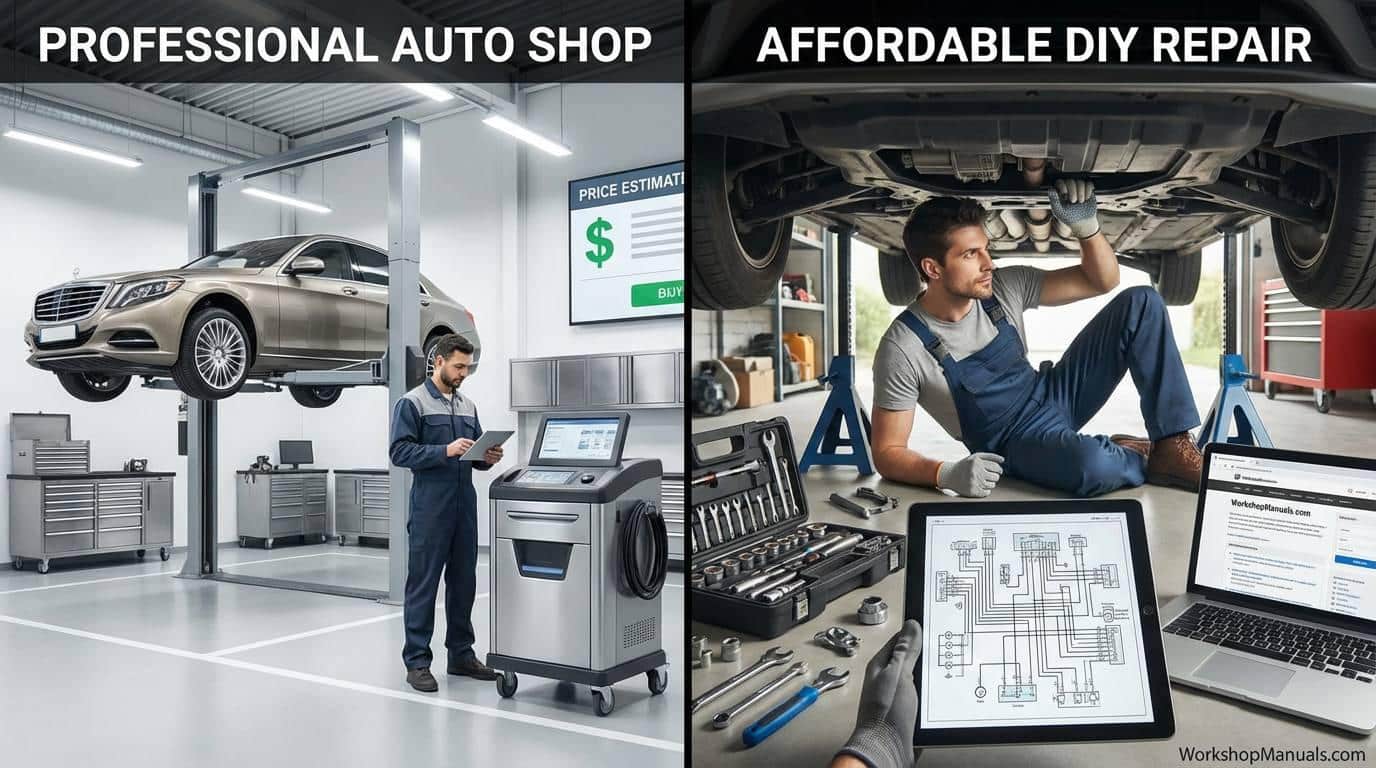
Beyond DIY: Why Even Non-Mechanics Benefit
You don’t need to turn wrenches yourself to benefit from service manual access. Armed with factory documentation, car owners gain several advantages when dealing with repair shops:
Accurate repair estimates. When you know the factory-specified labor time for a procedure, you can identify shops padding their quotes. A job listed at 4 hours in the service manual shouldn’t appear on your invoice at 6 hours.
Informed second opinions. If a shop diagnoses an expensive repair, you can research the actual procedure complexity. Is that $2,000 quote reasonable, or are you being upsold?
Maintenance interval verification. Shops sometimes recommend services more frequently than manufacturers specify. The factory maintenance schedule—found in service documentation—provides the authoritative answer.
Negotiating leverage. Nothing changes a repair shop’s demeanor quite like a customer who clearly understands the technical aspects of their vehicle. Shops are far less likely to recommend unnecessary work to informed owners.
Where to Find Quality Workshop Manuals
The digital manual marketplace has matured significantly. For car owners seeking professional-grade documentation, quality and completeness matter more than price.
What distinguishes reliable manual providers from questionable alternatives is completeness. Beware of “free” manual sites offering incomplete documentation or outdated information. A wiring diagram missing a single circuit can turn a straightforward repair into a diagnostic nightmare.
Reputable sources provide the full factory documentation—the same information dealership technicians access daily. This includes complete wiring schematics, all technical service bulletins, and model-specific procedures that generic guides simply cannot match.
Getting Started: A Practical Approach
For vehicle owners new to self-service, a measured approach yields the best results:
Start with maintenance, not repairs. Oil changes, air filter replacement, and cabin filter swaps build confidence with low-stakes procedures. Service manual instructions eliminate guesswork about drain plug torque, filter orientation, and fluid capacities.
Invest in basic tools gradually. A quality socket set, combination wrenches, and a torque wrench handle most maintenance tasks. Add specialty tools as specific repairs require them. Many auto parts stores loan specialized tools at no charge.
Tackle one new job per service interval. After mastering oil changes, add brake pad inspection. Once comfortable with brakes, try a coolant flush. Progressive skill-building prevents the overwhelm of attempting unfamiliar complex repairs.
Know your limits. Some jobs—airbag service, major transmission work, AC system repairs requiring refrigerant handling—genuinely benefit from professional equipment and expertise. Workshop manuals help identify which repairs suit DIY approaches versus professional attention.
The Bottom Line
Car repair costs aren’t coming down. Labor rates will continue climbing as vehicle complexity increases and technician shortages persist. The $838 average repair bill of today will likely seem quaint within a few years.
But information—once the exclusive province of dealership service departments—has never been more accessible. Digital workshop manuals containing factory-level repair documentation are available for virtually every vehicle on the road, often for less than a single hour of shop labor.
For the 282 million registered vehicles in America, that accessibility represents a fundamental shift in the balance of power between car owners and the repair industry. Whether you turn wrenches yourself or simply want to make informed decisions about your vehicle’s maintenance, professional-grade documentation provides the knowledge foundation that mechanics have always relied upon.
The question isn’t whether you can afford professional repair documentation. Given current repair costs, the question is whether you can afford to go without it.
For immediate access to factory service manuals covering virtually every make and model, visit WorkshopManuals.com. Complete OEM documentation—including wiring diagrams, diagnostic procedures, and torque specifications—is available for instant download.
