


A California legislator has set his sights on artificial intelligence chatbots in children’s toys, proposing an unprecedented four-year ban that would allow privacy advocates time to establish safeguards before the feature is further integrated into playthings for minors. The bill, known as SB 287 and authored by Senator Steve Padilla, would ban the making of toys with conversational AI for anyone under 18.
Padilla couches the pause as a safety precaution, noting that current large language models can generate inappropriate, manipulative or unsafe content and kids are uniquely at risk of such encounters. The bill is designed to forcibly reset standards for content moderation, data handling and age-appropriate design as they catch up.
What California’s SB 287 Would Bar in AI-Enabled Toy Chatbots
The law applies to toys that use AI chatbot features, which are defined as systems being able to converse “in natural language; derive textual and/or spoken output from user inputs using a combination of predefined rules and machine learning in order to respond to user input by providing an equivalent digital speaker’s message; and generate responses or take actions based on user interactions.” It would also put a four-year hold on the sale and production of the toys in California, to allow government agencies and industry to establish safety standards tailored for young users.
Unlike orthodox scripted toys, chatbots can create as they go, learn from input and navigate large troves of information. That flexibility makes them compelling and educational, but it also leaves risks hard to anticipate or test under current toy safety regimes, which tend to focus on physical risks rather than algorithmic behavior.
Pushing for Safety After Incidents Involving Kids and AI
Padilla’s decision comes amid a rash of disturbing episodes connected to AI and children. Families have sued and pointed fingers at chatbots in the last year over claims that extended exchanges with them had factored into a teenager’s act of self-harm, raising questions about how to police artificial companions that are designed to mirror, or even amplify, a user’s emotional state.
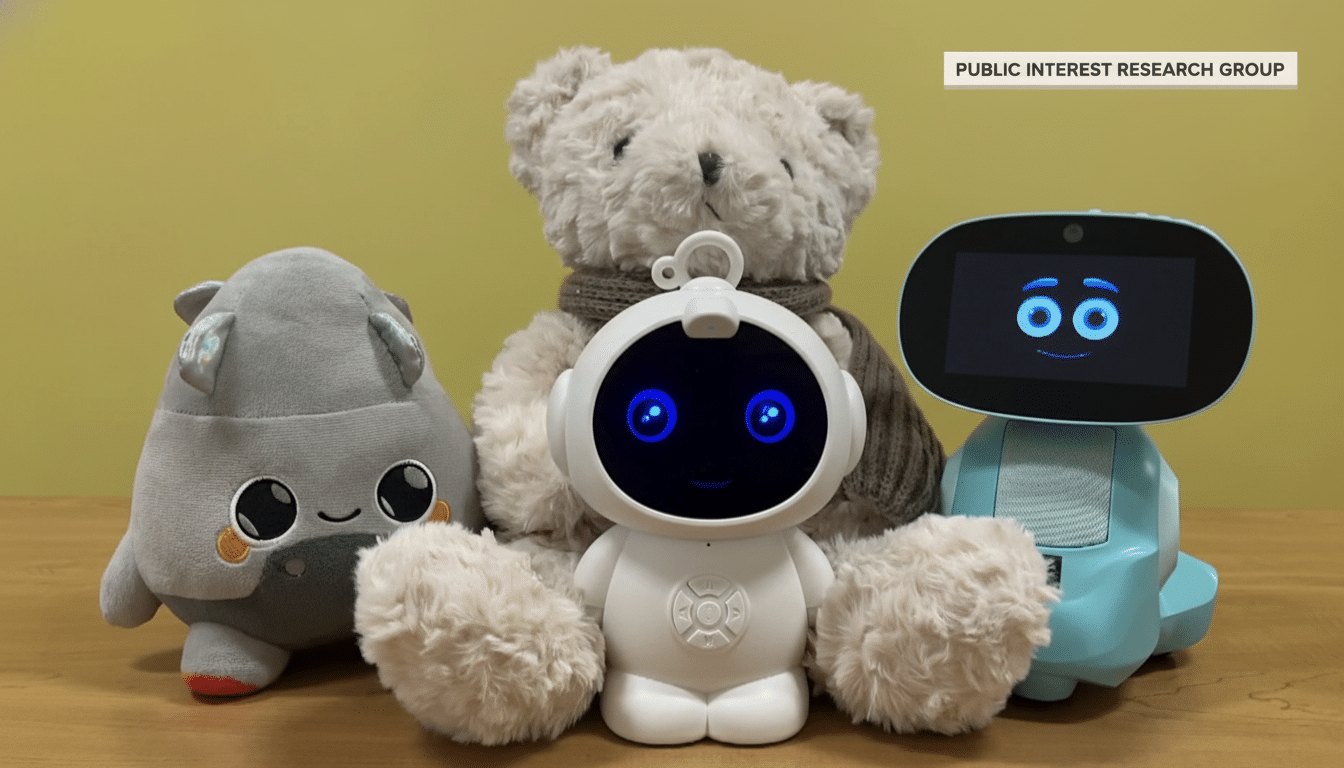
Consumer watchdogs have also identified issues in early “AI toys.” The PIRG Education Fund noted a flaw in learning materials used with a plush bear named Kumma, which could easily be directed into discussions about matches, knives and sexual topics. Reporting by NBC News discovered Miiloo, an AI toy designed for kids and sold by the Chinese company Miriat, sometimes said it was programmed to reflect Chinese Communist Party values — leading to questions about content provenance and possible geopolitical influence.
There is a history of backlash against toy tech. Germany’s regulator banned the My Friend Cayla doll years ago for fears of secret recording, and in 2015, a breach at VTech leaked data on millions of children and parents. Combined with the inherent unpredictability of generative AI, these have persuaded many child-safety advocates that existing safeguards are too flimsy.
Regulatory Picture and Legal Tensions Around AI Toy Chatbots
SB 287 comes amid national wrangling over who will set AI rules. A recent White House executive order encouraged federal agencies to sue states over AI laws, but carved out child safety as a space where the states could act. California has already enacted SB 243, which forces chatbot operators to embed protections for minors and other at-risk users.
Examples of available frames only partially cover the space. The Children’s Online Privacy Protection Act places restrictions on data collection for users under 13, and the Federal Trade Commission has shown that it will undertake large-scale enforcement, fining YouTube $170 million and Epic Games $275 million in recent years. But COPPA doesn’t explicitly cover conversational harms or real-time content risks in toys, two areas where state privacy regulators and the Consumer Product Safety Commission have little precedent.
Across the globe, UNICEF has called for AI design to be child-centered and standards bodies such as IEEE and ISO are working on guidelines for trustworthy AI. The suggested moratorium might provide California the ability to translate those principles into specific rules for products meant for children, from strong content filters and data minimization to transparent parental controls.
Impact on Toymakers and Tech Partners if SB 287 Passes
For manufacturers, the bill would halt a nascent but closely monitored category. OpenAI and Mattel have teased a product using AI before, but there was no timeframe for the launch. A four-year halt to the nation’s largest toy market would seem likely to drive companies toward less-generative features like on-device, rules-based assistants that do not learn from children’s conversations.
Retailers would have compliance options, like geofencing inventory from California or refusing to sell AI-integrated toys anywhere in the country. For startups teaching models about children, the bill is a choice between speed and safety: You can be sure there will now be greater investment in red teaming; in datasets that are curated by actual kids; and in logs so that parents and regulators can review what people have been training these bots on.
What Comes Next for SB 287 and AI Chatbots in Children’s Toys
SB 287 will go through a well-worn process of committee hearings and amendments, including almost-certain debate over how to characterize “chatbot,” which products fall into the category of toys and whether educational devices can escape being categorized altogether. Enforcement mechanisms might include the California Attorney General, the California Privacy Protection Agency and possibly even support from the CPSC.
Child health groups like the American Academy of Pediatrics are likely to push for strict, evidence-based guidelines around developmental impact and not just content filtering. Both Common Sense Media and Pew Research Center have conducted surveys that demonstrate that teens are already testing chatbots, proving the necessity for real-world-based protections.
The crux of Padilla’s argument is that children should not be practice grounds for rapidly evolving AI. Whether the Legislature goes for a pause or immediate rule-making, the message to industry is plain: Show that you know your systems are safe for kids, or plan to be sidelined in the toy aisle.
