


BTS returned to a U.S. stage as seven at an invite-only rooftop event on Manhattan’s Seaport, blending heritage and high-gloss pop in a way only they can. The showcase doubled as their first stateside performances from Arirang and a rare, nerdy breakdown of that chaotic Hooligan hook that already has fans trying to catch their breath.
Arirang Meets The Skyline In A New York Rooftop Showcase
The setting did half the storytelling. With the Brooklyn Bridge to one side and Lower Manhattan glittering behind them, BTS framed Arirang—titled after Korea’s beloved folk song—in an unmistakably New York moment. The album’s name nods to a melody UNESCO recognizes as Intangible Cultural Heritage, a tune so foundational that Korean schoolchildren and diaspora communities alike know it by heart.
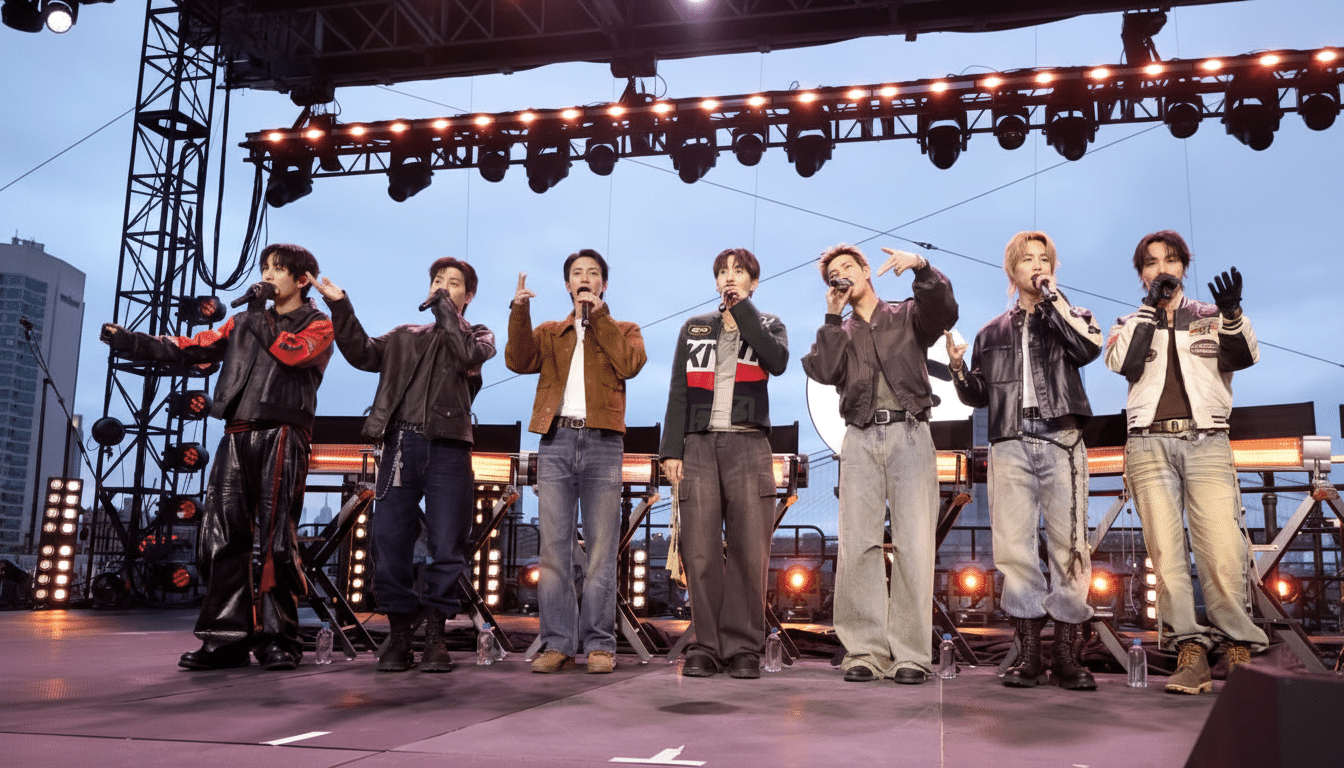
That cultural weight matters. BTS have long threaded tradition through global pop—think pansori-inflected motifs, hanbok styling, and Korean idioms folded into rap verses. Naming an album Arirang signals an embrace of roots even as they push sonically into sleek synths, clipped percussion, and arena-sized hooks calibrated for worldwide singalongs.
For the audience selected largely from top regional Spotify streamers, the symbolism landed. Between gusts of wind and smartphone constellations, fans turned the rooftop into a choral pit, echoing new lyrics barely days old as if they were standards.
A Q&A With Lived-In Ease Sets The Tone For New Music
Before the music, a relaxed Q&A moderated by Suki Waterhouse put the group in conversational mode. They talked about living together again while recording in Los Angeles and the mindset behind lead single Swim—a keep-moving mantra that fits a post-hiatus chapter.
It wasn’t all process talk. There were domestic jokes about suitcases on the floor, confessions about who hates swimming yet loves Swim, and a candid aside about at-home habits that detonated the crowd. The tone felt like a livestream, only magnified by a few hundred voices reacting in real time.
Cracking The Hooligan Hook With A Rapid-Fire Breakdown
Then came the night’s most delightful detour: a mini musicology lesson on Hooligan. The now-infamous “ha-ha-ha…” refrain—delivered in a rapid volley—looks easy on paper and punishing onstage. Two members admitted the line is deceptively hard to land cleanly at tempo, especially while moving.
They broke it down as a “three-three-three” burst—essentially a machine-gun string of grouped hits that rides just ahead of the beat. In pop terms, it’s the kind of percussive, chantable cell that punches through crowd noise and translates across languages. Put another way: it’s engineered for instant recall and maximum participation.
Jung Kook took the challenge to demo the cadence, slipping into that clipped rhythm with the control you’d expect from the group’s most agile vocalist. The exercise underscored a larger point: BTS hooks often work because they are rhythm first, melody second, turning arenas into metronomes.
First U.S. Spins Of New Tracks Light Up A Windy Rooftop
When the lights swung back to performance mode, the group delivered Swim, 2.0, and Normal—tight, unfussy staging that let the arrangements breathe. RM, nursing a sprained ankle, rapped from a seated perch while the others threaded choreography around him without dimming momentum. The precision made the rooftop feel bigger than its footprint.
Fans met each drop with the kind of full-body response usually reserved for tour stops: synchronized lightsticks, air-punched “ha-ha-ha” echoes, and handmade signs reading “We Stayed.” It read like a thesis statement for this phase of their career: the fandom didn’t hibernate; it studied.
Why This Moment Resonates For BTS And Their Global Fans
BTS have a documented track record of global impact—multiple years in the IFPI Global Recording Artist ranking, repeat Billboard records, and blockbuster stadium runs. Yet their greatest advantage has always been translation without dilution: keeping Korean cultural DNA intact while designing songs for shared spaces, from subway headphones to festival fields.
Arirang fits that blueprint. Titling the project after a folk touchstone sets a thematic floor; deploying precision-engineered hooks like Hooligan lifts the ceiling. Industry analysts from Luminate have noted that short, percussive refrains cut through today’s stream-led consumption patterns. BTS are fluent in that math, but they add human error—the playful stumbles, the breathy laughs—that turn a viral loop into a live ritual.
Back in New York, that alchemy was tangible. The songs hit, the jokes landed, and a tricky syllabic gauntlet became a shared inside joke. Tradition hummed under LED lights, a folk title met a modern skyline, and a rooftop turned into a rehearsal for whatever larger stages come next.
If the night was meant as a temperature check, the reading was clear. The current is strong, the swim is steady, and even the hardest hook is already halfway to muscle memory.
