


The Pixel line already has its established boundaries — the best computational photography on the market, the software that refuses to annoy, and the temporal commitment that no one can dare beat. However, it also often dabbles in a troubled battery experience, hits numerous hardware limitations and struggles to keep up with the current silicon winning spills. So what would an entirely perfect Pixel bring to its Google-centered spirit if it was just perfectly honest? This is a blueprint purely within the realm of usage and desired metrics.
Design That Puts Grip, Balance, and Size First
Two models, equal features. The compact 6.1–6.3-inch Pixel and 6.7–6.8-inch Pixel XL will not slow down anything that’s not silicon-bound: charging speed, camera performance, and identical memory specifications. The 190 g weight for the tiny model should be a legitimate upper threshold of one-hand versatility. Matte, glare-resistant back with a high-friction coating and a shallower, anti-rocking camera bar. Top Corning glass and IP68 water and dust prevention should be the bare minimum – all of that will pass harsher tests ahead of market drops.
- Design That Puts Grip, Balance, and Size First
- Cameras That Win on Consistency in Any Light
- Performance and Battery That Match Real-World Hopes
- Displays Tuned for Eyes and Efficiency, Without Gimmicks
- AI That Works Offline and Respects Privacy by Default
- Software Longevity and Repairability That Truly Lasts
- Pricing And Lineup That Did Not Make Sense
- The Pixel That’s Easy to Love and Live With Every Day
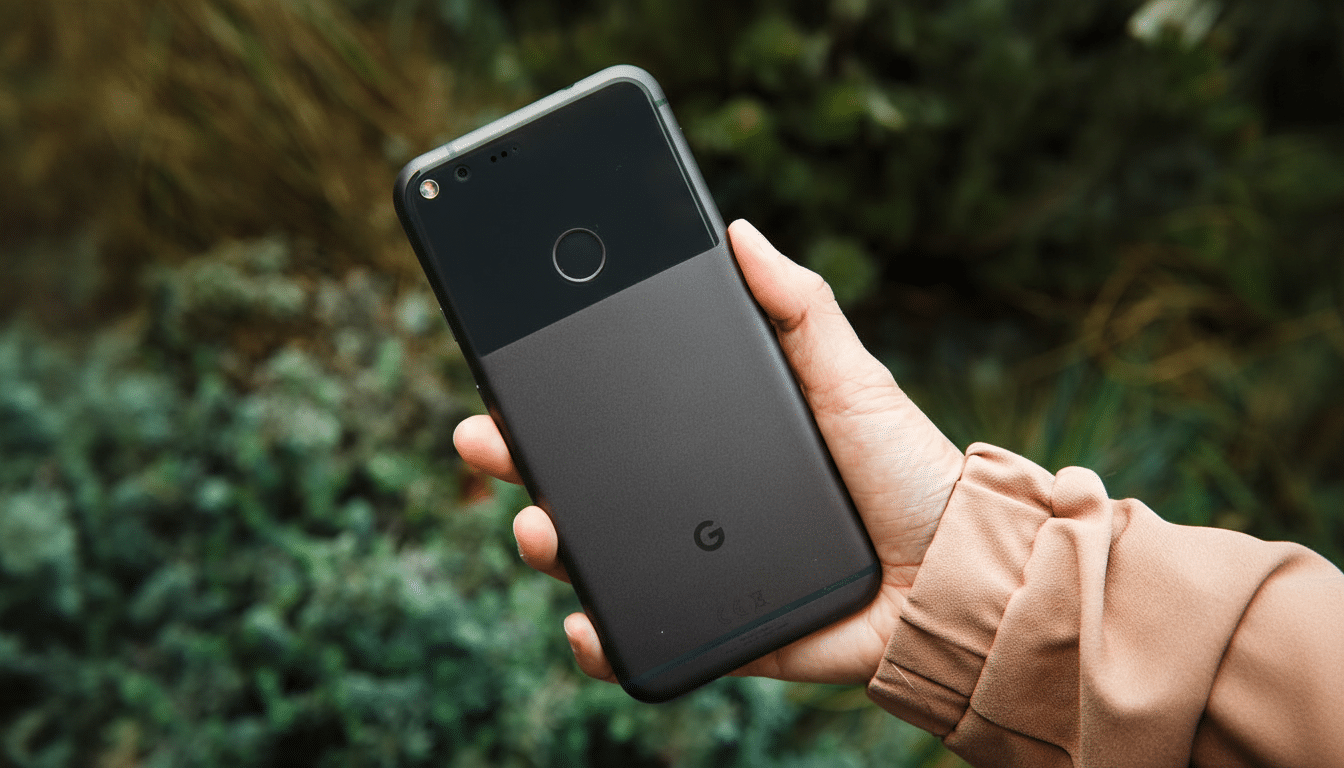
Open its chassis when possible, recycle aluminum, UWB support, powerful haptics, and dual option between eSIM and physical nano‑SIM.
Cameras That Win on Consistency in Any Light
A good Pixel redoubles on the brand’s primary benefit: solid images in any conditions. Specifically, that implies a 50 MP key sensor around 1/1.3-inch or more, with dual-pixel phase detection, a 12 MP ultrawide with autofocus for actual macro, and a 48 MP 5x periscope that remains crisp at 2–10x via in-sensor crop and multi-frame merging. And not only lab scores need to be frequent, but manifest excellence from bright midday to dark pubs.
Video equality is essential. 4K60 on all lenses with smooth lens switching, 10-bit HDR, and a horizontal LOG film for developers. Movement blur reduction, enhanced audio wind filtering, and consistent subject monitoring should all be accessible. Keep Real Tone as a compass and extend it to video film rendering of skin tone. Include a Pro function with shutter, ISO, and focus peaking that generates steady DNGs for Lightroom. These are the little touches amassed by organizations like DXOMARK and university students whom we work with over practice.
Performance and Battery That Match Real-World Hopes
The maximum Tensor was created to target continuous performance that is continuously 10–15% weaker than the most erstwhile Snapdragon for long hours, not just a fading course. That includes a recent CPU hub, a GPU that deals with slimmer ray tracing but is better in definite workloads, and an NPU that won’t blow up when actively generating on-deck properties. It also involves utilizing a larger vapor chamber and graphite layers to ensure they can rely on 20–30-minute sessions when it comes to thermal design. The present creation’s weakness was highlighted by scientists at AnandTech, for example.
Battery confidence is non-negotiable. A 5,000 mAh pack on the larger model and ~4,600 mAh on the smaller should deliver a trustworthy full day of heavy use: aim for 8–9 hours of active screen time in mixed 5G per standardized tests such as UL Procyon. Charging should be sensible, not speed-chasing: 45 W wired, 15 W Qi2 magnetic with impeccable heat dissipation, smart charging that uses socioeconomic status information to schedule slower overnight recharges and learns sleep schedules to protect longevity. Pixels have previously been known to drain “cell signal” in fringe coverage; a decent part is a top-tier modem with aggressive idle power savings.
Displays Tuned for Eyes and Efficiency, Without Gimmicks
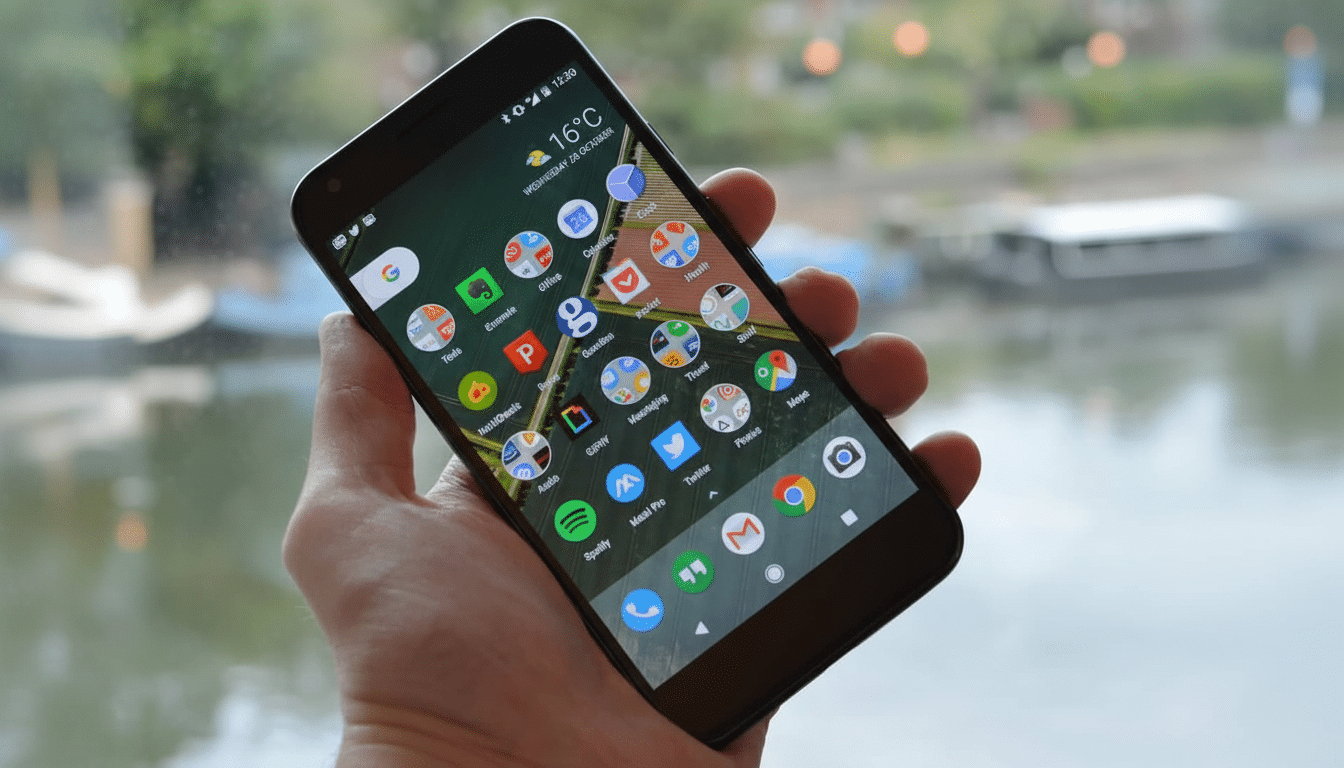
A flat LTPO OLED with 1–120 Hz refresh, carefully calibrated to ∆E < 1 in sRGB and P3, is a happy medium. Peak brightness is above 2,000 nits, and low-flicker mode helps PWM-sensitive user groups. Anti-reflective glass similar to the best on the market reduces glare without coloration — an improvement that real users notice more than raw nit face-offs.
AI That Works Offline and Respects Privacy by Default
The Pixel’s on-device AI sets it apart. A perfect model conducts core functions on your phone — using it as an assistant, Call Screen, and more — utilizing a peppy host model optimized for the NPU to avoid latency yet save energy. Sensitive jobs benefit from a trip through the secure enclave before being sent to Titan M2 and the Private Compute Core, ensuring that data isn’t uploaded into the round-for-the-Mayor’s-daughter bucket. Human-centered AI is most useful when it is instant and unnoticeable.
Software Longevity and Repairability That Truly Lasts
Seven years of duration for OS and security updates is a high bar; the perfect Pixel is making good on that promise by continuing to offer parts and making repairs straightforward. Genuine parts available through established partners, modular subcomponents for common failures including USB‑C ports and batteries, clear repair documentation — these things keep devices alive and out of landfills. Independent testing by groups such as iFixit, which breaks down electronics to inspect them for flaws in design and construction, demonstrates design choices — like stretch-release glue tabs on battery cells and fewer layers glued together — that lead to faster, safer repairs.
Pricing And Lineup That Did Not Make Sense
Keep it simple. Two similar flagships in two sizes, plus an A-series that takes last year’s camera and AI down a price point or two. Hitting $699–$799 for the smaller flagship and $999 for the larger one while keeping trade-in and carrier offers could be in line with actual consumer behavior observed in market research from companies like Counterpoint Research. Regional editions shouldn’t make more compromises than necessary — particularly when it comes to modem bands and charging speeds.
The Pixel That’s Easy to Love and Live With Every Day
The ideal Pixel isn’t a spec sheet dazzler; it’s quietly assured that every shot, every call, and every hour away from the charger will be predictable. Make them about grip and size, cameras that don’t fluctuate out of control, performance that doesn’t decay too quickly, practical charging, private on-device AI and long-term support. Do that, and the Pixel’s identity — useful, human and unbothered — is not only a message but a daily experience.
