


Email is still the soft underbelly of online life. The FBI’s Internet Crime Complaint Center tracks billions lost to business email compromise each year, and Verizon’s Data Breach Investigations Report has repeatedly found that roughly 74% of breaches involve the human element. If you want a private inbox you can trust, end-to-end encrypted providers are the safest bet in 2026.
After testing and retesting the field, these are the secure email services I recommend right now. My picks emphasize strong encryption, transparent security design, solid mobile experiences, and long-term reliability—not just flashy features.
- How I Chose These Providers: Security, Audits, and Value
- Proton Mail: Swiss Encrypted Email With a Robust Suite
- Tuta: Privacy-First Email With Post-Quantum Steps
- StartMail: Disposable Aliases and Secure Messaging
- mailbox.org: Privacy-First Email and Productivity Suite
- Mailfence: Approachable OpenPGP and Secure Suite
- What Secure Email Can and Can’t Do in Daily Use
- Why These Picks Lead in 2026 for Privacy and Security
How I Chose These Providers: Security, Audits, and Value
I focused on services with true end-to-end encryption for message content and attachments, open or auditable code, robust two-factor authentication, and sensible pricing. Jurisdiction matters, too: providers operating under GDPR or strict privacy regimes earn extra points. Finally, I looked at extras that reduce real-world risk, like aliasing, phishing defenses, and simple ways to message contacts who aren’t using encryption.
Proton Mail: Swiss Encrypted Email With a Robust Suite
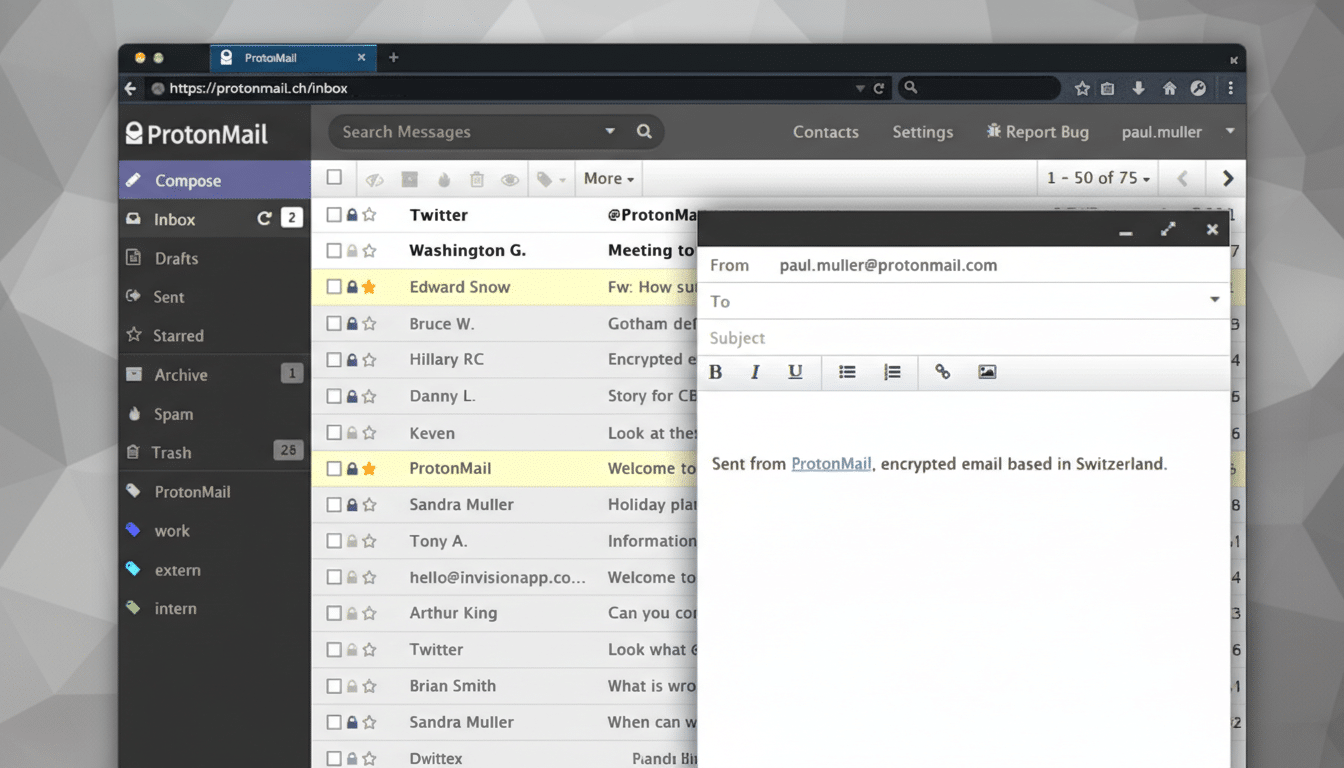
Based in Switzerland and built around zero-access architecture, Proton Mail remains the best all-rounder. It offers end-to-end encryption, encrypted search for your inbox, tracker blocking, and one-click unsubscribe that actually works. On mobile, the apps are clean and fast, and on desktop, Proton’s Bridge lets you use traditional clients while keeping your keys local.
Proton’s suite (Drive, Calendar, Pass, and VPN) adds meaningful privacy value without bloat. Independent audits of its apps and cryptography help keep trust grounded in evidence rather than marketing.
Tuta: Privacy-First Email With Post-Quantum Steps
Formerly Tutanota, Tuta is a top pick for users who want maximal privacy by default. It encrypts more than most—including subject lines and contacts—and has rolled out hybrid, post-quantum-ready encryption using NIST-selected approaches like CRYSTALS-Kyber, aiming to stay safe against future threats.
It’s ad-free, runs on 100% renewable energy, and includes a slick calendar and solid spam filtering. Multi-platform apps and support for 2FA and security keys make it a strong daily driver. The free tier is useful; paid plans start low and scale with storage and custom domains.
StartMail: Disposable Aliases and Secure Messaging
StartMail, from the Netherlands, stands out for unlimited disposable aliases. Create throwaway addresses on the fly and auto-expire them to starve data brokers and stop spam at the source. If your contact isn’t using encryption, you can still send them a password-protected message that they can reply to securely—no extra software required.
Expect built-in PGP, strong spam defenses, and compatibility with popular desktop clients. There’s no native mobile app yet, but the responsive web app is polished and easy to pin to your home screen as a PWA.
mailbox.org: Privacy-First Email and Productivity Suite
If you want a privacy-first productivity hub, mailbox.org is the sleeper hit. It pairs secure email with an office suite, cloud storage, and video tools—all hosted in Germany under strict privacy law. You can enable PGP, use aliases and catch-all domains, and even set expiration for shared links.
I appreciate the pragmatic payment options, including traditional methods and even cash-by-mail for those who want minimal financial traceability. There’s no dedicated Play Store app, but the web client is excellent and works as a PWA with notifications.
Mailfence: Approachable OpenPGP and Secure Suite
Belgium-based Mailfence blends ease-of-use with serious cryptography. OpenPGP is built in, so you can generate and manage keys without wrestling with plugins. The suite includes calendars, contacts, and secure document storage, and the company accepts cryptocurrency payments for additional anonymity.
The free tier is limited but adequate for testing. Paid plans are reasonably priced and add storage, custom domains, and priority support—all without ads or tracking.
What Secure Email Can and Can’t Do in Daily Use
Even the best encrypted email can’t hide all metadata. The global email system still exposes routing information, and messages to non-encrypted recipients fall back to standard delivery unless you use features like password-protected emails. That’s normal—but it’s worth knowing.
For daily safety, enable 2FA with a hardware security key, review forwarding rules, and beware of OAuth token theft in third-party apps. ENISA and the Electronic Frontier Foundation both emphasize layered defenses: use strong passphrases, keep devices patched, and treat unexpected “account security” messages with suspicion.
Why These Picks Lead in 2026 for Privacy and Security
These providers combine end-to-end encryption with mature tooling: alias management to reduce exposure, encrypted calendars and files to keep more of your life private, and cross-platform clients that don’t get in your way. With NIST standardizing post-quantum cryptography and attackers targeting inboxes for high-value fraud, choosing a provider that ships fast, audits often, and iterates on threat models is no longer optional—it’s table stakes.
If you’re switching today, start with Proton or Tuta for the most polished privacy experience, pick StartMail for unbeatable aliases, choose mailbox.org if you want a full suite under one roof, and consider Mailfence for straightforward OpenPGP with a balanced feature set. Each is a meaningful upgrade from legacy email—and a smarter foundation for the years ahead.
