


Choosing the best portable power station for running appliances starts with knowing what you need to power and for how long. Some appliances draw a small, steady load, while others need high startup power or extended runtime. A good power station should match both the wattage and the battery capacity your situation demands. Whether you want backup for outages, off-grid convenience, or mobile jobsite power, comparing output, surge capability, charging flexibility, and usable runtime helps you avoid buying too little power or paying for capacity you will never use.
Comparing Portable Power Stations for Different Appliances
Small Appliances: Lights, Fans, Routers, and Electronics
Small appliances are usually the easiest loads for a portable power station to handle. LED lights, Wi-Fi routers, laptops, phone chargers, small fans, and similar electronics often use modest wattage, which means even a compact unit can keep them running for hours. For basic home backup, these devices benefit most from steady AC output, quiet operation, and enough battery capacity to cover an evening or a workday. If your priority is communication, lighting, and comfort, this category places the least strain on the battery and inverter.
- Comparing Portable Power Stations for Different Appliances
- Small Appliances: Lights, Fans, Routers, and Electronics
- Medium Appliances: Refrigerators, TVs, and Kitchen Devices
- High-Power Appliances: Tools, Air Conditioners, and Larger Equipment
- Key Specifications to Check Before Choosing a Power Station
- Output Wattage and Peak Power Capability
- Battery Capacity and Expected Runtime
- Charging Methods for Extended Appliance Use
- How to Select the Right Portable Power Station for Your Appliances?
- Conclusion
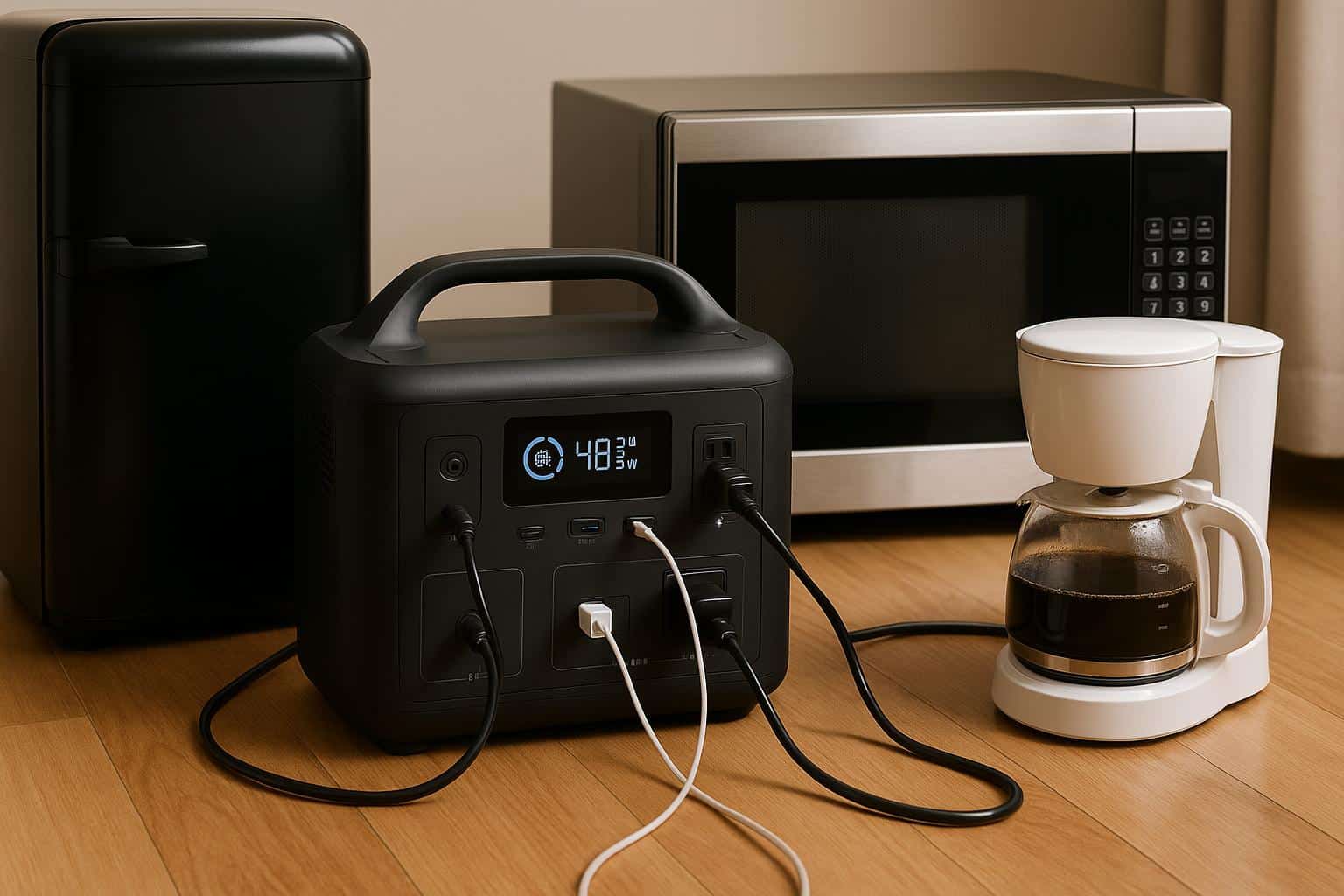
Medium Appliances: Refrigerators, TVs, and Kitchen Devices
Medium appliances require more planning because they combine higher running watts with occasional startup surges. Refrigerators, televisions, coffee makers, blenders, and microwave use can quickly raise your total power demand, especially if several devices run together. In this range, inverter strength and battery size matter more than simple portability. The best portable power station for running appliances in this class should deliver reliable continuous output and enough stored energy to handle repeated cycles. For home backup, these are often the most practical appliances to prioritize first.
High-Power Appliances: Tools, Air Conditioners, and Larger Equipment
High-power appliances demand a power station with strong continuous output and high peak power for startup loads. Power tools, portable air conditioners, larger pumps, electric grills, and similar equipment can exceed the limits of entry-level models very quickly. Here, choosing a unit with enough overhead is essential, not optional. A station that runs near its maximum all the time will drain faster and leave little room for additional devices. For demanding applications, look for a model designed to support heavier appliances without compromising stability or runtime.
Key Specifications to Check Before Choosing a Power Station
Output Wattage and Peak Power Capability
Output wattage tells you how much continuous power the station can supply, while peak power covers short startup surges from motors and compressors. Both matter when running appliances reliably. The Anker SOLIX C1000 Gen 2 provides 1,024Wh capacity, 2,000W rated output, and 3,000W peak power, making it suitable for many household devices and emergency applications. For users needing more power, the SOLIX C2000 Gen 2 offers 2,048Wh capacity, 2,400W rated output, and 4,000W peak power, supporting higher-demand appliances and longer backup periods.
Battery Capacity and Expected Runtime
Battery capacity, measured in watt-hours, determines how long a portable power station can run your appliances before recharging. A higher-capacity unit supports longer backup for refrigerators, fans, lighting, and electronics, especially during outages or off-grid use. Runtime depends on the appliance load: a low-draw router and light setup may last many hours, while a heater or cooking device drains the battery much faster. To estimate runtime, divide the battery’s watt-hour capacity by the appliance’s average watt draw, then allow for inverter losses and real-world usage patterns.
Charging Methods for Extended Appliance Use
Charging flexibility becomes important when you need to run appliances over long periods or during repeated outages. A portable power station that supports wall charging, car charging, and solar charging gives you more ways to stay powered. Fast AC recharging helps restore backup capacity between outages, while solar input supports longer off-grid use without relying on fuel. Car charging adds convenience during travel or mobile work. When comparing options, look beyond battery size and confirm the charging methods fit how and where you expect to use the station most often.
How to Select the Right Portable Power Station for Your Appliances?
Calculate Your Total Power Consumption
Start by listing every appliance you want to run, then note both its running wattage and any startup surge. Add the running watts for devices you may use at the same time, not just individually. This gives you the minimum continuous output your portable power station must support. Next, check whether one appliance, such as a refrigerator or power tool, needs extra peak power at startup. This step prevents overloads and gives a direct answer to what size unit you need, making your buying decision much more accurate and practical.
Match Capacity With Your Usage Scenario
After calculating wattage, choose capacity based on how long you need power. For short outages, light appliance use, or portable convenience, a mid-capacity unit may be enough. For overnight refrigerator backup, longer work sessions, or running several appliances together, larger capacity is the better choice. Think in real scenarios: a camping trip, a blackout, a van setup, or emergency home backup all place different demands on stored energy. Matching capacity to your routine helps you avoid underbuying, while still keeping the system reasonably portable and efficient for daily use.
Conclusion
The best portable power station for running appliances is the one that matches your actual load, runtime needs, and charging situation. Small electronics need modest output, but refrigerators, kitchen devices, tools, and air conditioners require stronger continuous power and higher surge capability. Focus on three essentials: rated wattage, peak power, and battery capacity. Then confirm the unit offers charging options that fit home backup, travel, or off-grid use. When you calculate total appliance demand first and match it with realistic runtime expectations, you can choose a power station confidently and power the devices that matter most.

