


Baseus’s new PicoGo AG11 global travel adapter just saw its first price cut, dropping to $26.99 down from $39.99 — or roughly 33% off.
It’s the first notable markdown since launch at a major retailer, and it arrives just as travelers are finalizing spring and summer plans — and reflecting on their power kits.
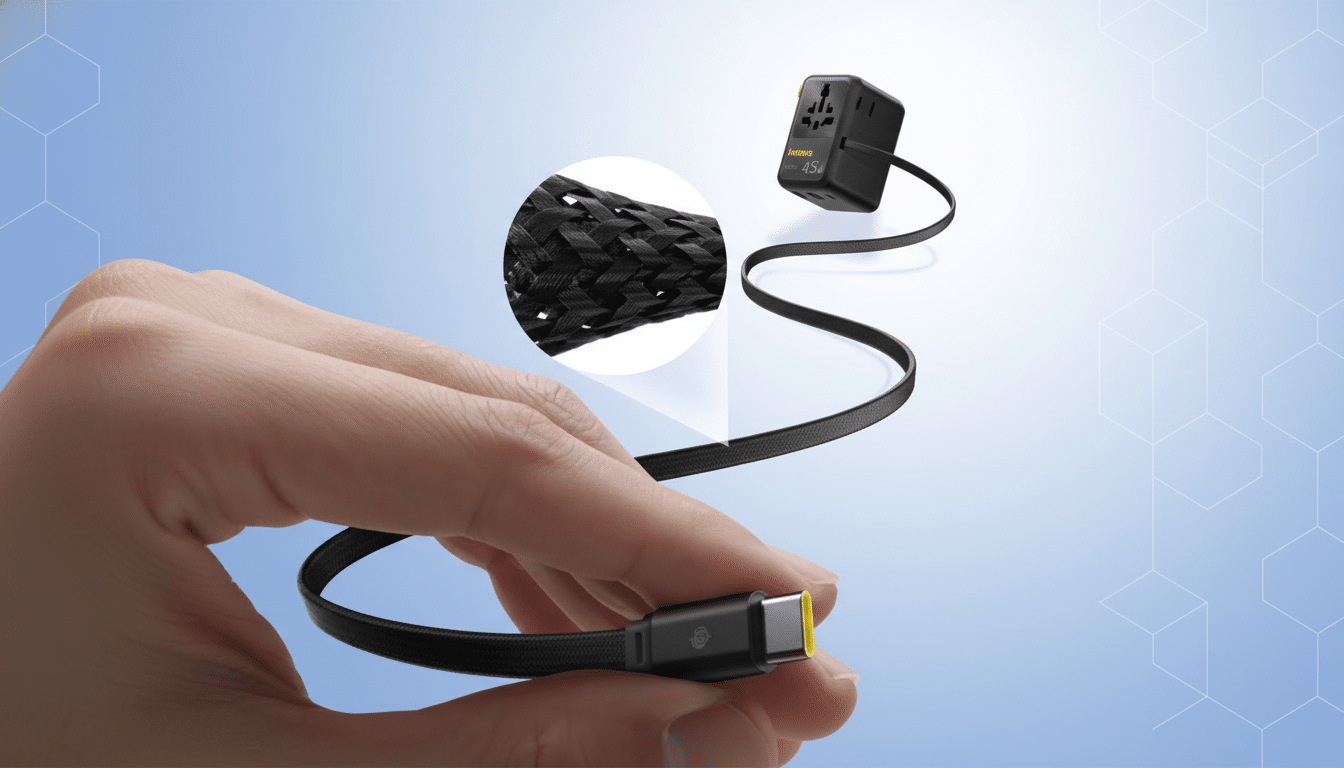
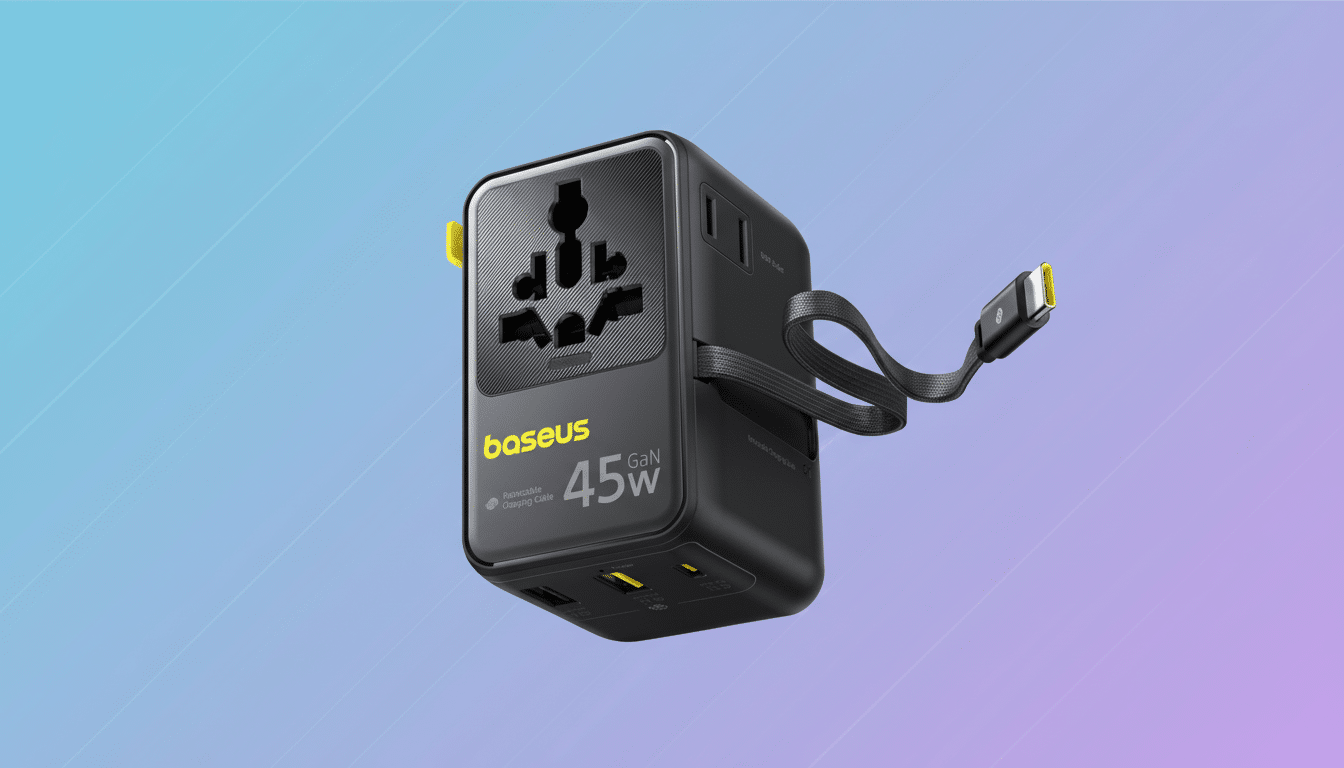
And beyond the deal: It’s a pretty simple value proposition, 45W of compact, GaN-based hub, capable, with an integrated retractable USB-C cable and enough ports to keep all your essentials topped up on that carry-on’s worth of gadgets.
Why 45W and GaN Matter When You’re Traveling
Forty-five watts is a good happy medium for travel. It’s enough for phones, tablets, handheld consoles and many ultraportable laptops that take a 45W charge. Roughly translated to real-world values, this equates to a thin-and-light laptop that it would normally ship with via a 30W–45W adapter or an iPad or Nintendo Switch (and possibly wireless buds and/or smartwatch) all being catered for by just one brick and a couple of cables.
The small footprint is enabled by gallium nitride (GaN) power components, which are cooler running and more efficient than the older silicon in a like-class device. If you believe manufacturers and semiconductor companies such as Navitas, GaN designs can be up to 30% smaller for the same output — which means more space in your personal item, less wobble when plugging into loose outlets.
A nice touch is the built-in 45W USB-C retractable cable. Forgetting or losing a cable is a frequent travel hassle; incorporating it into the adapter eliminates that locus of failure and accelerates the nightly plug-in regimen too. The 6-in-1 design will allow you to charge up to six devices at once, eliminating the typical outlet triage in hotels and airports.
Global Compatibility Without Guesswork or Hassle
Though some listings say “European” on it, this is an all-encompassing global travel adapter. It is compatible with plug types from Europe, UK, US, Australia and more than 200 countries and regions. For frequent air passengers, that’s one adapter you won’t have to unpack from your bag the whole year round.
Like all travel adapters, it’s a pass-through for plug shapes, not a voltage converter. Newer chargers and devices are dual-voltage/multinational compatible, marked with a rating of 100–240V. The International Electrotechnical Commission advises checking those markings before traveling; if a device isn’t dual-voltage, you’ll need to use a separate transformer. The PicoGo itself has a wide voltage range, and it will take care of sharing power on its USB outputs.
Real-World Charging Scenarios You Can Expect
Imagine the hotel room with a single accessible electrical outlet: There’s nowhere to plug in but the adapter’s AC plug, which locks into the wall and includes a built-in USB-C cable that fast-charges your phone or tablet. Other USB ports can power earbuds, a smartwatch and a camera battery, while a laptop sips juice at 45W overnight.
(In a family or group scenario, that means everyone can wake up ready to crush the day rather than commence a morning cord search.)
There are limits to respect. Power is siphoned through the same outlets, meaning wattage is halved once more when charging multiple devices. Ultraportable: okay; power-hungry laptops that expect 60W–100W are going to charge more slowly or may need a higher-wattage brick. Some phones will hit peak speeds only when certain protocols are supported. The USB-IF calls out USB-C and Power Delivery as table stakes, but proprietary fast-charge modes can add some variability. If you have a device with an Ethernet port that can only achieve peak speeds using a brand-specific method, inspect the spec sheet carefully.
How the Price Compares With Similar Adapters
Multi-country adapters with built-in USB-C power usually cost around the $40–$70 mark. Those would include higher-end choices like OneAdaptr’s OneWorld series, or a now-burgeoning array of established charging names’ GaN travel hubs, generally with the goal of bumping up wattages and prices. At $26.99, the PicoGo AG11 is cheaper than most competitors and includes a 45W ceiling and an integrated cable — two things that really add convenience when you’re on the road.
Crucially, this is the first price drop since the model launched at a mainstream retailer, meaning stock seems good but time may be short. Deal tracking by retailers and price-history services frequently reveals early dips to test consumer interest before prices settle back down, so early adopters typically benefit from these bursts in enthusiasm.
Who Should Consider It for Their Travel Gear
It’s best for frequent flyers, students who study abroad and those with multiple devices on the go. If your everyday laptop is a pig of a machine, you may want to look into something with a higher wattage; for everyone else, this 45W adapter hits a decent cross-section of the power spectrum without taking up too much space.
Check for common safety certification markers for your region, such as UL/ETL in North America, the CE mark in Europe and others, and carry a spare USB-C to USB-C cable in your bag for good measure. For the vast majority of travelers, however, that initial-price-drop moment makes the PicoGo AG11 a surprisingly simple addition to the leanest traveling kit: global-ready charging.
