


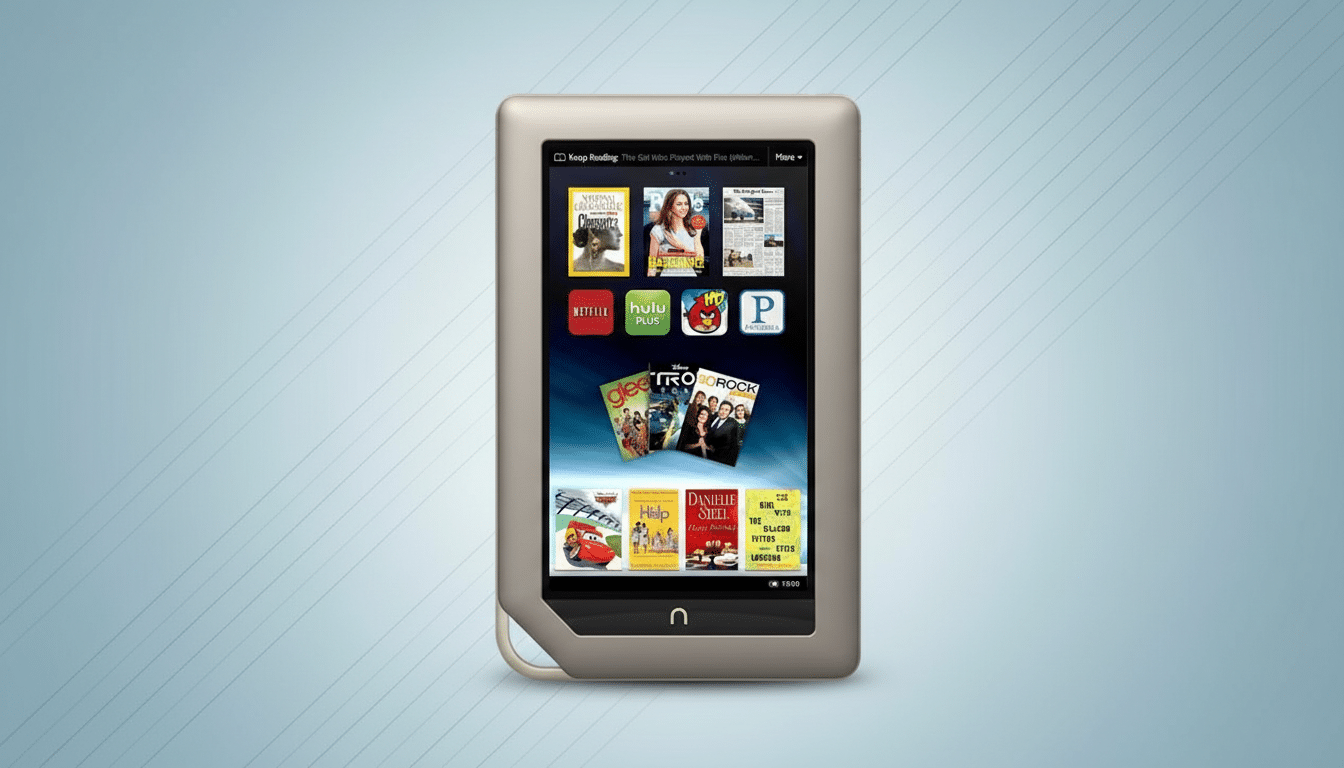
Barnes & Noble has introduced a new 8.7-inch NOOK Reading Tablet, but it’s not the upgrade die-hard E Ink readers have been waiting for. Instead of a next-generation GlowLight e-reader, the company is extending its LCD lineup with a budget-friendly Android slate aimed at color-rich content like magazines and comics.
The move underscores a familiar tension in digital reading: tablets keep getting more capable and affordable, while dedicated E Ink devices remain the gold standard for long-form reading. This launch lands firmly on the tablet side of that divide.
What Barnes & Noble Launched: Specs and Price
The new NOOK features an 8.7-inch IPS LCD designed to display color content with punch and clarity, a stark contrast to the monochrome, paper-like look of E Ink. It ships with Android 15, includes 64GB of internal storage, and supports microSD expansion—an increasingly rare perk in budget tablets. Priced at $149.99, it’s positioned for casual reading, streaming, and light app use rather than marathon novel sessions.
Because it runs Android with full Google Play access, the tablet can install Kindle, Kobo, Libby, and audiobook apps alongside Barnes & Noble’s own store. That flexibility broadens its appeal beyond the NOOK ecosystem, effectively turning it into a general-purpose reading and media device rather than a single-purpose book machine.
Still, LCD trade-offs apply. Battery life is measured in hours and days, not weeks, and a backlit display can be harsher on the eyes during extended reading. For quick bursts of comics, recipes, or news, it fits. For the fifth chapter in a row of a dense novel, less so.
Why E Ink Fans Feel Overlooked by This Launch
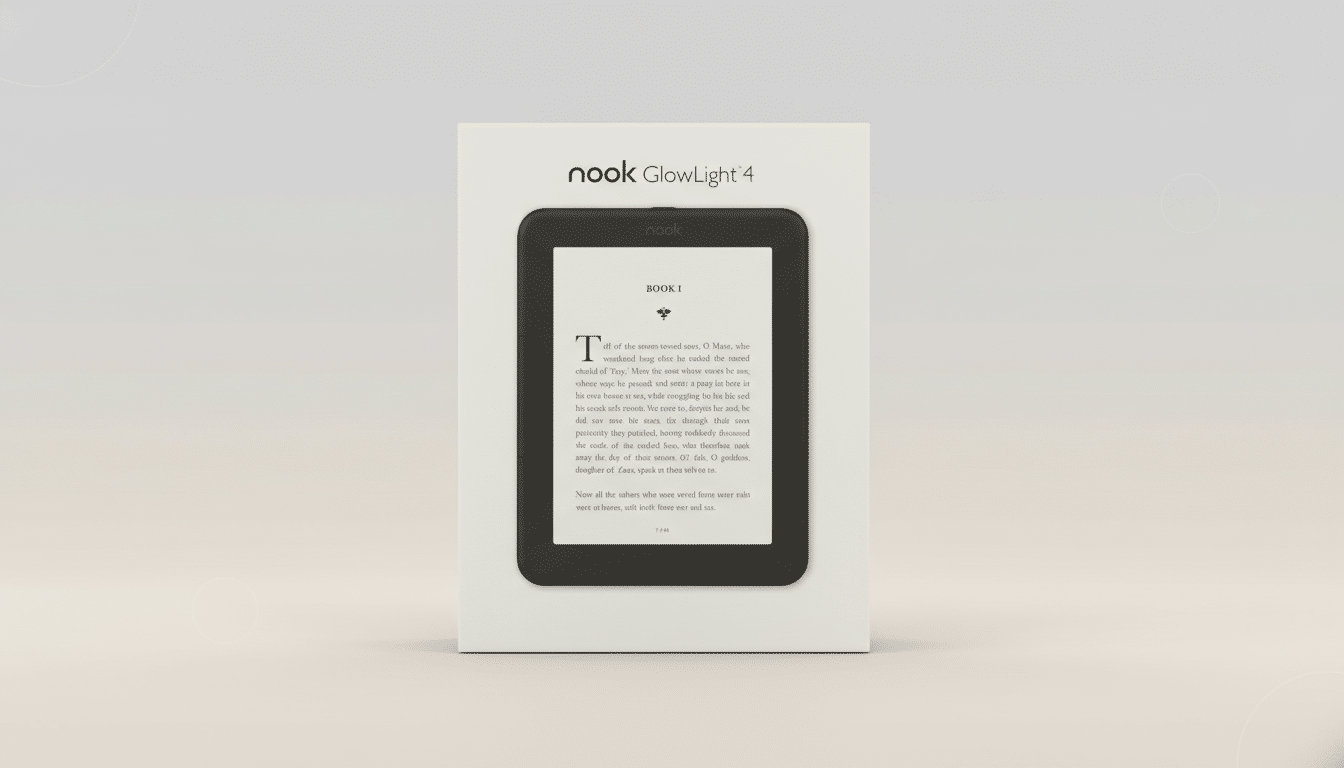
Barnes & Noble’s last dedicated e-readers were the GlowLight 4 and the larger GlowLight 4 Plus, both with sharp 300ppi E Ink panels, warm front lighting, and physical page-turn buttons—features that matter to heavy readers. The 4 Plus added waterproofing and Bluetooth support for audiobooks, rounding out a thoughtful, book-first design.
E Ink remains the preferred choice for sustained reading because it dramatically reduces eye strain and sips power; weeks of battery life isn’t marketing spin; it’s the format’s defining advantage. That’s why the absence of a fresh GlowLight is notable. Rumors have circulated about a next-gen E Ink refresh, potentially even exploring color e-paper or faster internals, but leadership changes around NOOK hardware have made timelines murky.
There’s also competitive pressure. Kobo has leaned into color E Ink options using E Ink’s Kaleido technology, and premium E Ink makers like Onyx Boox have shown what faster processors and stylus features can do for note-taking and annotation. Amazon, for its part, built momentum with Kindle Paperwhite’s readability and the larger Kindle Scribe for pen input. In that context, a new LCD from Barnes & Noble feels like a side quest, not the main storyline.
How It Stacks Up Against Rival Tablets and E-readers
At $149.99, the NOOK Reading Tablet lands in the same neighborhood as value Android slates like Samsung’s compact Tab A-series and Fire-branded tablets from Amazon. The headline advantage here is Android 15 with the Play Store, plus microSD—conveniences that make it more open than Fire OS devices and more modern than many budget alternatives.
Against dedicated readers, however, it’s a different story. The Kindle Paperwhite and Kobo’s midrange E Ink models deliver razor-sharp text, adjustable warmth, and far superior endurance. For readers who primarily consume novels, essays, and fan fiction, that experience still wins. Where the new NOOK makes sense is in hybrid use: a device for graphic novels, web reading, kids’ picture books, and casual video, with the flexibility to install any reading app you prefer.
One more nuance: color. While LCD has always had the edge here, color E Ink has matured enough to make illustrated content viable on dedicated readers—without sacrificing the paper-like look. If Barnes & Noble intends to keep serious readers engaged, exploring a color GlowLight or a faster monochrome model with modern comfort features would be a clear signal of commitment.
What to Watch Next from Barnes & Noble and NOOK
The new NOOK Reading Tablet is a sensible, competitively priced addition for casual reading and media, but it doesn’t answer the most loyal customers’ ask. The “right” upgrade for that crowd looks like this: a speedy 300ppi E Ink GlowLight with quicker page turns, refined warm lighting, waterproofing, Bluetooth, robust note-taking and annotation support, and—if Barnes & Noble wants to leapfrog rivals—a color option done right.
Until then, this launch reads as a strategic placeholder. It broadens NOOK’s reach and bumps the platform’s relevance in the sub-$200 tablet space, yet it leaves the core e-reader story unfinished. For many book-first buyers, patience remains the smartest play.
