


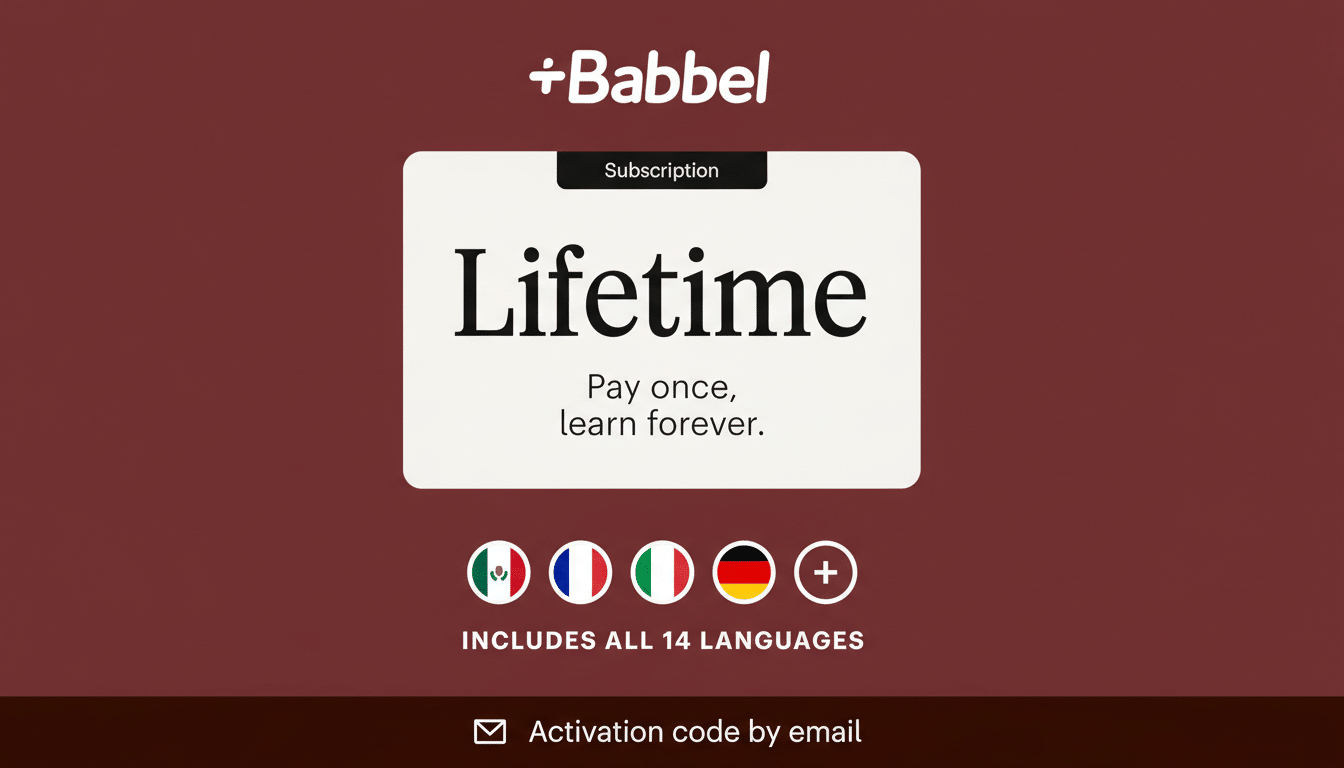
If you want language learning to stick, treat it like a long-term habit rather than a sprint. That’s where Babbel’s lifetime access option becomes compelling: it removes the monthly meter, folds in 14 languages under one roof, and turns consistent practice into a low-friction routine you can actually sustain.
Why Babbel Fits a Long-Term Language Strategy
Babbel’s core design is built for repetition without burnout. Lessons run about 10 to 15 minutes, slotting into commutes or coffee breaks. Instead of front-loading grammar, it leads with practical phrases and everyday dialogues, so you can use new language in real scenarios—ordering at a cafe, asking directions, or chatting with colleagues.
Courses are created by more than 100 linguists and map to the Common European Framework of Reference (CEFR), giving you a clear path from A1 basics through intermediate proficiency. Built-in speech recognition nudges your pronunciation toward native patterns, and spaced-repetition review sessions surface words right before you’re likely to forget them—an approach supported by decades of cognitive science on the forgetting curve and distributed practice.
The Case for Lifetime Access to Babbel’s Languages
Most learners underestimate how long it takes to become conversationally agile. Proficiency grows in layers, and you’ll cycle through plateaus along the way. A lifetime plan acknowledges that reality. It gives you room to pivot languages—say, from Spanish to German for work—without juggling multiple subscriptions. It also encourages a healthier cadence: steady, low-pressure sessions rather than guilt-driven cramming before a trip.
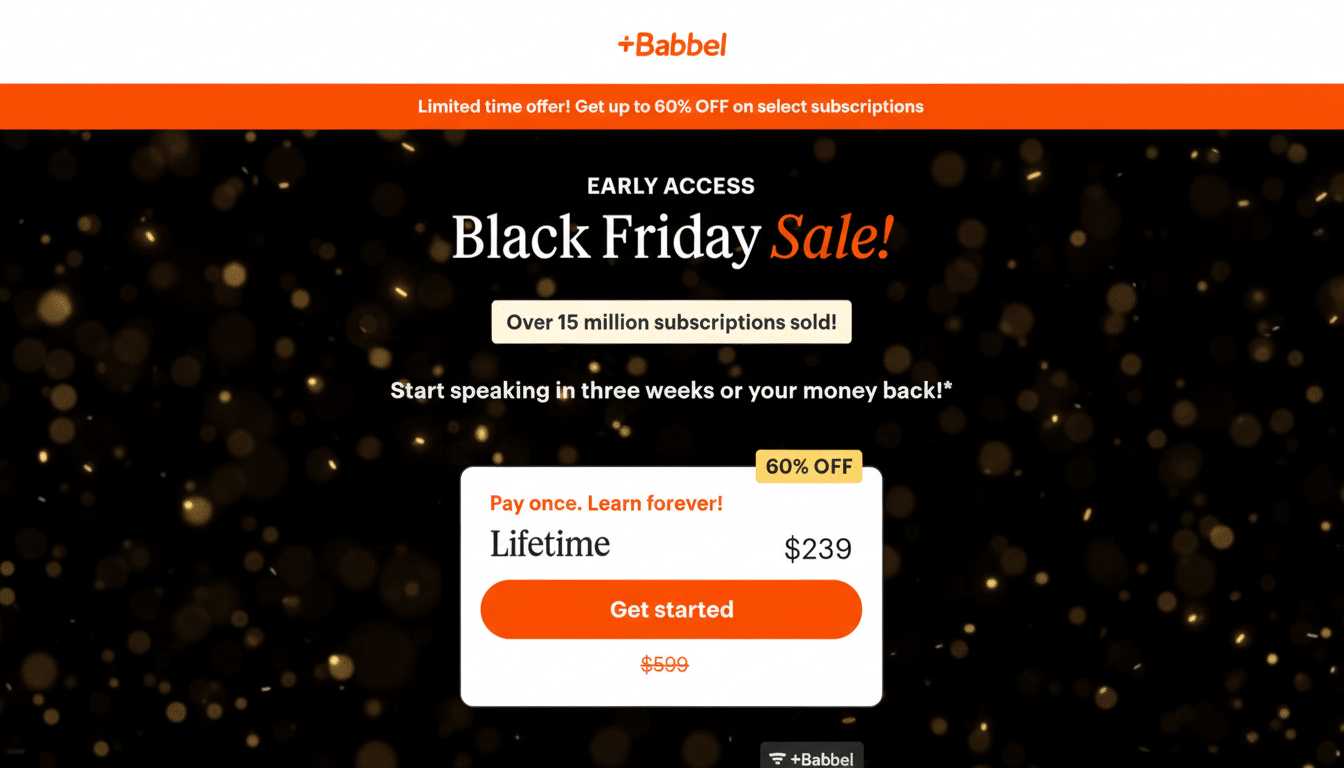
From a cost perspective, frequent learners can save substantially. Consider that a typical monthly plan can run into the hundreds over a few years. A one-time license turns that open-ended expense into a fixed investment, especially if you anticipate revisiting languages across different life stages—travel, career shifts, or supporting kids in school.
What You Actually Get With Lifetime Babbel Access
Babbel’s lifetime option unlocks all 14 languages—among them Spanish, French, German, Italian, Portuguese, Swedish, Turkish, and more—so you can move freely if priorities change. Beyond core lessons, you’ll find review drills, culture snippets, listening activities, and curated paths for travel or business scenarios. The app’s Review feature is particularly valuable long term: it tracks your personal error patterns and schedules refreshers, helping memory consolidate over time.
For pronunciation, the app’s voice feedback is immediate and forgiving, great for building muscle memory before you ever step into a live conversation. And while Babbel is self-paced, its scope and structure keep you anchored to measurable milestones, which is crucial when motivation inevitably ebbs.
Evidence That Lifetime Language Learning Pays Off
Demand for multilingual talent is not a trend; it’s a labor reality. In research published by the American Council on the Teaching of Foreign Languages, 90% of U.S. employers reported relying on workers with language skills, 56% expected that need to grow, and 25% said they had lost business because of language gaps. That’s a tangible incentive to build and maintain proficiency, not just dabble before a vacation.
On the learning science side, spaced repetition and interleaving—both tactics embedded in Babbel’s design—have repeatedly shown gains for durable retention in academic studies. In practice, that means you’re less likely to memorize for a week and forget by the next. Over months and years, those small compounding wins are what turn a new language into a usable skill.
How to Turn Babbel Into a Sustainable Study Plan
Start with a concrete goal tied to a framework, such as reaching A2 for travel or B1 for work. Commit to a daily 10–15 minute session, then add two longer blocks each week for listening and speaking. Use the Review tab until error rates drop, and speak aloud during every lesson to train pronunciation and rhythm.
Layer in real-world exposure early: read a short news brief, watch a subtitled clip, or narrate daily tasks in your target language. Every two months, take a CEFR-aligned self-assessment to recalibrate your path. If you’re preparing for a credential like DELE (Spanish) or Goethe-Zertifikat (German), align Babbel’s grammar modules with official exam topic lists for focused progress.
Who Benefits Most From Lifetime Babbel Access
Professionals eyeing international roles, frequent travelers, and heritage learners rebuilding vocabulary all get outsized value. So do parents planning multi-year learning with kids: the ability to rotate among languages and revisit modules without new fees encourages consistent family study habits.
The bottom line is simple: proficiency rewards patience. By removing subscription churn and offering linguist-built courses across 14 languages, Babbel’s lifetime access makes it easier to stay in the game long enough to win it.
