


Audible is rolling out Read & Listen, a new feature that syncs Kindle ebooks with their matching audiobooks and highlights text in real time as professional narration plays. The move effectively brings Amazon’s long-running “immersion reading” concept into the Audible app itself, letting users fluidly jump between reading and listening—and even do both at once—without losing their place.
How Read & Listen Works in the Audible App
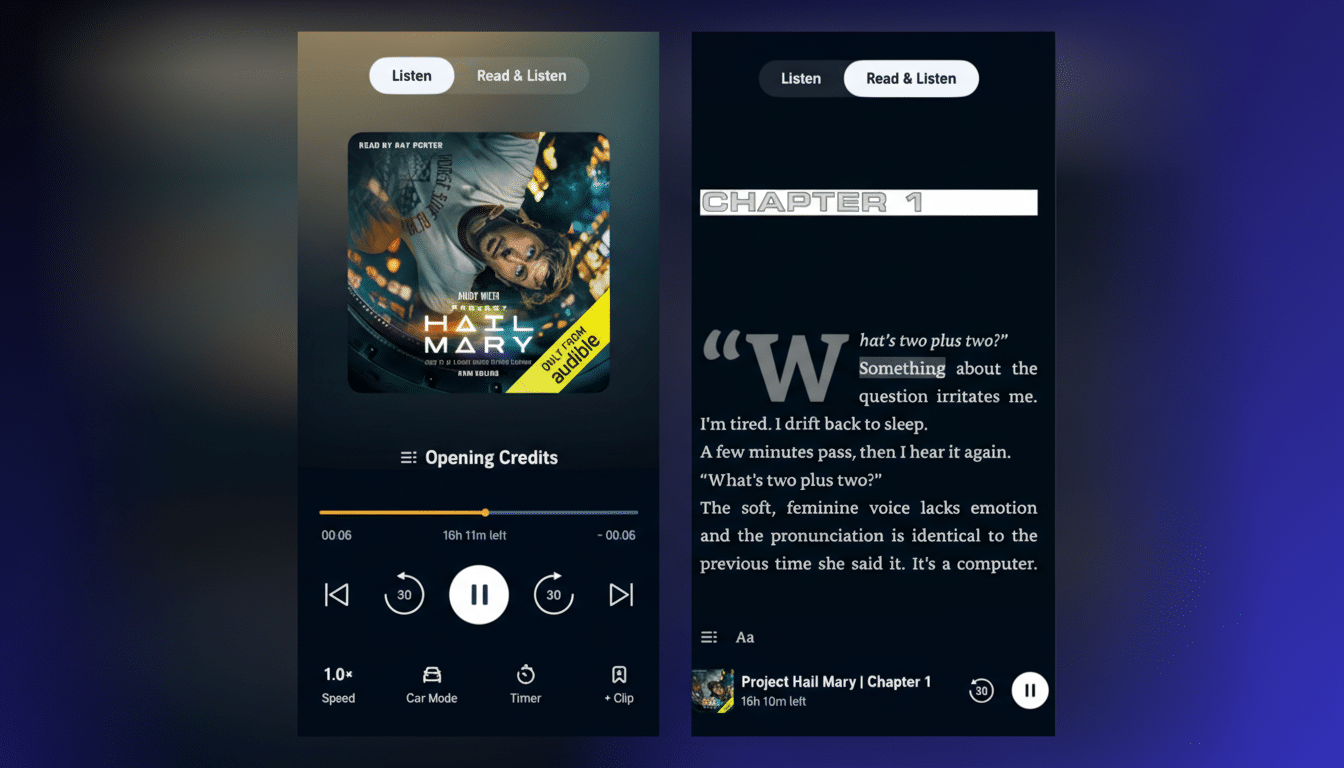
Readers who own both the Kindle ebook and the Audible audiobook will see a Read & Listen option on eligible titles inside the Audible app. Tap it, and the ebook text appears with synchronized highlighting that tracks the narrator’s cadence line by line. Stop the audio and the text stays put; pick up again on another device and your progress carries over through Amazon’s Whispersync technology.
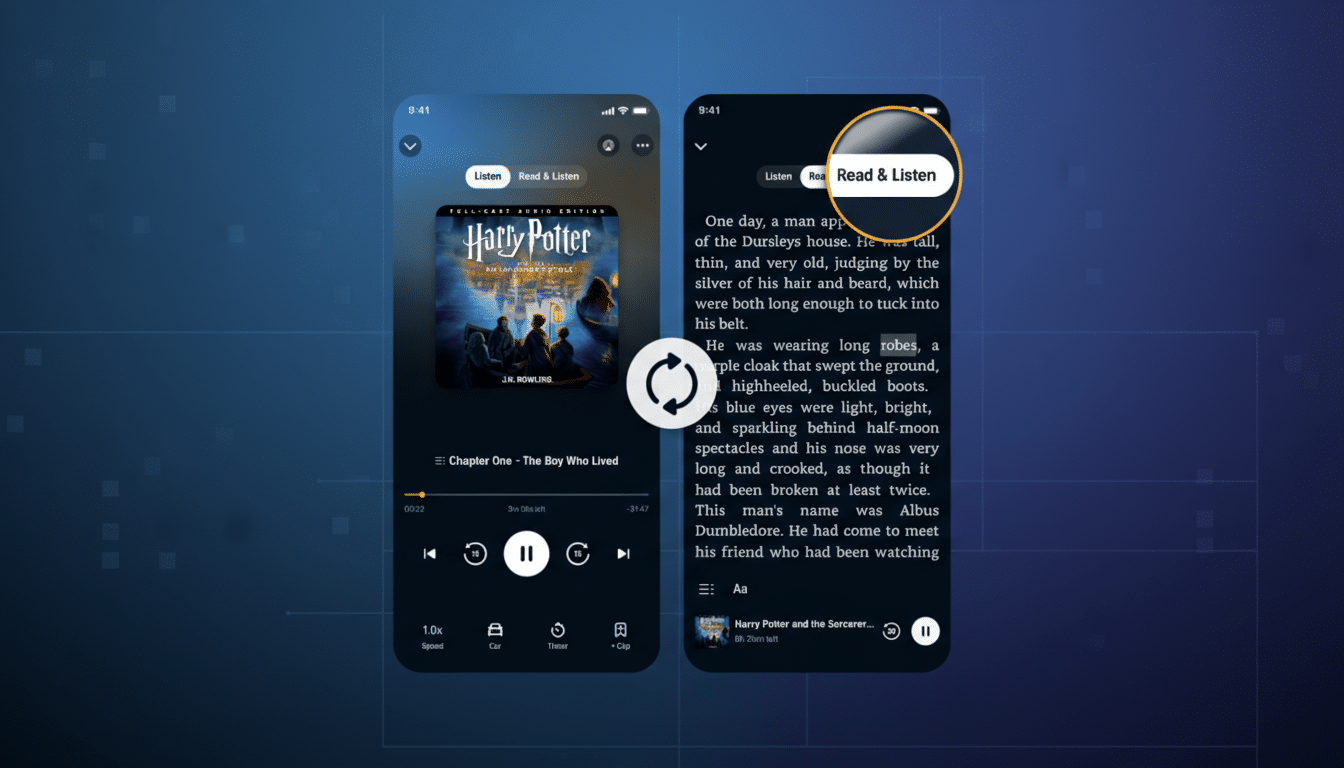
At launch, Audible says hundreds of thousands of titles support the feature across English, German, Spanish, Italian, and French. Availability starts in the U.S., with the U.K., Australia, and Germany next in line. To make discovery painless, Audible automatically detects which books in your Kindle library have a matching audiobook and surfaces bundle options when they exist.
You’ll still need to own both formats to enable the synchronized experience, but Audible will offer discounted audiobook add-ons for customers who already purchased the Kindle edition. Amazon also notes the rollout won’t alter publishers’ royalty calculations—a detail likely intended to reassure rights holders wary of new consumption modes.
Why Syncing Formats Matters for Readers and Learners
For many readers, life rarely fits the neat boundaries of a single format. Commuters listen on the train, students annotate at a desk, and parents squeeze in chapters on a smart speaker while making dinner. Read & Listen removes friction for all of them by letting attention shift without penalty—and by keeping a single, authoritative “last page read” across devices.
There are tangible comprehension benefits, too. Educators have long used read-along techniques to build fluency and vocabulary, and Audible cites both industry research and its internal data to argue that pairing audio with text improves focus. The company says customers who combine formats consume nearly twice as much content per month as audiobook-only listeners—a powerful signal that multimodal reading deepens engagement.
Pronunciation is another practical win. Fantasy epics, historical nonfiction, and translated works often present tongue-twisting names. Having a skilled narrator model the words while the spelling sits on the screen reduces guesswork and speeds recall, a boon for language learners and anyone tackling dense material.
A Familiar Idea With New Reach Inside Audible
Amazon pioneered the concept more than a decade ago with Immersion Reading on Kindle Fire tablets and Whispersync for Voice inside the Kindle app. The difference now is venue: by embedding text into the audio-first Audible app, Amazon places reading minutes where its most engaged audio customers already spend time. That subtle shift could lift session lengths, daily return rates, and—crucially—cross-format conversion.
The strategic timing is hard to miss. Spotify has been pressing into audiobooks and recently extended its ambitions to physical book sales paired with progress sync between listening and offline reading. Audible’s update is a reminder that Amazon still controls the deepest end-to-end catalog and the tightest linkage between ebook and audio ecosystems.
The broader market backdrop favors the move. According to the Audio Publishers Association, U.S. audiobook revenue rose 9% in 2023, reaching roughly $2.1 billion, with unit sales up 7%. As audio grows and ebooks remain steady, features that blur the line between formats don’t just please power users; they create bigger baskets for publishers and narrators.
Implications For Publishers And Authors Worldwide
Because rights vary by territory and language, not every title will qualify on day one. Still, the “hundreds of thousands” figure suggests wide coverage across frontlist and backlist. If discounted add-ons nudge ebook buyers to pick up the audio, authors could see incremental revenue without cannibalizing print or digital text sales.
Royalty neutrality also matters. Keeping existing payment structures intact lowers the barrier for participation and avoids renegotiation snags that often stall new features. For narrators—a cornerstone of audiobook quality—the feature should increase discoverability as more readers sample the audio while skimming the text.
Real-World Use Cases for Read & Listen Across Devices
A graduate student can annotate a Kindle ebook at home, switch to audio on a walk, and return to the exact paragraph later without hunting. A bilingual learner can slow the narration, watch the words light up, and accelerate through familiar sections. A fantasy fan can hear a cast pronounce characters consistently while reading along to lock in spelling.
Yes, Alexa can read many Kindle titles aloud, but text-to-speech still lacks the nuance of a trained performer. Read & Listen leans into what makes audiobooks compelling—tone, pacing, and character—and fuses it with the precision and scannability of text.
Bottom Line on Audible’s New Read & Listen Integration
Read & Listen is less a flashy novelty than a thoughtful integration: it unifies two entrenched habits into one continuous experience. For Audible, it’s a retention play and a cross-sell engine. For readers, it’s simply the path of least resistance to finish more books with better recall. And for a publishing industry chasing time and attention, that may be the most important sync of all.
