


AST SpaceMobile deployed its most powerful megarocket, a direct-to-cell satellite, into low Earth orbit — the next generation of a BlueBird that is now being used for the launch phase of this company’s scaled deployment to connect regular smartphones from space.
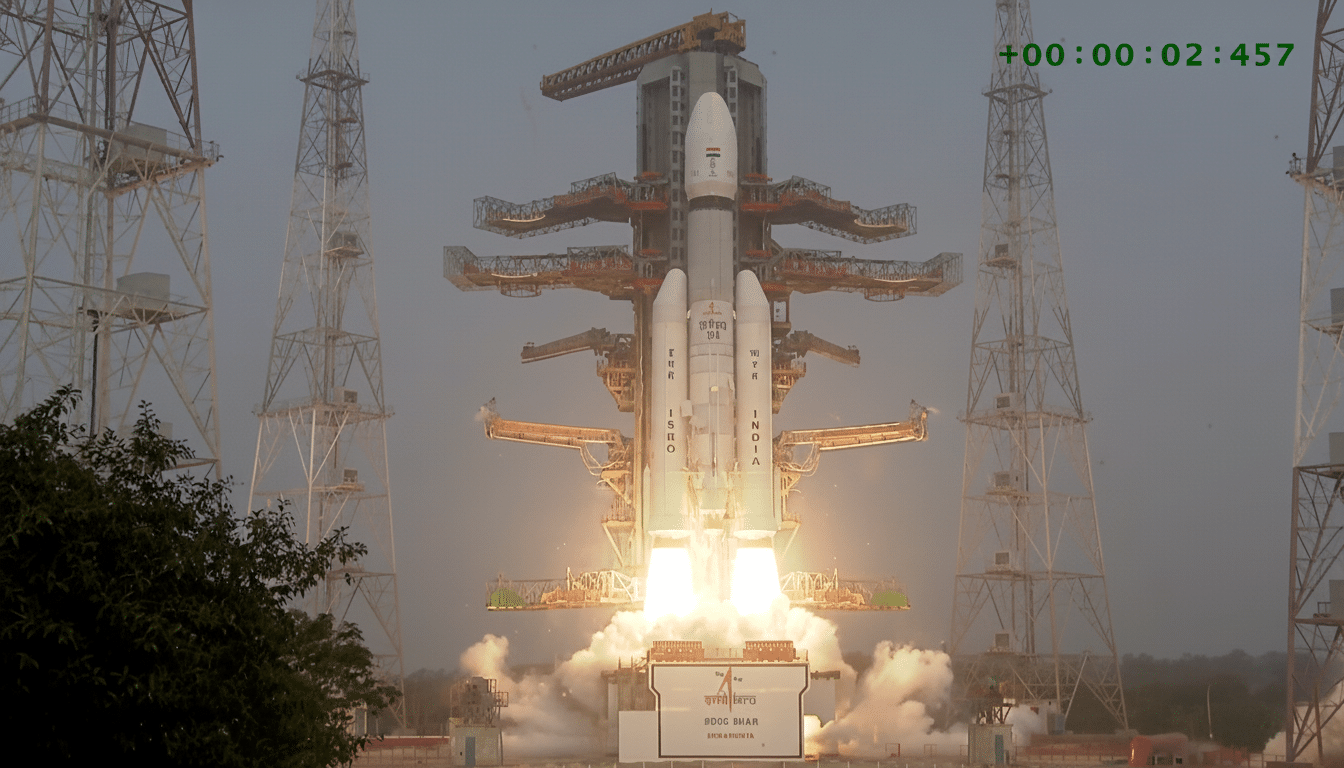
The spacecraft, named BlueBird 6 and from the Block 2 series, launched on India’s LVM3 vehicle from Satish Dhawan Space Centre. The technology is based on utilizing licensed cellular spectrum and unmodified phones, to provide broadband access in cooperation with mobile operators.
What BlueBird 6 Adds to Direct-to-Device
AST SpaceMobile says BlueBird 6 unfurls what it describes as the largest commercial communications array ever flown in low Earth orbit, at almost 2,400 square feet. That gargantuan maw is designed to form thousands of independent cells from orbit, giving the link budget a boost high enough that standard LTE and 5G waveforms can reach ordinary phones with billions of antennas spinning somewhere in the Earth’s lower atmosphere.
The firm aims for enabling more than 20,000 cells per satellite that will be able to provide up to 120 Mbps of bandwidth per cell serving messaging, voice and data. The spacecraft was inserted into an approximately 323-mile orbit and will be fitted out, the payload checked, the array deployed and on-orbit calibration commenced with carrier partners.
AST mentions full-sustained capacity is unlocked based on a new custom ASIC update for the on-board processing system, which is planned to appear on a future BlueBird once integration milestones have been reached.
Even before that chip gets to BlueBird 6, it’s set up to test multi-cell service, mobility and handovers across large geographical regions.
Coverage plans and launch cadence for BlueBird 6
The company has told investors it is aiming for a long-term constellation ramp in the dozens of satellites quickly, which internal planning, seen by SpaceNews in 2019, shows around 40 or so are needed to reach an initial nationwide service area in the United States.
That footprint is most likely to accommodate the likes of AT&T and Verizon under current terms, for messaging initially with voice and more-generalized data as capacity grows.
To expedite deployment, AST SpaceMobile plans to employ higher-capacity launch vehicles. SpaceX’s Falcon 9, executives have said, has room for three of the next-gen BlueBirds per flight, while Blue Origin’s New Glenn will loft as many as eight at once — boosting buildout economics significantly if schedules hold.
India’s heavy-lift assist with LVM3 launch vehicle
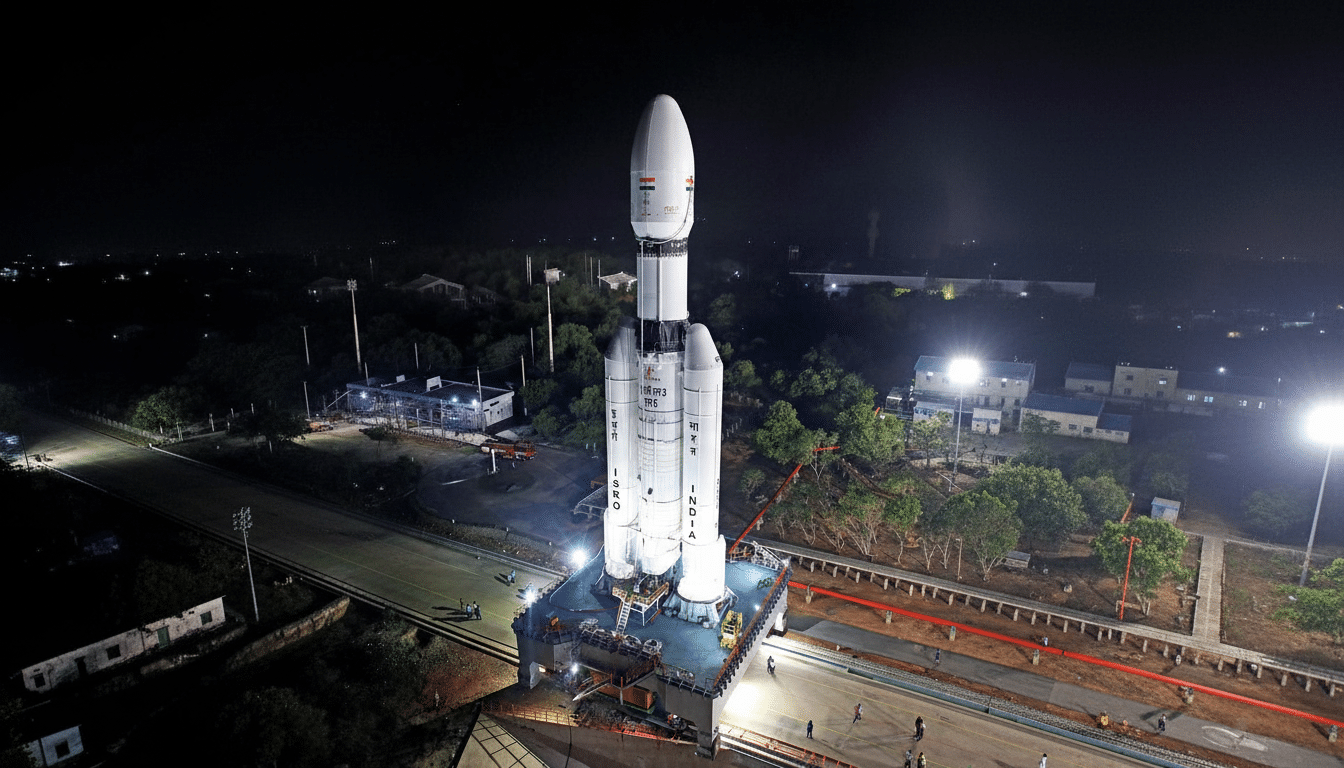
India’s LVM3 provided the ride to orbit as part of its increasing presence in commercial launch. Indian officials described BlueBird 6 as the heaviest satellite ever launched from Indian territory, a fact which corresponds to the spacecraft’s large number of antennas and its high power requirements. ISRO’s heavy lifter is also critical for the country’s human spaceflight programme.
Competitive context in direct-to-cell satellite race
AST SpaceMobile is competing with SpaceX’s Starlink, which has already launched hundreds of satellites with direct-to-cell payloads and is partnering with T-Mobile and other mobile carriers overseas. Starlink has the edge in total numbers but AST is betting on fewer, larger spacecraft that can form numerous, terrestrial-like cells and plug into partner networks using licensed spectrum.
Analysts from the likes of Quilty Space and Morgan Stanley have said AST’s promise rests on execution: steady launch cadence, swift array deployments, as well as proof that continued multi-megabit service to regular handsets can be delivered at scale. Should BlueBird 6 prove those claims out and be followed up shortly by other spacecraft, competitive dynamics could change in markets where there are large coverage gaps.
Why direct-to-cell connectivity matters for users
Direct-to-cell service is designed to wipe out dead zones for hikers or motorists, maritime users and communities beyond the reach of fiber or tower networks — and be a hardener when ground infrastructure is down during disasters. Because the service is aimed at unmodified phones, you don’t need satellite messengers or special antennas.
AST had previously conducted field trials showing two-way voice and data connectivity to unaltered smartphones on standard networks using its older test platform, in collaboration with Vodafone, AT&T, Nokia and others. BlueBird 6 is designed to be the first Block 2 craft big enough to take those demonstrations and turn them into repeatable service, conforming with 3GPP Non-Terrestrial Networks specifications for LTE and 5G.
What to watch next for AST SpaceMobile’s BlueBird 6
Key milestones include the full deployment of arrays, first call and data sessions served over partner spectrum, mobility and handover tests between satellite beams passed, and performance metrics including:
- Call setup success
- Spectral efficiency
- Latency
Regulatory advancements with the FCC and international bodies, roaming policies and emergency-service integration will also determine how fast consumers see true coverage.
For now, BlueBird 6 represents a concrete lead asset for AST SpaceMobile: a flagship, power-rich satellite engineered to function as an outsized cell tower in the sky.
In the coming launches, we will see the extent to which the company can turn an arresting piece of hardware into a robust, carrier-grade network that connects with the billions of phones already in people’s pockets.
