


NASA is taking the Space Launch System through a full dress rehearsal with real propellant on board, and the agency is inviting the public to watch it unfold live. The wet dress rehearsal is a high-stakes, end-to-end countdown designed to validate the rocket, ground systems, and launch team before the first crewed Artemis mission around the moon.
What the Wet Dress Rehearsal Proves During Countdown
A wet dress rehearsal mirrors launch day without the ignition. Controllers at Kennedy Space Center’s Launch Control Center roll through fueling, “go/no-go” polls, terminal count procedures, and scrub operations. For Artemis 2, teams will load roughly 700,000 gallons of super-cold liquid hydrogen and liquid oxygen into the core stage and upper stage, then drain the tanks to rehearse a safe stand-down.
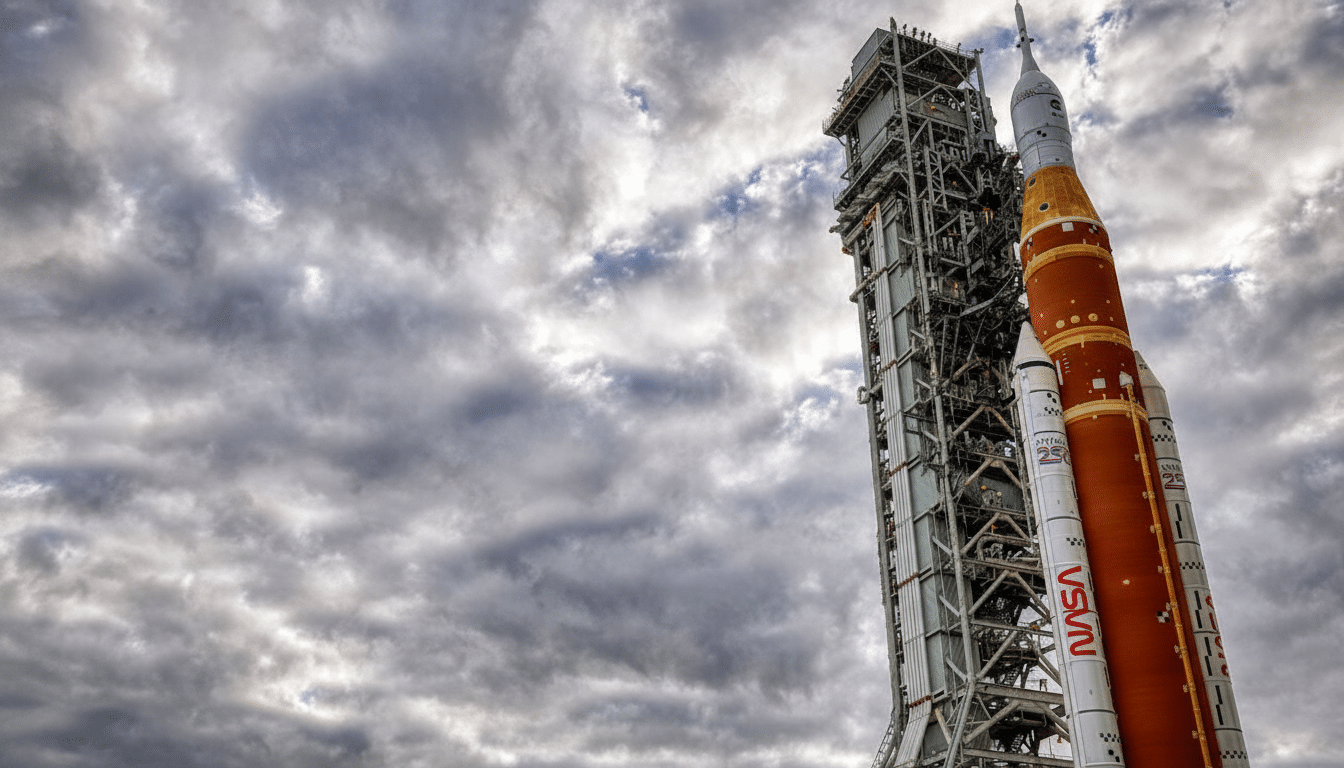
This isn’t a paper exercise. Cryogenic propellants are unforgiving, chilling hardware to about −423°F for hydrogen and creating pressure swings as tanks chill, fill, and vent. These conditions reveal weak points that room-temperature tests miss—especially around umbilicals and quick-disconnect fittings that must seal perfectly while flexing with the rocket.
Why This Rehearsal Matters For Artemis 2
NASA’s first attempt at this rehearsal identified hydrogen flow restrictions and minor leaks, a familiar challenge from the Artemis 1 campaign. Engineers swapped a ground-side filter and reverified lines after a targeted partial fueling run helped localize the issue. The objective now is to demonstrate stable “fast fill,” transition to “topping” and “replenish,” and maintain leak rates within strict constraints.
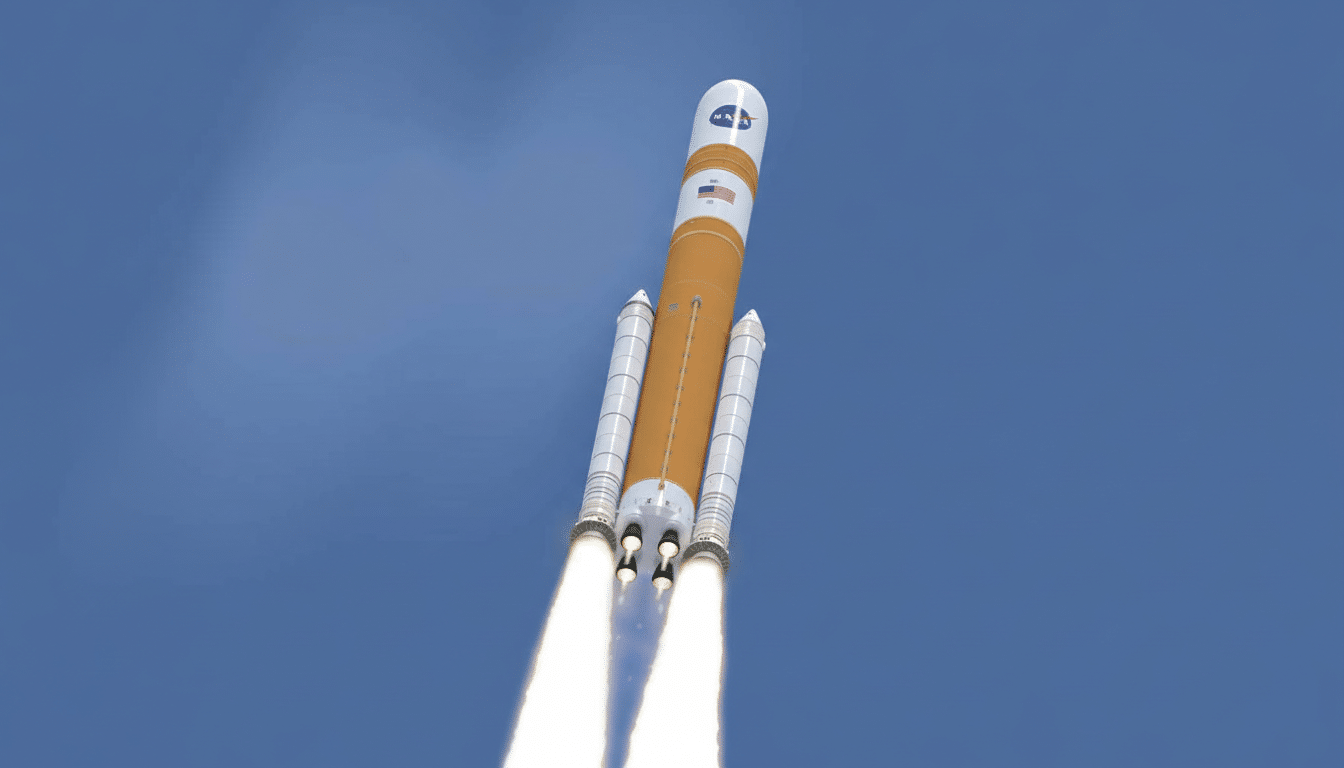
SLS is a complex stack: a Boeing-built core stage powered by four RS-25 engines from Aerojet Rocketdyne, twin five-segment solid boosters from Northrop Grumman, and the Orion spacecraft on top. At liftoff the rocket will produce about 8.8 million pounds of thrust, but it all depends on clean, repeatable cryo operations. Artemis program leaders have emphasized that characterizing how this specific vehicle chills, breathes, and vents is essential before committing a crew.
The stakes are clear. Artemis 2 will send Commander Reid Wiseman, pilot Victor Glover, mission specialist Christina Hammock Koch, and the Canadian Space Agency’s Jeremy Hansen on a roughly 10‑day mission to loop around the moon, testing Orion’s life-support, power, and navigation systems on a deep-space profile. Proving the ground-to-rocket interface now directly reduces risk for that flight.
How to Watch the Artemis 2 Wet Dress Rehearsal Livestream
NASA is providing a continuous live video feed during fueling and countdown operations, with expanded camera views from Launch Complex 39B, close-up shots of umbilicals, and commentary from the launch team. Expect periodic callouts from the firing room and status graphics indicating tank levels, temperatures, and pressure rates.
You’ll hear key milestones: “Core stage chilldown,” “engine section purge,” “go for LH2 fast fill,” and “stable replenish.” Keep an ear out for hold points and recycling of the clock, which simulate real launch-day delays due to weather or technical items. NASA will also post running updates through its Artemis channels so viewers can track decisions and test objectives in near real time.
What the Teams Will Practice in Terminal Count Drills
Controllers plan to run the critical final stretch—known as the terminal count—multiple times. They will execute holds and restarts near the last 90 seconds and again closer to the half-minute mark, then recycle the timeline and repeat. This trains the team to respond crisply to late-breaking knobs like upper-level winds, range notices, or sensor rechecks.
Beyond the firing room, an Orion closeout crew will practice pad operations, including ingress procedures and hatch closures, using the same choreography they’ll employ with astronauts on board. The exercise confirms timelines, tool staging, and pad egress routes under countdown pressure.
Success criteria include leak rates within limits at all temperature plateaus, stable tank pressurization, clean transitions between fill phases, nominal venting behavior, and a controlled drain. Just as important is the human performance: voice discipline on the loops, tight procedure execution, and clear decision authority throughout the countdown.
What Comes After a Clean Rehearsal and Data Review Cycle
When the rehearsal ends, engineers will comb through terabytes of data—valve positions, temperature gradients, structural deflection, and ground-system telemetry—to verify margins. Only after that review will mission leaders consider setting a formal launch date. If something needs refinement, the team can address it now rather than in the final hours before liftoff.
Hydrogen may be notoriously finicky, but it remains unmatched for high-performance rockets. Demonstrating that SLS and its ground systems can tame it repeatedly is the last big gate before Artemis 2 sends a crew farther from Earth than any humans in a generation. For spaceflight watchers, this rehearsal is more than a test—it’s the closest look yet at launch day, streamed live from America’s lunar pad.
