


Apple has opened the door to “vibe coding” in its IDE. With Xcode 26.3, the company is adding native support for Anthropic’s Claude Code and OpenAI’s Codex, two of the most widely used agentic coding assistants. The release candidate is available now to Apple Developer Program members, with an App Store rollout coming soon. Apple’s Susan Prescott says the integrations are meant to “supercharge productivity and creativity, streamlining the development workflow.”
What Xcode 26.3 Actually Adds to Developer Workflows
In practical terms, developers can pair-program inside Xcode using Claude Code or Codex to generate Swift and SwiftUI scaffolding, explain unfamiliar APIs, refactor legacy Objective-C, and draft unit tests and UI tests across multiple files. Because these tools are “agentic,” they can propose coordinated changes—updating a view, wiring a ViewModel, and modifying entitlements in a single guided flow—while the developer stays in control via diffs and approvals.
- What Xcode 26.3 Actually Adds to Developer Workflows
- Why Apple Is Embracing Third‑Party AI in Xcode 26.3
- Claude Code Versus Codex Inside Xcode: Key Differences
- Productivity Gains With Guardrails for Apple Developers
- How to Get Started with Claude Code and Codex in Xcode
- The Bigger Picture for Apple Developers Using Xcode
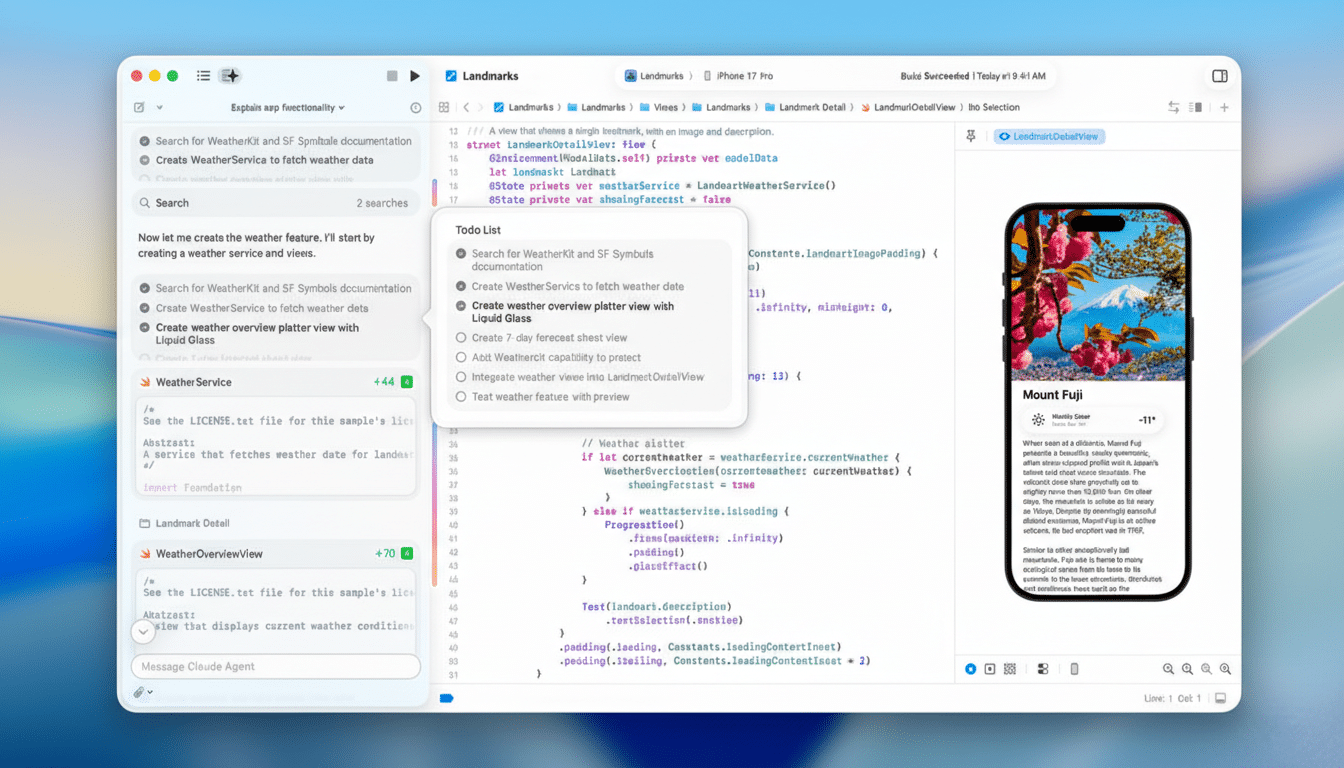
This is less about autocomplete and more about orchestrating end-to-end tasks. Think of requesting “build a settings screen with iCloud sync and accessibility presets,” getting a concrete implementation, and then asking the agent to write snapshot tests and a migration for existing user defaults.
Why Apple Is Embracing Third‑Party AI in Xcode 26.3
Apple previewed a homegrown Swift coding assistant at WWDC 2024, but it never shipped. By mid‑2025, Bloomberg reported Apple had pivoted to work with Anthropic on an Xcode-integrated tool, and industry chatter highlighted developer frustration as months slipped by. The new integrations are a pragmatic acknowledgment that the fastest path to value is partnering with proven models. It mirrors Apple’s broader AI posture, where Google’s Gemini is powering parts of the company’s consumer-facing intelligence features.
The strategic upside is clear: ship capabilities developers are already adopting elsewhere, keep them inside Xcode, and reduce context‑switching to competing tools.
Claude Code Versus Codex Inside Xcode: Key Differences
Claude Code brings Anthropic’s long-context strengths and a conservative, instruction‑following style geared toward safety and explainability. It’s well-suited to large Swift packages, codebase audits, and policy‑aware assistance. OpenAI’s Codex, meanwhile, arrives alongside a standalone macOS app (with Windows in the works) aimed at developers who want an assistant beyond ChatGPT. OpenAI says the app can span tasks from “targeted edits” to supervising “teams of agents” across design, build, ship, and maintenance.
To seed adoption, OpenAI is offering Codex access free for a limited time to ChatGPT Free and Go users, and it is doubling rate limits for Plus, Pro, Business, Enterprise, and Edu tiers. Expect aggressive usage from teams that have already standardized on OpenAI tooling elsewhere in their stack.
Real-world examples: both agents can migrate Combine pipelines to async/await, translate UIKit code to SwiftUI, or generate App Intents for Siri and Shortcuts. They also help with provisioning profiles, StoreKit 2 receipts, and privacy manifests—areas where even seasoned developers appreciate a second brain.
Productivity Gains With Guardrails for Apple Developers
AI coding assistants are not theoretical boosts. GitHub’s 2023 research found developers completed tasks 55% faster with AI help, and follow‑up surveys reported higher satisfaction and lower cognitive load for boilerplate work. In mobile app development, the leverage compounds: faster prototyping shortens design loops, and automated test generation catches regressions earlier—key advantages when shipping to multiple Apple platforms.
But the fine print matters. Agents can hallucinate APIs or misuse entitlements. Teams should enforce human‑in‑the‑loop reviews, run static analysis and unit tests on all AI‑authored code, and maintain SBOMs to track any third‑party snippets suggested by the models. Apple’s review guidelines ultimately measure shipped behavior, not author intent; verification is non‑negotiable.
How to Get Started with Claude Code and Codex in Xcode
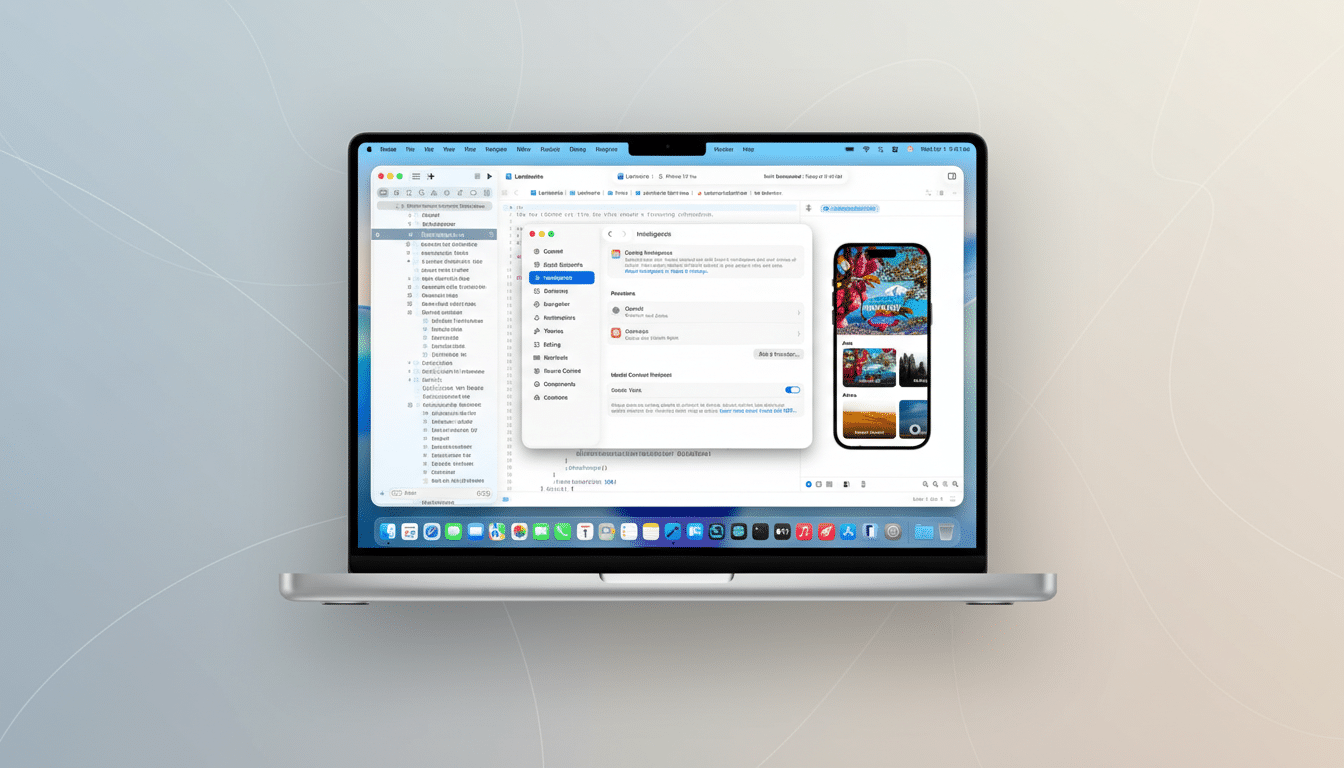
Developers can install the Xcode 26.3 release candidate from the Apple Developer portal, then select Claude Code or Codex as the assistant within Xcode’s settings. You’ll authenticate with your Anthropic or OpenAI account and can typically scope the assistant to the active workspace. Best practice is to enable project‑level controls: restrict write actions to explicit files, require diff approval for multi‑file edits, and log agent suggestions for auditability.
For teams, create a playbook: which tasks are agent‑first (e.g., test stubs, localization keys, documentation), which are human‑first (security‑sensitive crypto, payment flows), and how to escalate from single‑agent edits to broader refactors. Tie this into CI so every AI‑assisted change passes the same gates as human code.
The Bigger Picture for Apple Developers Using Xcode
By bringing Claude Code and Codex into Xcode, Apple is normalizing agentic workflows at the heart of its app ecosystem. It’s a win for velocity—less time hunting forum threads, more time shaping product. It’s also a cultural shift: code becomes a conversation, and the IDE becomes a cockpit for supervising agents rather than a blank canvas.
The message to developers is straightforward: the tools you’ve been testing on the side now live where you ship. And as Apple refines these integrations, expect tighter hooks into SwiftUI previews, Instruments, and TestFlight—turning “vibe coding” from a novelty into a reliable part of the Apple app lifecycle.
