


Apple is reaching out to Android households by bringing Google Cast support to its Apple TV app for Android, while Netflix members decide that they’re just not doing that anymore. It’s also a rare truce between platforms and is likely to change viewing behavior in living rooms centered around Chromecast-enabled TVs and soundbars.
Why Apple Is Adopting Cast Support on Android Now
Google Cast is one of the easiest ways to throw video from a phone to the largest screen in the house, and it comes built into millions of television sets from companies like Sony, TCL, Hisense and Vizio. Supporting Cast directly on its Android app sends Apple’s strongest signal yet that it has a greater issue to be solved than reinforced ecosystem walls. It’s reminiscent of how Apple handled Apple Music for Android, adding Chromecast support years ago to meet listeners where they are.
The timing is no accident. By one estimate, from StatCounter, Android runs on nearly 70 percent of the world’s smartphones and mobile-to-TV casting remains a default for many people who don’t orbit Apple hardware. As the streaming squeeze turns tighter, and the cost of acquiring customers climbs, greasing up Apple TV for Android users seems a pragmatic way to expand its addressable audience.
What It Means for Android and Chromecast Customers
For Android users, the new capability will allow users to use the Apple TV app on phones, tablets and even foldables as a full-fledged Cast remote. Begin playing a show on the device, tap the Cast icon and pass playback off to a compatible TV or Chromecast receiver while still having transport controls on the phone. Google Cast, which usually streams from the cloud rather than device mirroring, will also save battery life and enable higher-bitrate playback if supported by the app on your TV.
Still, this is more than just convenient — it greatly reduces the barrier to entry for families who are intermixing Android phones with living room hardware that isn’t Apple-branded. It also closes the gap with competitors whose Android apps have had similar Cast-friendly features for ages, closing a feature deficit that drove some viewers to plain-vanilla choices like YouTube or Prime Video when they wanted to share what was on the screen.
A Sharp Contrast With Netflix’s Strategy
It’s a stark divide along what is known as the Cast support line, with in-app Netflix Cast on one side and no in-app option to cast content once you’ve paid for your Netflix subscription.
Though Netflix has not explained its reasoning, the move is consistent with an industry-wide push to steer consumers into native TV apps, where providers have greater control over quality, ads and personalization. And yet the trade-off in consumer experience is difficult to overlook: thousands of posts on Reddit and X in recent weeks have bemoaned the disappearance of that Cast button, particularly for those households where casting — not wrestling with TV app logins — is used to watch what they want.
Apple is making the contrary bet. By stripping away friction on Android at the precise moment its most dominant competitor is adding it, Apple TV makes a case that it has now become the path of least resistance for some set of users — at least ones looking to start watching from their phones. In a market where streaming churn rates remain high and viewers rotate between services depending on marquee shows, even a slight boost in conversion counts.
The Competitive and Contextual Stakes for Apple TV
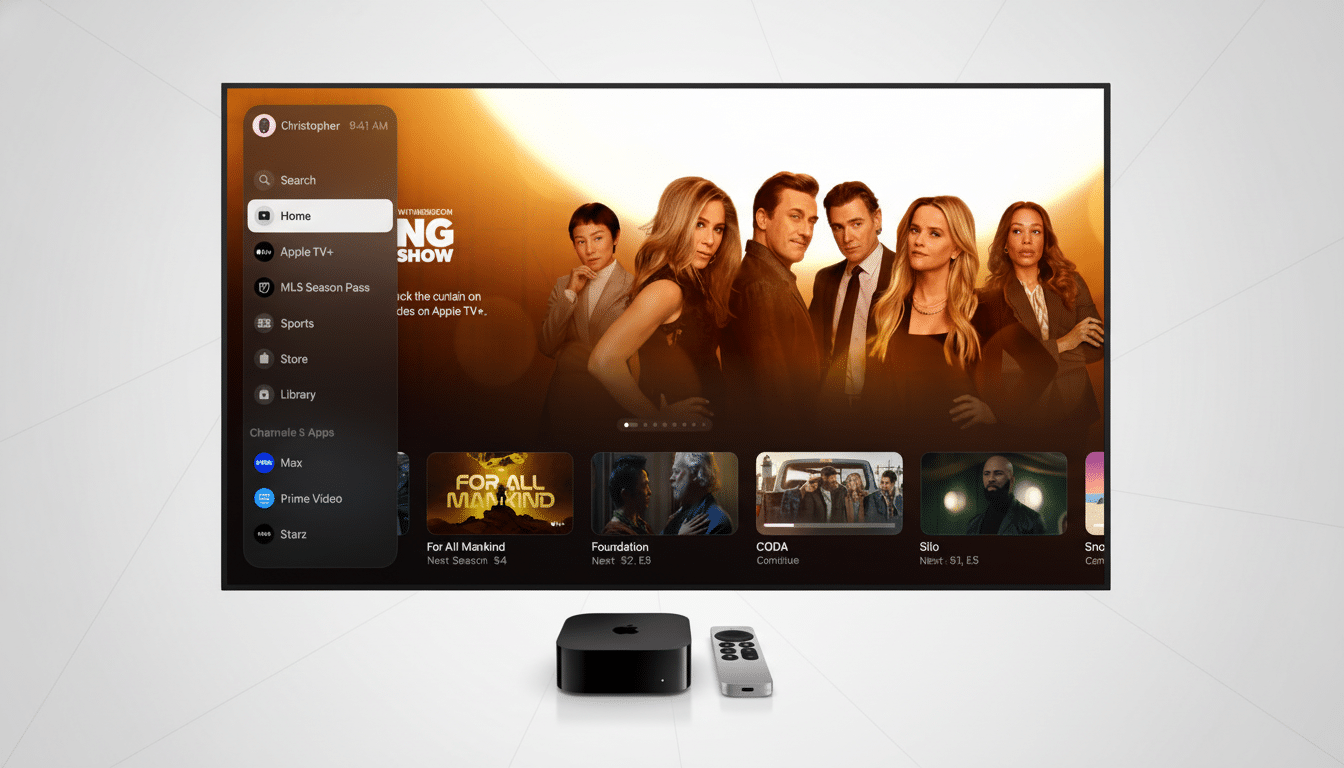
Streaming is now the preponderant way Americans watch TV, representing about 38–40 percent of overall TV usage in recent Nielsen “The Gauge” reports. In such an environment, the friction of distribution is time. Apple’s library is slimmer than those of older rivals, but punches above its weight with buzzy series like Severance, The Morning Show and Slow Horses and live sports standbys like Friday Night Baseball and Major League Soccer’s MLS Season Pass. High-visibility films like this summer’s F1 hit expand the funnel further.
The approach falls in line with Apple’s wider services playbook. Services continue to be a revenue-growth engine in Apple’s financials, and reaching beyond the base of hardware (whether it’s Roku, Fire TV, PlayStation, Xbox, now with Cast on Android) helps with steadying subscriber growth and engagement — without requiring a hardware purchase.
How Casting Compares With AirPlay in Mixed Homes
AirPlay and Google Cast tackle similar challenges differently. When it comes to AirPlay, in many cases this is merely mirroring or relaying streams that have been started via the device — perfect for an Apple-first home. Google Cast would normally hand off playback to the TV app and give back control of the phone, letting you do other things, as well as improving multi-user control in homes that may not have all the same platforms. “It makes living rooms more flexible and less siloed for mixed-device families to have both options available.”
How to Use Google Cast on Apple TV for Android
Installation is simple: just download the Apple TV app from Google Play on your Android device, then join it to the same Wi‑Fi network as a Cast-enabled television or Chromecast, open an episode or film and tap the Cast icon in the top-right corner.
Playback and navigation controls are still available on the phone, so, for instance, you can lock the screen or open another app without interrupting the stream.
The upshot where casting is concerned: as Netflix pulls back, Apple leans in. In a competitive market where a few taps can make the difference in what people watch next, Google Cast support for Android boosts Apple TV’s usability at just the right time, and by one more route to sway folks who do not yet belong to the Apple hardware ecosystem.
