


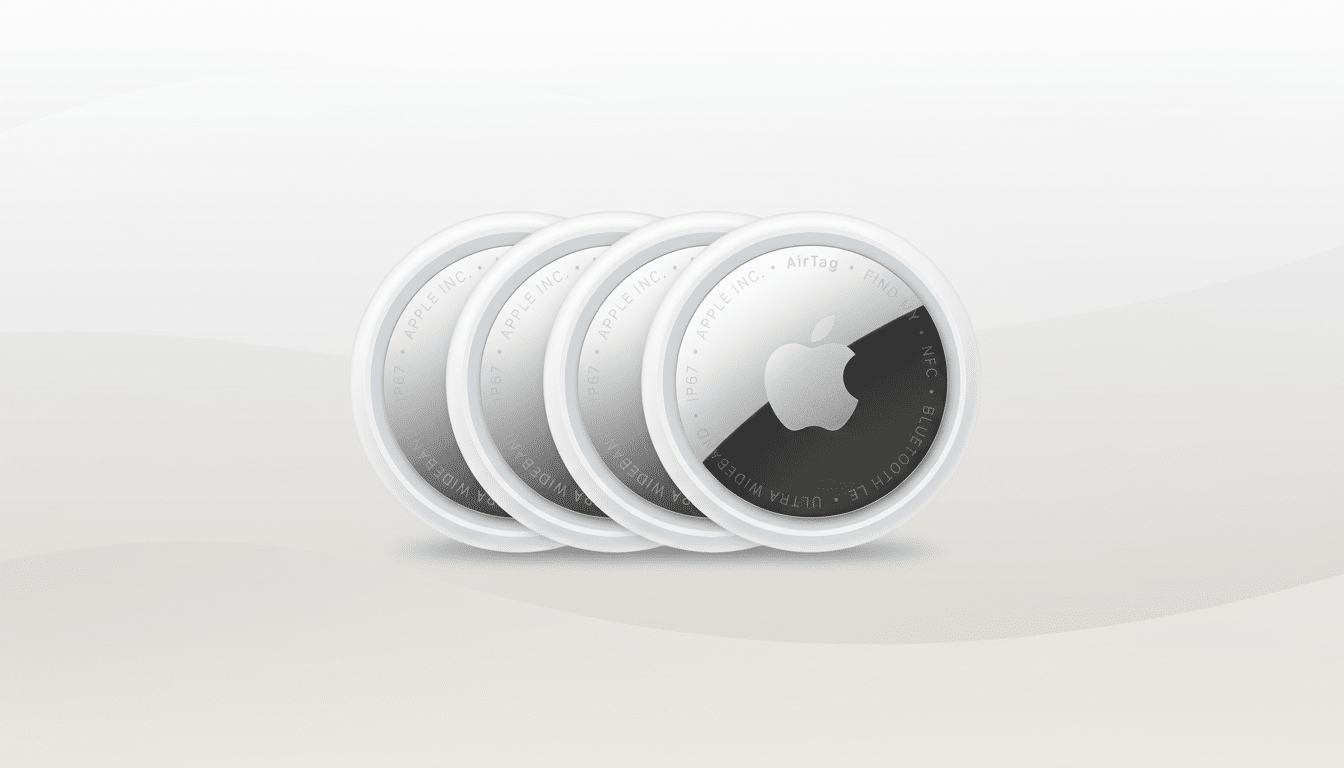
A standout deal just landed for forgetful folks and frequent travelers alike. The Apple AirTag 4‑pack is now $64 at a major retailer, a $35 drop from the regular $99 price and a clean 35% discount. That works out to $16 per tag, undercutting the usual $25‑per‑tag list price and making this one of the strongest values we’ve seen on Apple’s tracker bundle.
Why this AirTag deal stands out and offers strong value
Four tags cover the essentials in one shot: keys, wallet, backpack, and luggage. If you’ve ever spent 20 minutes hunting for a set of keys, the cost per tag here is easier to justify than a single panic‑filled morning. Travel data underscores the utility too. SITA’s Baggage IT Insights has repeatedly documented mishandled baggage rates in the mid‑single digits per 1,000 passengers in recent years, a reminder that a simple tracker can save hours of uncertainty when bags go wandering.
- Why this AirTag deal stands out and offers strong value
- How AirTags work on Apple’s Find My network
- Real‑world AirTag uses that pay off at home and travel
- Setup tips and useful accessories to get started fast
- Privacy and safety features to know before you start
- Should you buy at $64? How this AirTag bundle compares
AirTags also don’t require a subscription. After the upfront purchase, tracking is free via Apple’s Find My network—no monthly fees, no activation charges—so the $64 outlay goes further than most GPS devices that tack on recurring costs.
How AirTags work on Apple’s Find My network
AirTags tap into the vast Find My network, which Apple says spans over a billion active devices worldwide. When you mark an item as lost, nearby Apple devices can securely and anonymously relay its location back to you. In practice, that scale means more precise pings in dense areas like airports, apartment buildings, and city centers.
For close‑range hunts, Precision Finding uses Ultra Wideband on compatible iPhone models to point you directly toward your tag with an on‑screen arrow and distance meter. A built‑in speaker can chirp to guide your search through couch cushions, while standard Bluetooth helps your phone reconnect as you move closer.
Each AirTag is IP67‑rated for dust and water resistance and runs about a year on a user‑replaceable CR2032 coin cell. Swap the battery by twisting the back plate—no tools required. For best results, avoid bitterant‑coated cells that sometimes interfere with contact points, a quirk noted by Apple and battery makers alike.
Real‑world AirTag uses that pay off at home and travel
Luggage tracking has become the AirTag’s calling card. During recent airline disruptions, travelers routinely used Find My updates to prove a bag’s location—even when the carousel came up empty—speeding up reunions with missing suitcases. Closer to home, tagging car keys, a remote, or a work badge saves daily time tax.
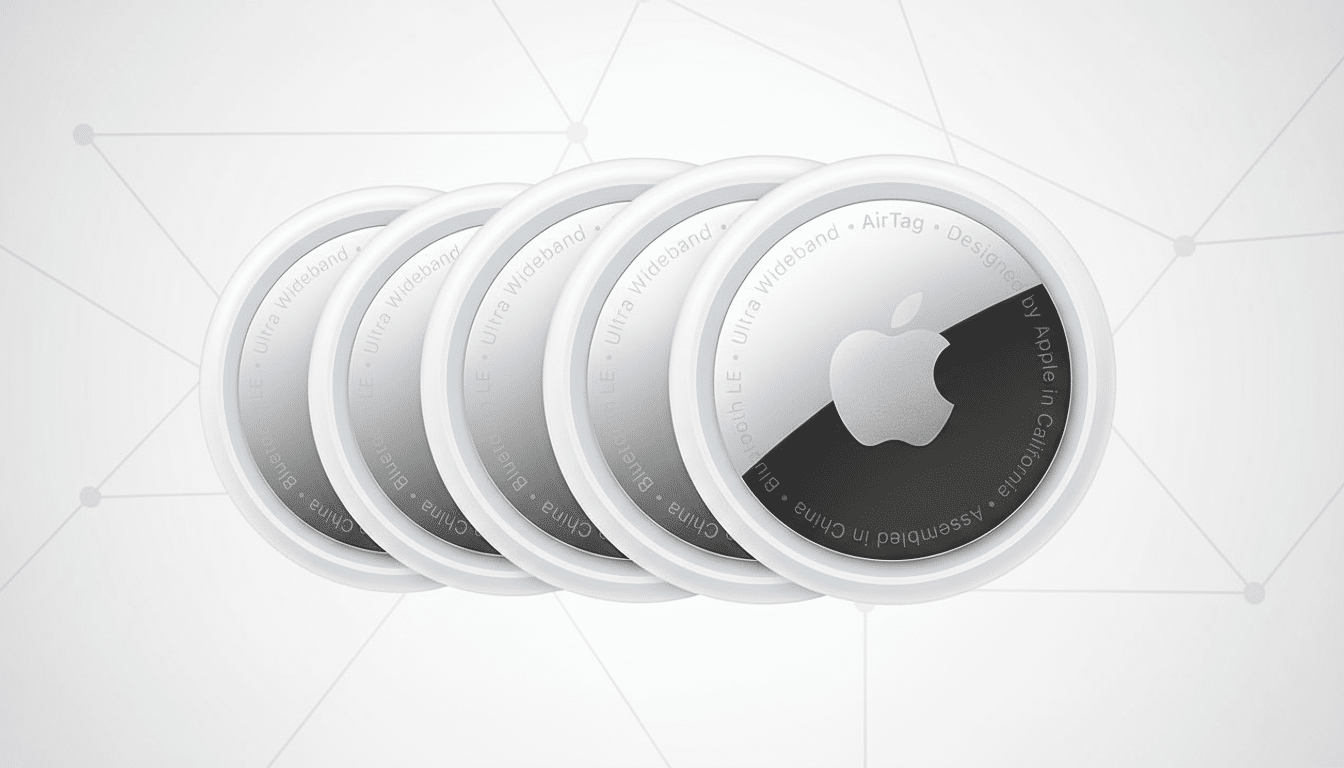
Families can also share access. Since iOS 17, you can share an AirTag with up to five other people in Find My, so everyone in the household can locate the same set of keys or the stroller. Pet owners sometimes attach AirTags to collars, though Apple recommends dedicated GPS trackers for real‑time pet monitoring and emergencies.
Setup tips and useful accessories to get started fast
Pairing takes seconds: bring the AirTag near your iPhone, tap Connect, name the item, and you’re done. Consider using distinct names and emojis—Keys, Wallet, Luggage—so you can identify what’s missing at a glance from the Find My app.
AirTags don’t have a keyring hole, so plan for a holder. A simple silicone loop or carabiner‑style case works for keys and backpacks. For wallets, slim card‑sleeve mounts keep bulk down. Adhesive mounts help for bike seats or remote controls; just place them where a chirp can still be heard.
Privacy and safety features to know before you start
Apple built in anti‑stalking protections. Your iPhone alerts you if an unknown AirTag appears to be traveling with you, and the tag will emit a sound after being separated from its owner for a period of time. In 2024, Apple and Google jointly rolled out a cross‑platform standard for unwanted tracker alerts, extending notifications to many Android phones as well—an important step endorsed by digital rights groups and safety advocates.
Each AirTag has a unique serial number and pairs cryptographically to its owner’s Apple ID. Location data is end‑to‑end encrypted within the Find My network, so neither Apple nor bystanders know which device located your tag.
Should you buy at $64? How this AirTag bundle compares
If you’ve been waiting, this is the time. At $64 for a 4‑pack, the per‑tag cost is low enough to blanket your most‑misplaced items without overthinking it. Whether you’re gearing up for a trip or just want fewer frantic mornings, this is the best mainstream AirTag value available right now—and likely to move fast.
