


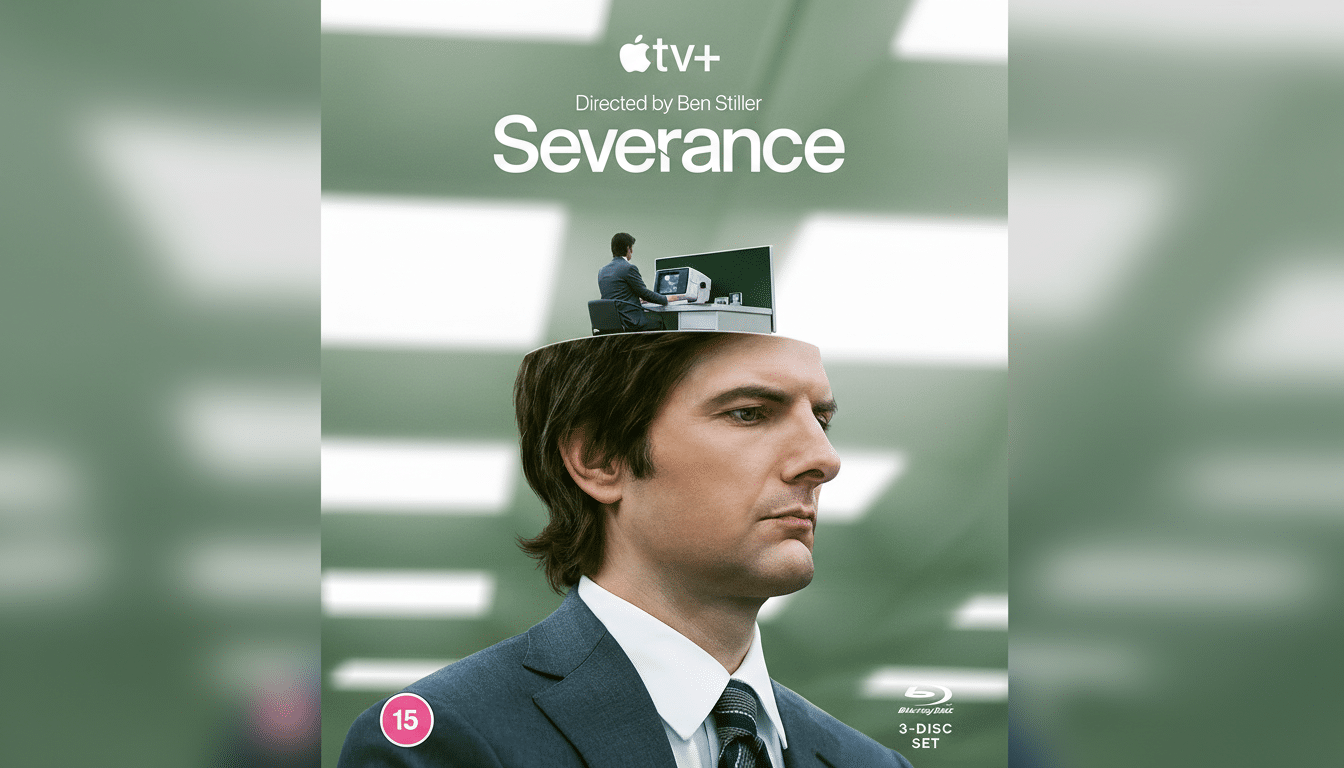
Apple has acquired the intellectual property and all rights to its acclaimed series Severance from original studio Fifth Season in a deal valued at just under $70 million, according to reporting from Deadline. Apple Studios will now produce future seasons entirely in-house, while Fifth Season remains attached as an executive producer.
The move consolidates one of Apple TV+’s most recognizable franchises under Apple’s direct control and mirrors a similar rights transition the company executed with Silo after its first season. It positions Severance as a core pillar of Apple’s original content library, with development, budgeting, and scheduling centralized inside Apple Studios.
Why Apple Wanted Full Ownership of Severance IP Rights
Severance has proven unusually valuable to Apple TV+, with its second season becoming the service’s most-watched series at the time of release and later securing the highest number of nominations for Apple at the 2025 Emmy Awards. Owning the rights outright gives Apple flexibility to extend the universe, manage windowing, and control downstream monetization without negotiating with a third-party rights holder.
The economics matter. Prestige dramas carry steep costs—Variety has reported that top-tier hourlong series frequently reach $10 million per episode or more—making cost control and asset ownership pivotal to long-term returns. By bringing Severance in-house, Apple can align creative decisions with platform objectives, use integrated marketing across devices, and capture the full lifetime value of an expanding franchise, from potential spin-offs to international adaptations.
Inside the Deal and the Production Shift for Severance
Deadline reports that Severance’s production costs had outgrown what Fifth Season could sustain, prompting the studio to request advances from Apple and weigh a production move from New York to Canada to access larger and faster tax rebates. New York’s Film Production Tax Credit typically offers a 30% incentive on qualified spending, while Canada’s combined federal and provincial programs can exceed that benchmark, especially in Ontario and British Columbia. With deeper resources and a longer investment horizon, Apple opted to assume full control rather than adjust scope or relocate chiefly for financing reasons.
Producing in-house also streamlines Apple’s ability to standardize vendor relationships, secure long-term below-the-line talent, and coordinate post-production workflows—an efficiency advantage that helps steady budgets and timetables in a competitive labor market. For a serialized mystery-thriller with exacting production design like Severance, consistency behind the camera can be as crucial as story continuity.
What It Means for Apple TV+ and Its Originals Strategy
The acquisition underscores Apple’s broader pivot toward owning premium IP that can anchor subscriber engagement across multiple years. Analysts at firms like Ampere Analysis and MoffettNathanson have long noted that platforms earn a higher return on franchises they fully control, due to library value, international rights, and the ability to repackage content across markets. Apple’s earlier consolidation of Silo rights signaled this direction; Severance elevates it to marquee strategy.
Crucially, fully owned hits can be extended without complex licensing renegotiations. Deadline indicates Severance is expected to run for four seasons, with prospects for spin-offs, a prequel, and localized versions. Apple’s global footprint—hardware, services, and a growing international originals slate—gives it distribution leverage if it opts to commission foreign-language adaptations or window ancillary content around major device launches and service bundles.
The Road Ahead for Severance Under Apple’s Full Control
As Apple assumes production duties, the immediate priorities are likely to include locking the creative timeline, safeguarding the show’s distinct tone, and calibrating budgets to maintain cinematic quality while improving cost visibility. Fifth Season’s continued role as executive producer should help preserve institutional memory from earlier seasons even as operational leadership shifts to Apple Studios.
Apple can now revisit production logistics—whether to keep principal photography in New York or evaluate incentive-rich alternatives—based on creative needs rather than financing constraints. With post-strike production lanes normalizing, in-house stewardship should reduce scheduling friction and allow the company to coordinate release windows more precisely around Apple TV+ programming arcs.
Bottom line: acquiring Severance’s full rights is both a creative bet and a balance-sheet decision. It signals Apple’s confidence that the series can sustain multi-season momentum and seed a broader franchise. For viewers, the shift should translate into steadier seasons and potentially a larger storytelling canvas. For Apple, it’s a step toward a library of wholly owned, globally scalable tentpoles that can compound value over time.
