


Open your feed this week and you’ll see two very different moods: candy-red declarations of devotion, and a wave of jet-black humor, breakup rituals, and community events that reject the script entirely. The internet’s Anti-Valentine’s Day is no longer a fringe joke; it’s a mainstream counter-programming ecosystem with its own aesthetics, rituals, and economy.
Fresh polling helps explain the moment. Recent YouGov data finds just 37% of U.S. adults plan to celebrate, and even among people in relationships only 52% say they’ll mark the day. That gap creates fertile ground online for alternatives that feel more authentic, less performative, and easier on the wallet.
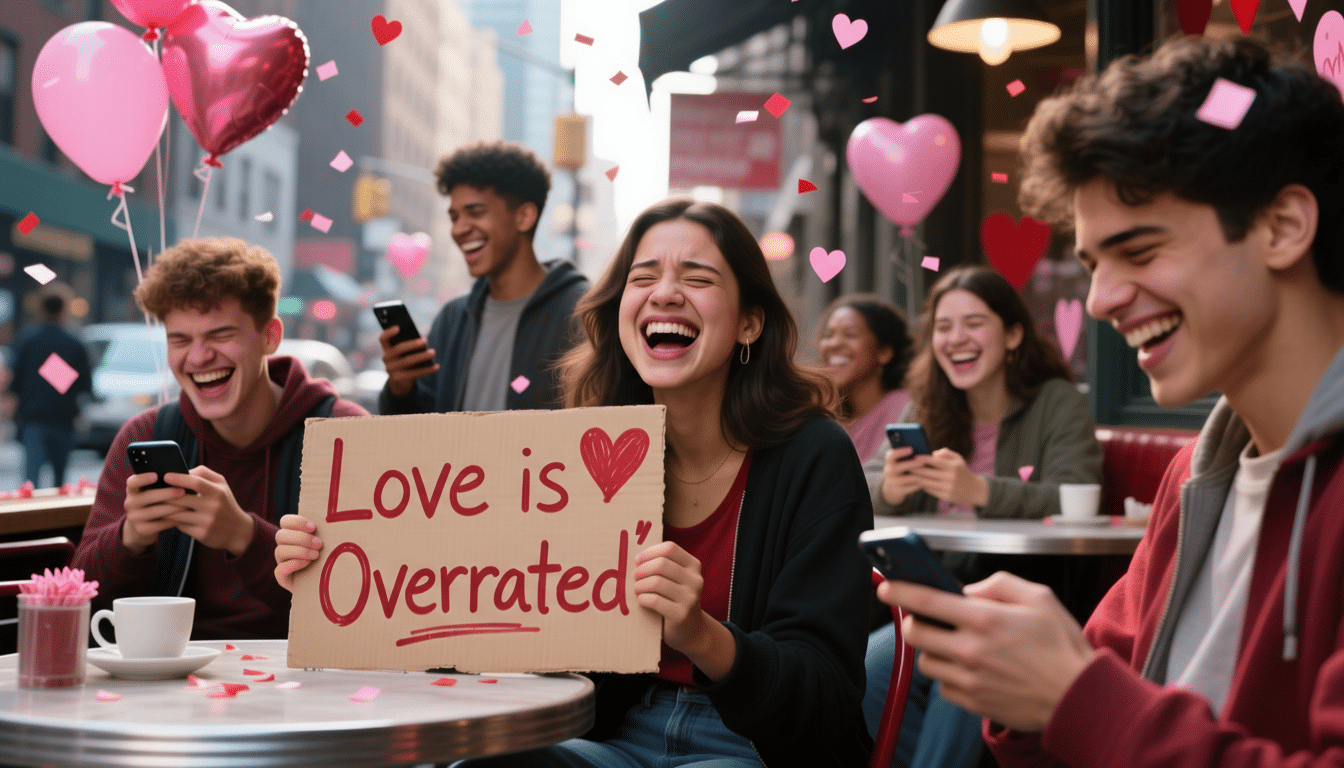
Underneath the memes is a serious reset. Users talk about opting out of commercial pressure, rejecting the “relationship escalator” expectation, and centering platonic love, friendship, or simply a night off from performative romance. For many, Anti-Valentine’s Day is not anti-love—it’s anti-script.
Why the Valentine’s Day backlash is building online
The consumer squeeze is a factor. The National Retail Federation has reported that Valentine’s Day spending remains high even as participation hovers around half of adults, a mismatch that feeds the sense that the holiday can be more commerce than connection. In tight economic stretches, the idea of one “correct” night of lavish gifts reads as out of touch.
There’s also a culture shift. Post-pandemic, people are renegotiating rituals—from office birthdays to New Year’s Eve. Valentine’s Day, long treated as a relationship litmus test, is getting the same treatment. Online, creators frame the pivot as a sanity check: measure relationships by ongoing care, not by what happens on one winter evening.
How the Anti-Valentine’s trend spreads online
Platforms supercharge the trend. Seasonal content reliably spikes in February, and recommendation systems surface contrarian takes alongside heart-forward posts. On TikTok and Instagram, tags like #AntiValentines and #SinglesAwareness draw millions of views, while Reddit threads trade playfully subversive plans: potlucks with friends, do not disturb movie marathons, or “treat yourself” budgets that skip roses for noise-canceling headphones.
Offline activations feed the share cycle. Bars and cafes advertise Anti-Valentine’s parties with breakup playlists and “red flag bingo.” Some venues lean into catharsis with shred-your-ex-photo stations. In New York, the Bronx Zoo’s long-running Name a Roach program lets people symbolically christen a Madagascar hissing cockroach and send a certificate—a wry, photogenic ritual made for Stories and group chats.
Meanwhile, creators promote “self-date” challenges, platonic gift swaps, and quiet alternatives like crisis-line donations in a friend’s name. The message is less bitterness than rebalancing: make space for friendships, caretaking, and communities that don’t fit the couple-centric script. The rise of Galentine’s and Palentine’s content shows how easily the internet repurposes a holiday toward connection without the couple pedestal.
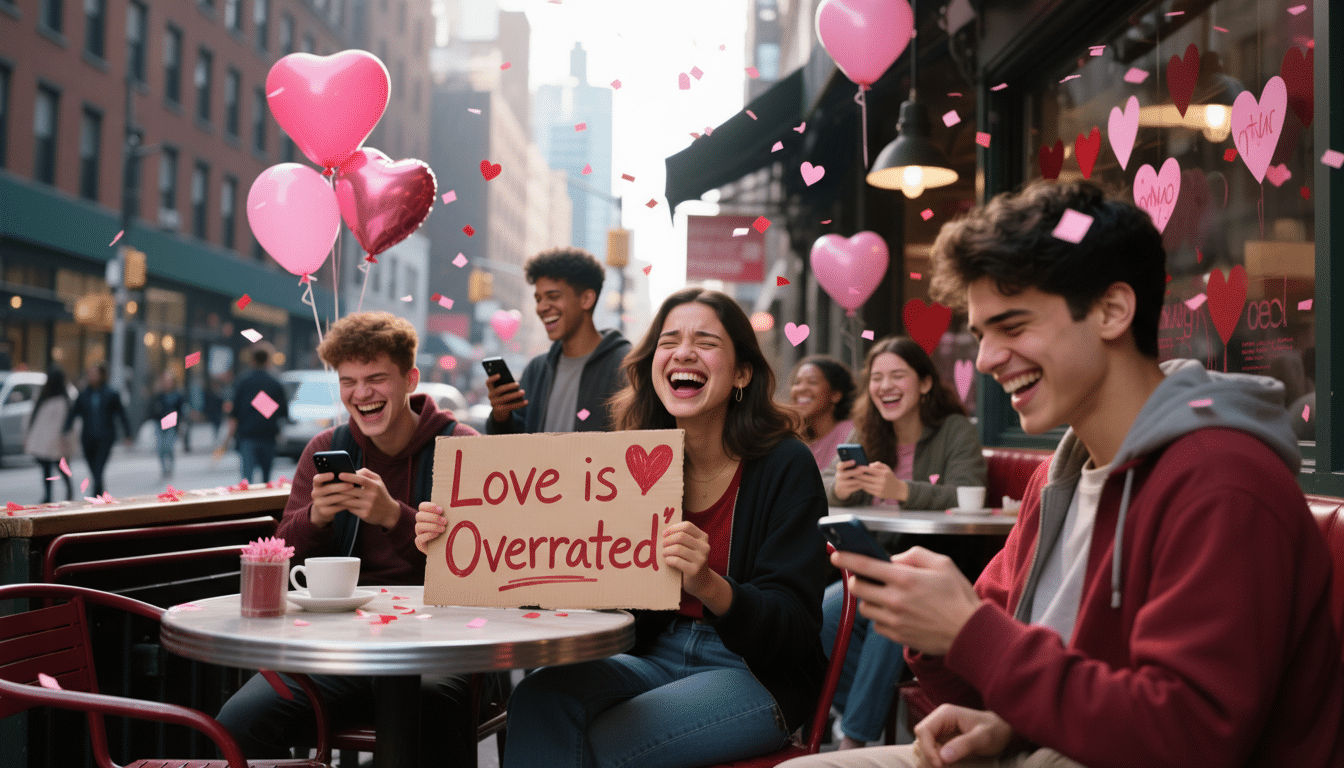
The business of opting out gains commercial momentum
Where audiences go, commerce follows. Independent sellers on marketplaces showcase sarcastic cards, black bouquets, and pins that wink at the holiday. Bars bundle “breakup flights” and mocktail menus. Even large brands increasingly build February creative around friendship and self-care to avoid alienating a sizable non-celebrating cohort.
Social listening firms regularly note February spikes in terms tied to opting out—“anti,” “solo,” “Galentine’s”—creating a reliable seasonal window for creators and advertisers. Crucially, the tone that performs best isn’t mean-spirited; content that skews funny, communal, or self-affirming tends to travel further than pure cynicism.
Not anti-love, anti-script: reframing February rituals
Anti-Valentine’s communities often intersect with broader visibility movements. Aromantic and asexual creators use the moment to spotlight relationship diversity and to question why partner love outranks the care we show friends, neighbors, and ourselves. Aromantic Spectrum Awareness Week, which follows Valentine’s, has gained traction online as a natural companion to this conversation.
Mental health voices also shape the narrative. The American Psychological Association has documented how social comparison can worsen mood, and February’s highlight-reel romance can amplify that effect. Anti-Valentine’s content offers a counterweight—humor, solidarity, and permission to log off—without shaming those who enjoy the day.
What to watch next as Anti-Valentine’s content evolves
Expect platforms to package the trend more deliberately: seasonal hashtag hubs, creator funds for friendship-first content, and brand collaborations that emphasize community over coupledom. Moderation will matter; the healthiest Anti-Valentine’s spaces punch up at the script, not at people.
The outcome is less a culture war than a portfolio of options. With only 37% planning to celebrate, millions are browsing for alternatives that feel true to their lives. The internet has delivered them—part party, part protest, and, increasingly, a reminder that love is bigger than a single date on the calendar.
