


Anker’s new Solix E10 is now available nationwide, and it might be the most approachable whole-home backup system yet. It blends rooftop solar, battery storage, and an optional generator into one hybrid platform, aiming to keep an entire house powered when the grid drops. For anyone tired of juggling standalone solutions or worrying about what happens when the sun sets, this is the kind of outage insurance that feels long overdue—and, notably, it’s launching with promotional bundles and discounted configurations.
Why This Hybrid Home Backup System Matters Now
Homeowners are facing longer, more frequent outages as severe weather becomes more disruptive. NOAA has documented a rising drumbeat of billion-dollar disasters, and utility reliability reports show customers enduring multi-hour interruptions annually. Traditional backup plans force a tradeoff: quiet, clean batteries that can run out after a cloudy stretch, or gas generators that are loud, maintenance-heavy, and inefficient for partial loads.
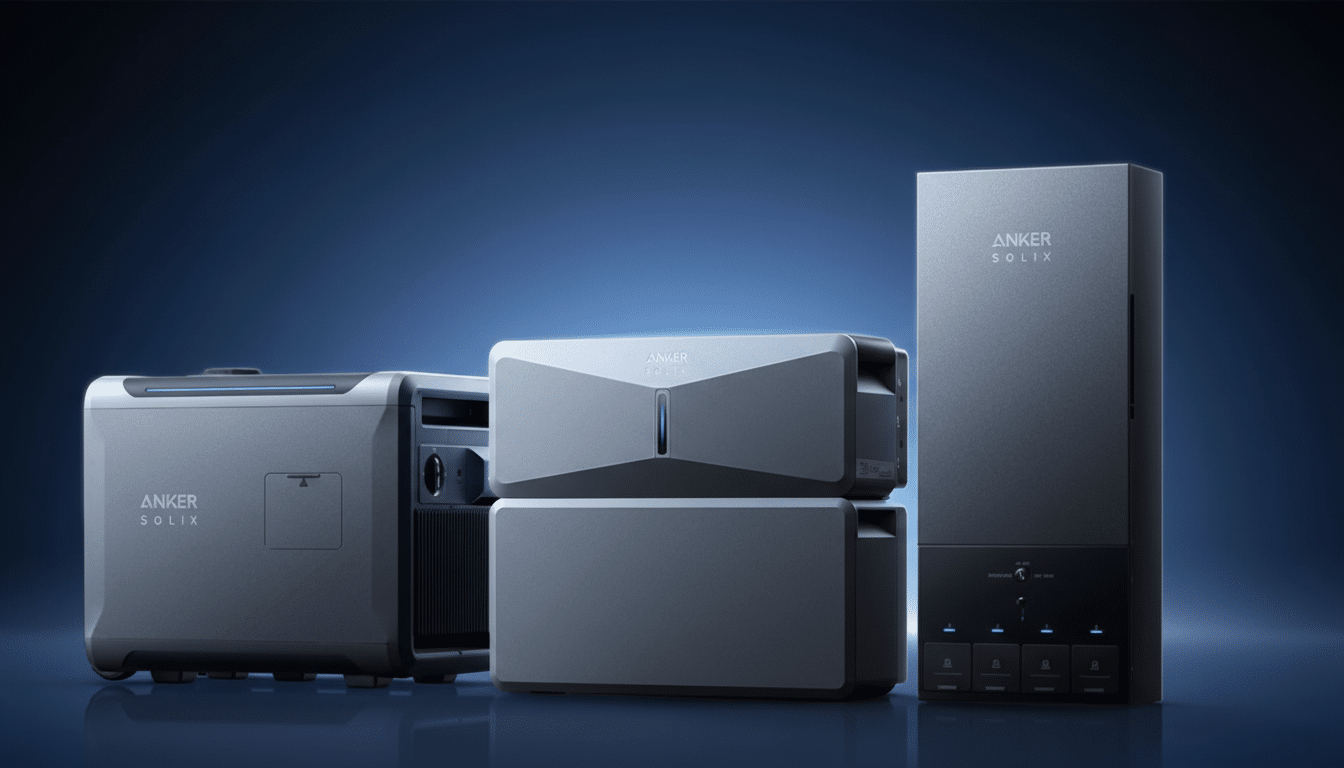
Anker’s approach is to coordinate all three power sources so you don’t have to choose. The Solix E10 uses a centralized Power Dock controller to blend battery, solar, and a DC-connected Smart Generator, which the company says can extend backup duration by up to five times compared with a typical generator feeding the home through AC. The efficiency gain comes from charging the battery directly over DC, avoiding conversion losses and letting the system optimize runtimes automatically.
Key Specs and Real-World Implications for Buyers
The platform starts with a 6 kWh battery module and scales to 90 kWh when three full systems are combined—enough headroom to cover everything from a small home to a property with substantial loads. For context, many households use roughly 20 to 30 kWh per day outside of heating and EV charging; storage above that range can keep essentials running for days if you’re conservative.
Each E10 unit accepts up to 9 kW of solar input and supports rigid rooftop arrays, portable panels, and third-party AC solar systems. That flexibility means it can slot into existing setups or anchor a new build without dictating panel choices. The Power Dock delivers automatic switchover in about 20 milliseconds—fast enough that most refrigerators, routers, and even many PCs won’t notice. For homeowners who prize resilience, that near-UPS performance helps prevent nuisance reboots and food spoilage when the lights flicker.
Hardware is designed for outdoor life with an all-metal NEMA 4 enclosure and an operating range from minus 4 to 131 degrees Fahrenheit. That rating signals resistance to driving rain, snow, and windblown dust, which is important for regions where storms are the reason you bought backup power in the first place. The stackable, plug-and-play design favors DIYers, though professional installation is available nationwide for those who prefer turnkey service.
Installation Paths and Control Options Explained
Buyers have two main installation routes. The Power Dock configuration is the premium option: it provides whole-home automatic transfer, intelligent load coordination, and the fast 20 ms switchover that protects sensitive electronics. The budget-friendlier Smart Inlet Box enables manual switchover and plays nicely with existing solar, offering a straightforward way to bring battery storage online without a full electrical overhaul.
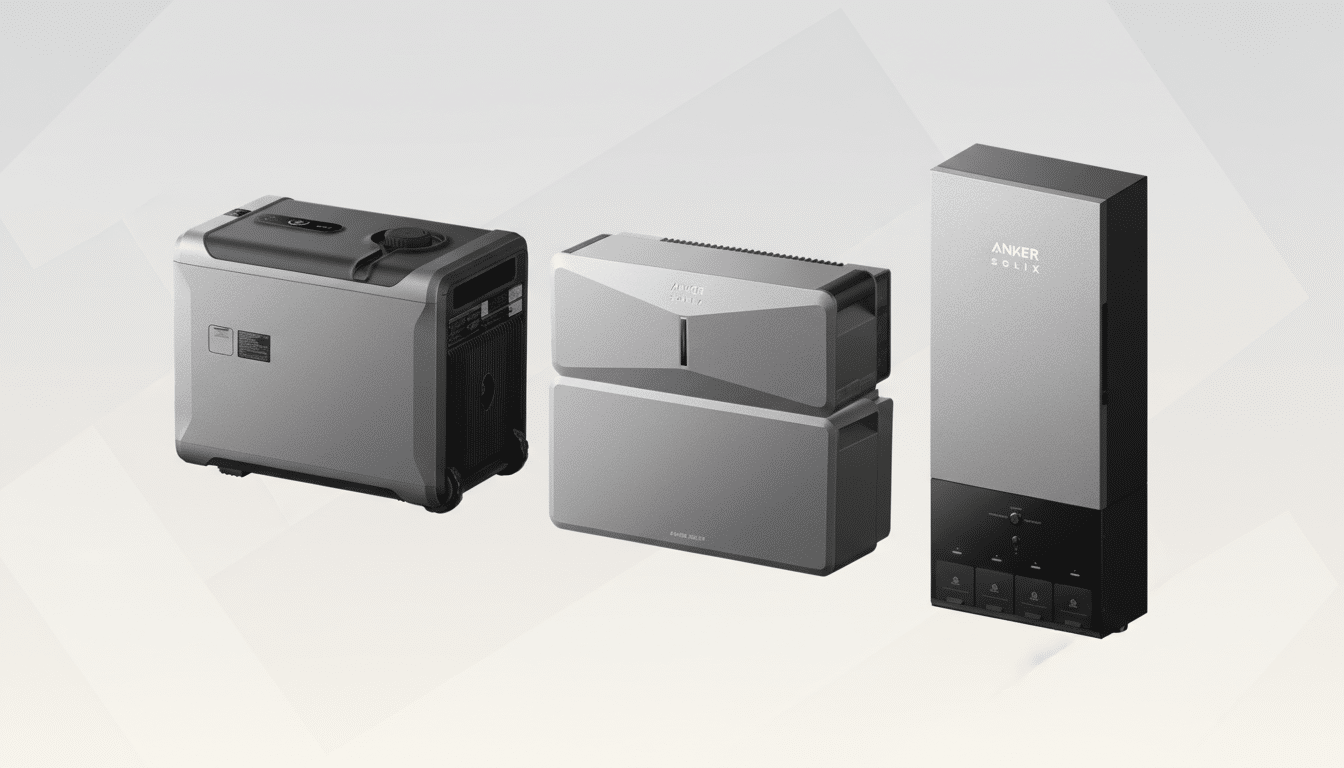
Anker claims this is the first residential system of its kind to seamlessly orchestrate battery, solar, and a DC-connected generator across the continental US. That’s a bold claim, and it’s where the E10’s architecture stands apart: many systems can integrate with generators at the panel, but fewer treat the generator as a managed DC resource designed to maximize efficiency and minimize runtime.
Pricing and Early Offers for Anker Solix E10
Pricing starts at $4,299 for the base system with one inverter and one battery. The base system with a Smart Inlet Box is $6,599, while the base system with one battery and the Power Dock is $7,799. The full kit—base system, Power Dock, and Smart Generator—lands at $9,399. For a limited time, Anker is bundling a free 400-watt solar panel, an accessory kit, and an extended three-year warranty with qualifying purchases. Units are available through Amazon and the Anker Solix store.
How It Stacks Up Against Popular Competitors
Competitors like Tesla’s Powerwall, EcoFlow’s Delta Pro Ultra, and Bluetti’s EP-series pack serious storage and power, but their generator integrations typically rely on AC coupling or third-party transfer switches. By contrast, the E10’s DC generator link prioritizes efficiency and control. It’s a smart angle for households in low-solar regions or during extended storms when sunlight is scarce and grid outages stretch over days.
Utility, not specs alone, defines a good backup system. The E10’s modularity encourages starting small and expanding as needs grow—add capacity as you install more panels, finish a basement, or bring an EV into the mix. That phased approach can be the difference between getting started now and waiting years for the “perfect” system.
Bottom Line on the Anker Solix E10 Backup System
If you’ve been torn between batteries and generators, Anker’s Solix E10 makes a compelling case for choosing both—and letting software decide which to use, when. With rapid switchover, robust weather protection, and a clear upgrade path, it’s an elegant whole-home backup that feels built for how people actually live through outages. The fact that it’s on sale with bundle perks only sweetens the pitch.
