


AMD seized its moment in the CES spotlight to push the AI PC storyline a little further, with an announcement of its own Ryzen AI 4000 Series tailored for everyday computing and gaming, and specifically the Ryzen 7 9850X3D that’s made for gamers.
The company presented the launches as a larger bet that on-device intelligence will become an essential part of how people work, create, and play on PCs in the years ahead.
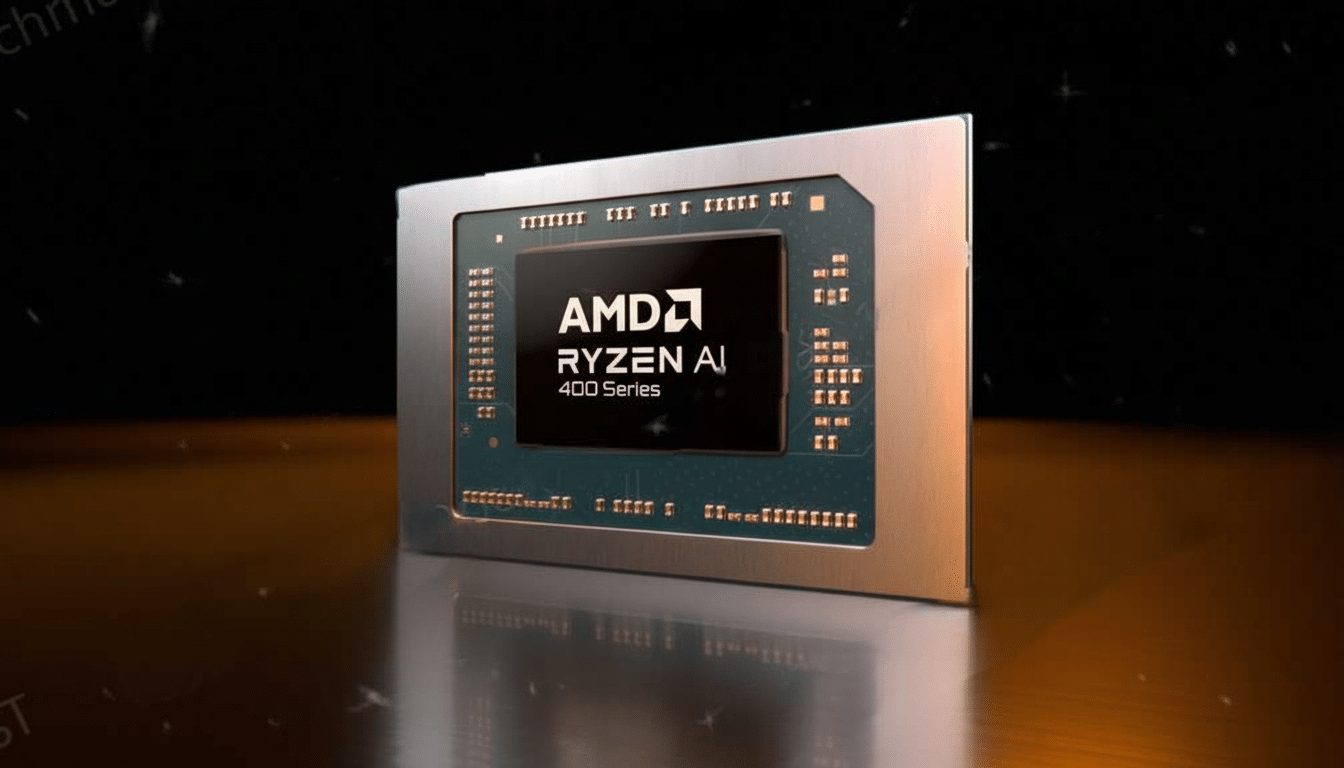
Ryzen AI 4000 Targets On-Device Intelligence
The Ryzen AI 4000 Series is AMD’s newest response to the AI PC push, mixing a modern CPU with integrated graphics and an onboard AI engine designed for local task acceleration. The chips, according to AMD, offer 1.3x quicker multitasking performance compared to competing parts and up to 1.7x faster content creation in its tests, with 12 CPU cores and threads that help ensure productivity or creative apps remain responsive when under load.
The focus is on running AI features directly on the laptop or desktop—think real-time video effects, speech transcription, object background removals in editors, and lightweight language models—in a way that does not constantly pass data to the cloud. In addition to responsiveness, local acceleration also improves battery life and privacy—both areas of critique for AI PCs.
AMD’s client lead Rahul Tikoo said that his company now reaches over 250 AI PC platforms, about double its size from a year ago, indicating fairly widespread OEM alignment. And timing matters: software will only thrive when developers can rely on a hefty installed base with a capable AI engine, and AMD seems determined to make that base impossible to ignore.
The previous generation of Ryzen AI 300 Series brought dedicated NPUs that AMD markets as capable of delivering heavy on-device throughput. With the 4000 Series, AMD is lining up for the next wave of Windows features and creative suites, which utilize increasingly on-disk models for things like smart selection, denoising, and ambient computing. Microsoft has put a stake in the ground with AI PCs, and chip makers are scrambling to keep up with ever-evolving demands for continuous, power-efficient AI acceleration in thin-and-light form factors.
Ryzen 7 9850X3D Extends X3D Gaming Performance Lead
For fans, AMD launched Ryzen 7 9850X3D, the latest in its gaming lineup. Traditionally, the X3D label has denoted added on-package cache meant to lower latency and increase frame rates in CPU-bound titles. Previous X3D parts also led all comers in independent gaming benchmarks (among others, Tom’s Hardware and TechSpot), with performance gains reaching double digits in esports and open-world games where CPU bottlenecks become painfully real.
AMD is coupling the new chip with an updated version of one of its ray-tracing technologies, Redstone. The pitch is more realistic illumination without such a harsh performance penalty—dovetailing with upscalers like FidelityFX Super Resolution in challenging titles like Cyberpunk 2077 and Alan Wake II. That aligns with the bigger trend: extracting more visual fidelity without asking gamers to make compromises on fluidity.
Market Context, Competitive Landscape and Availability
AI is emerging as the necessary spark in the PC industry. IDC has forecast that AI PCs could account for more than half of all shipments within a couple of years, and Gartner has pointed to AI-focused capabilities as a common thread in Windows systems at the premium tier. Facing off with rivals such as Intel, Qualcomm, and even Apple—which all boast on-chip AI capability—AMD is leaning on photorealistic gaming quality to single itself out.
AMD said systems with the Ryzen AI 300 and new Ryzen 7 9850X3D will begin shipping in Q1, followed by broader partner rollouts. That means names you already know as OEMs—design wins in the top lines of Windows laptops and desktops—because AMD needs its performance claims to translate into day-to-day user experience at scale.
What These AMD Announcements Mean For Everyday PC Buyers
For knowledge workers and creators, the big headline is time saved: faster exports, snappier batch edits, and AI-powered effects that are always available offline. On-device AI can also reduce power consumption for students and travelers by negating the need for continuous network calls to access information and keeping it local. And for gamers, X3D lineage means higher and more consistent frame rates in CPU-limited situations—now supplemented with faster ray-traced visuals.
The caveat is the same one that applies to every new chip generation—real gains will depend on things like software support, thermal design, and OEM tuning. AMD’s claims will, of course, be tested by independent benchmarks—it remains to be seen how they filter down through the brands and price levels. But the trend is clear—AI is no longer a sidekick to the PC. In other words, with Ryzen AI 4000 and the 9850X3D, AMD is doubling down on that “everything is done locally” mantra.
