


Amazon Prime customers who used 11 to 20 Prime benefits in a year can now qualify for automatic refunds under a court-approved expansion of the Federal Trade Commission’s settlement with Amazon. The revision raises the maximum total payment available to an eligible consumer to $200 from $51, broadening a redress program tied to FTC allegations that Amazon enrolled consumers in Prime without consent and made cancellation unnecessarily difficult.
The FTC said Sept. 17 that the revised order, jointly sought by the agency and Amazon, is intended to accelerate the distribution of settlement money. Payments to the newly eligible group are scheduled to begin Oct. 1, 2026. The change is consequential because the agency says Amazon had already issued more than $845 million in refunds, yet the settlement’s consumer-redress component can reach $1.5 billion.

Who is newly eligible for Amazon Prime refunds
The expansion centers on how much customers used Prime after signing up. Under the revised program, consumers who used between 11 and 20 Prime benefits during a 12-month period may receive automatic payments. The FTC’s announcement of the revised order says these payments will begin Oct. 1.
Benefit use is not the only criterion. The FTC’s consumer-facing Amazon refunds guidance says an eligible person must have been a U.S. Prime customer who either enrolled through a challenged enrollment flow or tried unsuccessfully to cancel online between June 23, 2019, and June 23, 2025. The customer also must have used no more than 20 Prime benefits in a 12-month period after enrolling.
That ceiling is important. The new policy does not make every Prime subscriber eligible, and a $200 payment is not assured. It is the maximum total payment under the amended process. The FTC says payments will be sent automatically through electronic methods, including PayPal or Venmo, or by mail check; future eligible recipients need not submit a claim or additional paperwork.
The revised standard also resolves what can look like conflicting eligibility descriptions in earlier FTC materials. At the initial rollout, automatic payments were aimed at certain customers who had used fewer than three Prime benefits in a 12-month period. The original settlement also contemplated a later claims process for other customers who used fewer than 10 benefits. The amended order adds the 11-to-20-benefit group to automatic distribution rather than replacing the earlier phases.
How the revised refund process works
The settlement announced in September 2025 had two financial components: a $1 billion civil penalty and up to $1.5 billion for consumer redress. The distinction is material. The widely cited $2.5 billion figure is not a $2.5 billion refund pool. The FTC described the $1 billion as a penalty and the other portion as money available for consumer payments.
As of the FTC’s September update, more than $845 million had been distributed. That represents roughly 56% of the $1.5 billion maximum redress amount, leaving up to about $655 million in potential distribution capacity. That calculation is not a measure of an unpaid balance owed to specific consumers: the settlement describes redress as up to $1.5 billion, and the actual amount depends on eligible payments and the amended distribution terms.
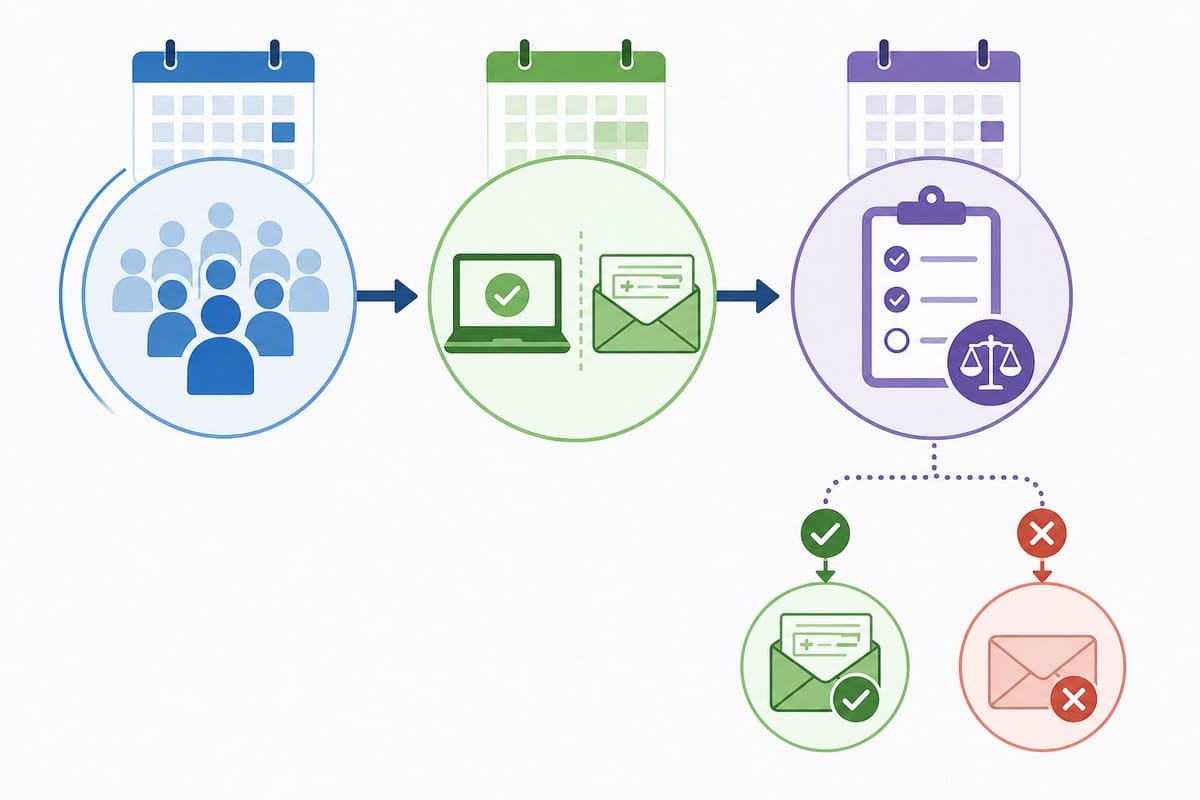
The revised order adds a second possible payment stage. If consumer-accepted payments do not reach the threshold required by February 2027, Amazon is to issue supplemental automatic payments of up to $149 to people who already received refunds. The FTC says that contingent phase must begin by April 2027. Combined with an earlier payment, the supplemental amount can bring a consumer’s total recovery to the new $200 cap.
The mechanism is designed to direct more of the available redress toward consumers without reopening a claim-filing process. It also means the final amounts cannot be determined solely from the October payments: the February acceptance test will govern whether the supplemental stage is triggered.
A settlement built around Prime enrollment and cancellation claims
The underlying case was filed by the FTC, not decided after a trial. In its September 2025 settlement announcement, the agency alleged that Amazon used enrollment designs that caused consumers to join Prime without informed consent and maintained a cancellation process that was difficult to navigate. Amazon agreed to the settlement, which also required changes to Prime enrollment and cancellation flows.
The court’s approval of the later revision is a confirmed procedural development; the FTC’s characterization of Amazon’s conduct remains the agency’s allegation as resolved by the settlement. That separation matters for consumers trying to understand the program: eligibility turns on the settlement’s defined enrollment, cancellation and usage conditions, rather than an individual finding that Amazon misled a particular customer.
Independent coverage by USA Today similarly reported the broader eligibility and the higher payment cap. The FTC says it is not contacting consumers about these refunds, a point that places the emphasis on the agency’s published payment process rather than unsolicited communications.
For Amazon, the amendment extends administration of one of the largest consumer-redress programs tied to a subscription service. For eligible customers, the key dates are more immediate: new automatic payments are set to start Oct. 1, 2026, while the possibility of supplemental payments will not be settled until after the February 2027 acceptance threshold is assessed.

