


Amazon is bringing new hardware to its Echo lineup specifically designed for its upgraded AI assistant, Alexa+, including faster responses, richer conversation, and new services that live directly on the device. Four models are being rolled out — the Echo Dot Max, Echo Studio, Echo Show 8 and Echo Show 11 — with each intending to be a proving ground for on‑device AI and a more extensive smart home stack.
Alexa+ has already made its way to millions of customers through an early access program, and these devices are the first wave that treats the assistant as the main operating system rather than a single feature.

The emphasis is evident: less latency, more natural conversation, and ambient intelligence that operates in the background without needing constant reminders.
What Alexa+ Changes for Voice and Smart Home Use
Alexa+ supercharges the assistant’s capabilities, allowing it to help with multi‑turn conversations, follow context across questions, and carry out more complex requests combining multiple services. Amazon says that an upcoming Alexa+ Store will let users tack on abilities from the likes of Fandango, Grubhub, Lyft, Priceline, Taskrabbit, Thumbtack and Yahoo Sports — with the assistant coordinating bookings and orders or sending updates via voice or screen.
The company is also doubling down on subscriptions that are linked directly to the assistant. Users can control services like Amazon Music and Amazon Kids+ or Alexa Emergency Assist from the device, and adjust the assistant’s behavior without opening several apps.
Edge AI custom chips powering faster on‑device Alexa
Under the hood, Amazon’s new AZ3 and AZ3 Pro silicon feature a dedicated AI accelerator to process models on the edge. With the Echo Dot Max, AZ3 delivers enhanced far‑field voice pickup and noise reduction, with Amazon claiming that it’s optimized for over 50% in wake‑word detection accuracy compared to previous generations.
The Echo Studio and the new Echo Show 8 and Show 11 step up to AZ3 Pro, which is optimized for larger language models and vision transformers processed on‑device. That allows for features like rapid conversational turn‑taking and on‑device perception that relies less on the cloud, which usually means lower latency and reduced data exiting the home.
Amazon will also launch Omnisense, a sensor fusion platform that leverages the 13‑megapixel camera on Echo Show devices; audio input; ultrasound; Wi‑Fi radar; accelerometer data; and Wi‑Fi channel state information. With it, Alexa can even act on what’s happening in the room — issuing a reminder when one person walks inside and warning that a garage door has been left open just as someone else is going to bed — turning from voice command to ambient assistance.
New Echo Speakers and Displays With On‑Device Alexa+
The Echo Dot Max ($99.99) is a compact two‑way speaker with one woofer and a custom front‑firing tweeter purported to deliver nearly three times the bass of previous small Echo devices. It is intended for bedrooms, kitchens and anywhere where voice responsiveness and a compact footprint matter more than sound quality.
The new Echo Studio ($219.99) sports a new spherical form factor that is approximately 40% smaller, with a high‑excursion woofer for bass and stereo, spatial audio for music playback, and support for Dolby Atmos.
And a new light ring makes it clearer when and why Alexa is busy doing something useful, such as juggling multiple tasks that Alexa+ automations have set in motion.
For bigger rooms and television setups, as many as five Echo Studio or Echo Dot Max speakers can be connected with some compatible Fire TV sticks to make a home theater experience more enveloping.
And Amazon will offer them in Alexa Home Theater bundles to make setup a breeze.
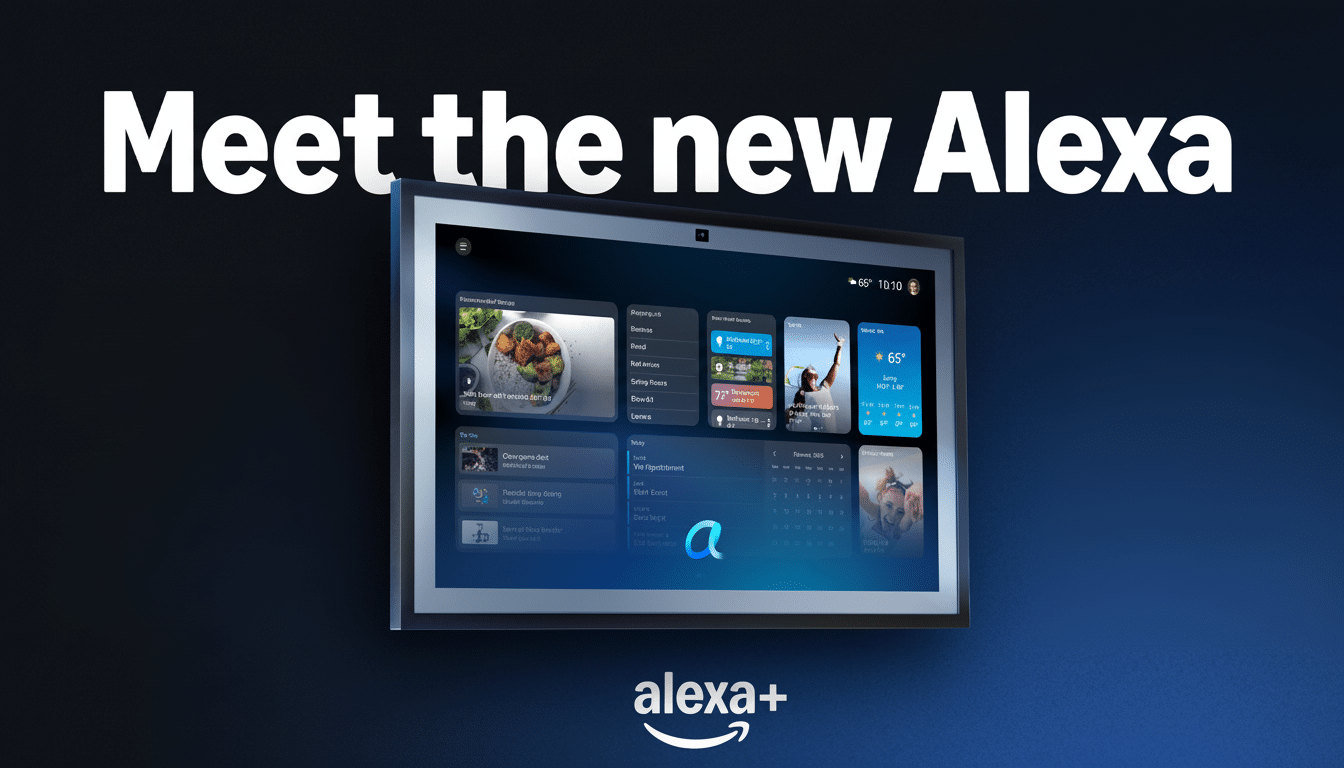
The Echo Show 8 ($179.99) and the Echo Show 11 ($219.99) add new smart display designs with better picture quality, more screen area, front‑facing stereo speakers that include a custom woofer, and the same 13‑megapixel camera for video calls and ambient sensing in one system. These operate Alexa+ features and introduce Alexa+ Home, an easier smart home view that shows event summaries (think Ring camera highlights) and works with the Matter, Thread and Zigbee standards to accommodate a wider variety of devices.
Looking beyond home control, the displays skew entertainment and day‑to‑day tasks: music streaming as well as outdoor audio, shared family calendars, a grocery list connected to Amazon (as with Whole Foods and Amazon Fresh) for reorders and delivery tracking. Amazon is also teaming up with Oura to deliver personalized wellness recommendations, like “workout nudges” or “guided sleep meditations,” and says it will eventually integrate with Withings and Wyze hardware.
Ambient AI and privacy controls on Echo devices
A good part of the privacy aspects arise from ambient intelligence. Amazon highlights on‑device processing to reduce cloud reliance, and cites traditional controls such as hardware mic mute buttons and camera shutters on Echo Show devices. Omnisense appears to be opt‑in detection and user‑managed routines, though clear data retention settings and controls could be the difference between people trusting these things as they grow.
Industry analysts have said that bringing perception and language models onto the device will not only reduce latency but also save on cloud costs and make devices more reliable in wireless dead zones. Those are meaningful improvements for a household assistant that users will anticipate answering instantly, even when they don’t have the bandwidth or provider support to do so.
Why it matters for the smart home and connected living
Alexa’s main rivals are also pursuing on‑device AI, but Amazon will put them all to shame by marrying silicon, services, and a truly massive accessory ecosystem. Edison Research reports in its Smart Audio studies that roughly a third of Americans have a smart speaker, and Canalys says screens are outpacing speakers as homes install visual assistants. By doubling down on the proliferation of local AI and creating an alliance around common standards such as Matter and Thread, Amazon is setting Echo up to be the default hub for that next step.
And the Alexa+ Store could potentially be equally significant. If brands can reliably sell tickets, book rides or order up home services through voice and displays, Echo devices are more of a higher‑value endpoint than merely music players. It’s a simple bet: More helpful, more personalized and more private‑by‑design assistants lead to daily engagement — and down the road, a smarter home that needs less managing and more living.
