


Another viral thread warns that artificial intelligence is about to upend life as we know it, and once again the timelines are breathless and the metaphors apocalyptic. The AI industry has a growing Chicken Little problem: too many sky-is-falling proclamations, not enough receipts. Alarm fatigue is setting in, and that makes it harder to take seriously the real, immediate risks that deserve attention.
Alarmism Becomes A Growth Hack For The AI Industry
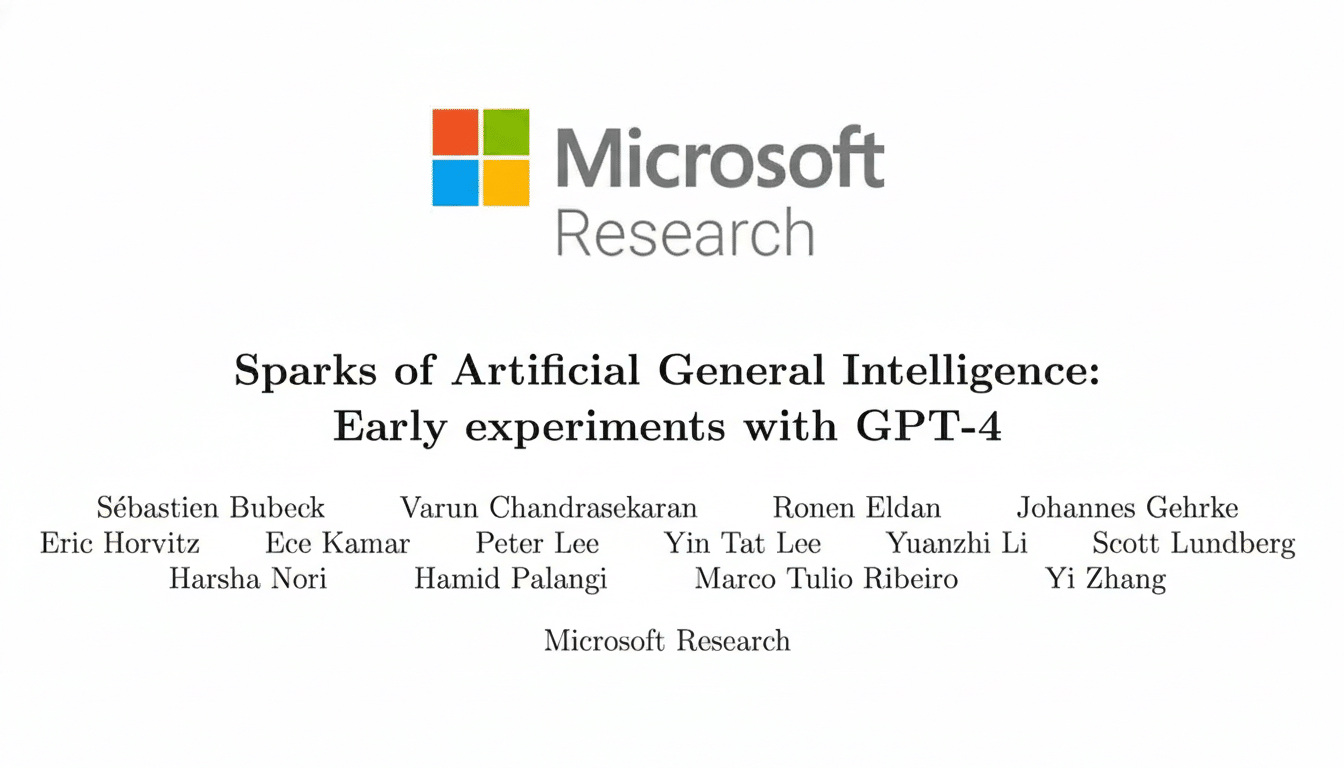
Dire forecasts travel fast because they serve multiple incentives. Founders need funding, model labs need talent, and platforms reward engagement. A sweeping warning about “the moment before everything changes” is a terrific user-acquisition strategy. We’ve seen this playbook before: the “sparks of AGI” claim in a Microsoft research paper, frenzied speculation around internal breakthroughs at major labs, and launch teasers promising leaps that will “change everything.” These messages aren’t neutral public-service announcements; they are often marketing in existential clothing.
When industry insiders frame AI progress as akin to a once-in-a-century event, they crowd out nuance. In practice, generative models have improved fast on benchmarks and coding assistance while remaining brittle, costly, and uneven across tasks. Treating every gain as a civilization-level shift turns healthy vigilance into noise.
Benchmarks Promise More Than Workplaces Feel
Lab scores are real, but they are not the economy. The Stanford AI Index reports that leading models have surged on popular tests, yet still lag humans on adversarial reasoning, factuality, and complex planning. NIST and Stanford’s HELM evaluations continue to document hallucinations and robustness gaps. Even state-of-the-art systems can generate fluent, confident errors—and cannot reliably self-audit those errors without strong guardrails.
Meanwhile, scaling keeps getting pricier. Analyses from Epoch AI show the compute used to train frontier models has been doubling on the order of months, not years. That curve fuels big capability jumps, but it also amplifies cost, energy, and supply-chain constraints. The International Energy Agency projects global data-center electricity demand could roughly double by the middle of the decade, with AI a major driver—an inconvenient backdrop for claims that superintelligence is imminent and inevitable.
What The Data Actually Shows About AI Today
Outside the hype, measured field evidence is accumulating. A Harvard Business School and BCG experiment found consultants using a large language model completed more tasks and did so faster—roughly 12% more tasks and 25% quicker on average—though performance fell on tasks outside the model’s strengths. A study by researchers from Stanford and MIT on customer-support agents found a 14% productivity lift, with the biggest gains for less-experienced workers. GitHub reports developers using its AI pair programmer finish coding tasks faster, with some trials showing time savings above 50%.
Adoption is real but uneven. McKinsey’s global survey found about one-third of organizations using generative AI in at least one business function, led by software, marketing, and customer operations. Gartner places generative AI at the Peak of Inflated Expectations, which is analyst-speak for “lots of pilots, variable ROI, turbulence ahead.” And while investment is surging, Pew Research finds the public remains more wary than excited, with a majority expressing concern about AI’s impact on jobs and information quality.
Real Near-Term Risks Deserve Oxygen And Focus
The melodrama also obscures problems that are here now. Copyright and data provenance are being fought in court, including high-profile media lawsuits against model makers. Voice-cloning and deepfake tools have already been used for scams and election meddling, prompting urgent guidance from regulators. Safety researchers continue to flag jailbreaks, prompt injection, and model-assisted cybercrime. And the energy and water footprints of large-scale inference are rising just as demand spikes.
Frontier labs have proposed voluntary guardrails, from responsible scaling policies to precommitments on catastrophic risk testing via the Frontier Model Forum. Those are steps in the right direction—but voluntary standards are no substitute for transparent evaluations and independent auditing before capabilities with dual-use potential are widely deployed.
How To Separate Signal From Sales In AI Announcements
There’s a better way to communicate breakthroughs. Ditch cinematic metaphors and provide specifics: what capabilities improved, by how much, against which public benchmarks, at what cost per token, and with what reliability. Release reproducible evals, invite third-party red teams, and quantify failure modes like hallucinations and security vulnerabilities. If a model is truly pushing toward dangerous autonomy, show the safety case, the tripwires, and the pause conditions—before the demo tour.
For businesses and policymakers, treat AI claims like weather forecasts: look for confidence intervals, not declarations. Prioritize deployments where today’s reliability is good enough—coding assistance, summarization, retrieval-augmented workflows—and pair them with human oversight and clear metrics. Invest in data governance, eval pipelines, and incident reporting, not bunker rhetoric.
Progress is real and fast. So is uncertainty. If the industry wants to be believed when it says the sky might fall, it needs to stop yelling and start showing its work.
