


Privacy and distraction-free browsing just got cheaper. AdGuard is bundling a five-year subscription to AdGuard VPN with a lifetime Family Plan of its ad blocker for $39.97, a package that typically lists around $439. That’s roughly 90% off for a combo aimed at cutting tracking, curbing malicious domains, and encrypting your traffic across devices.
What the $40 AdGuard Bundle Includes and Covers
The VPN side covers up to 10 devices with apps for Windows, macOS, Android, iOS, and major browsers, and lets you route traffic through 60-plus locations. AdGuard says it uses its own protocol to prioritize speed while keeping a strict no-logs policy, a must-have on public Wi-Fi and shared networks where traffic interception is common.
The ad blocker’s lifetime Family Plan removes banners, pop-ups, and in-stream video ads; reduces behavioral tracking; and maintains filters against known malware and phishing domains. It also includes parental controls that can screen adult or inappropriate content on shared devices. Because it’s a lifetime license, you pay once and keep getting updates with no recurring fee.
Why Pairing Ad Blocking With a VPN Matters
Ad blocking and VPNs solve different problems that often overlap. A VPN encrypts your connection and masks your IP address, limiting what your internet provider, public hotspot operators, and some services can infer about you. An ad blocker tackles the web’s third-party scripts, trackers, and heavy creatives that slow pages and profile users across sites.
Together, they reduce both exposure and noise. The combination is especially helpful on mobile and travel networks, where open hotspots are prevalent and page bloat is costly. The Google-supported Web Almanac and HTTP Archive have repeatedly shown that third-party resources account for a substantial share of page requests and bytes; stripping those trackers can cut data usage and speed up load times noticeably.
The timing is also pragmatic. The IAB’s most recent Internet Advertising Revenue Report shows U.S. digital ad revenues continuing to rise to record levels, which correlates with more aggressive tracking techniques. Using an encrypted tunnel while blocking known tracking domains is a practical baseline—something privacy advocates at groups like the Electronic Frontier Foundation have long endorsed as common-sense hygiene.
Performance and Privacy Considerations to Note
AdGuard VPN’s proprietary protocol is designed for speed and obfuscation, though some professionals prefer open standards like WireGuard or OpenVPN because they’re widely vetted. A no-logs stance is table stakes in 2026; best practice is seeking providers that have undergone independent audits or court-tested claims. If audit transparency is a priority for you, verify the current status directly with the vendor.
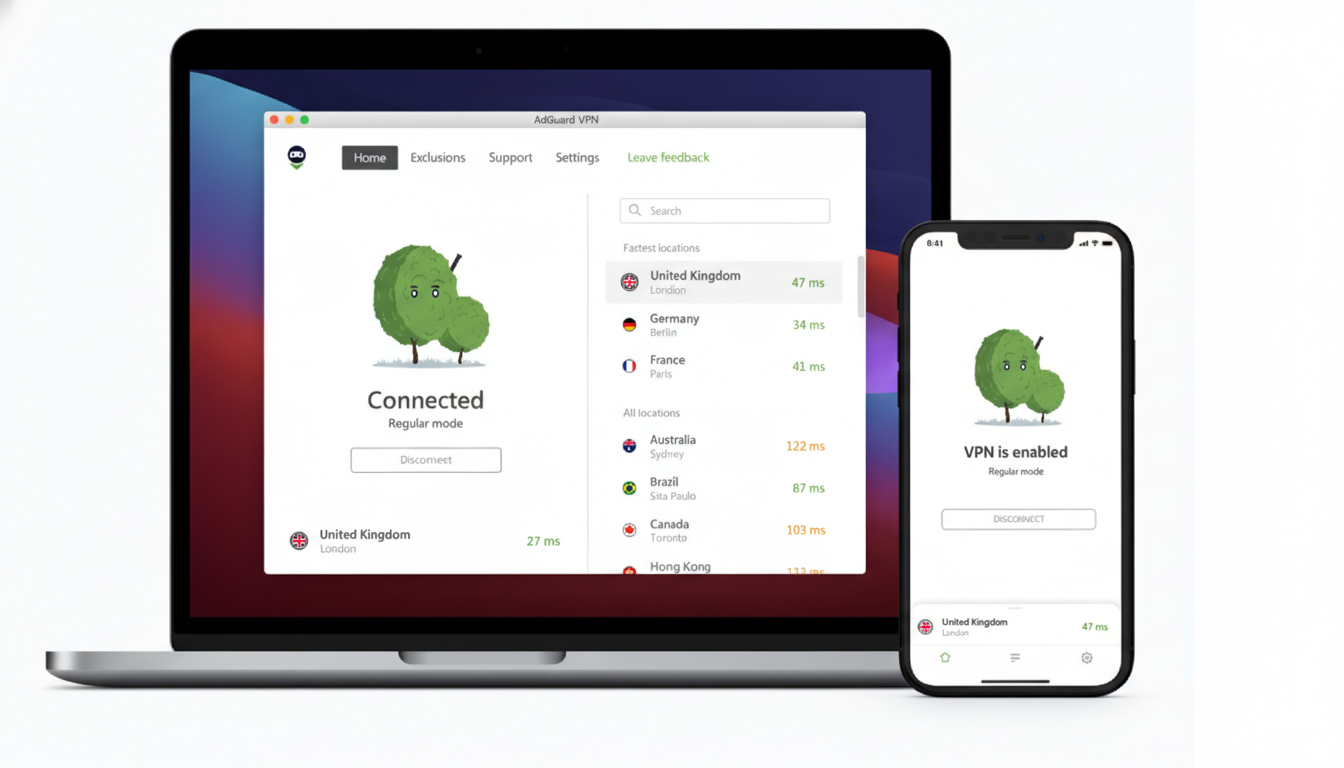
Network size also affects reliability. With 60-plus locations and support for 10 simultaneous devices, AdGuard’s footprint should be ample for households and frequent travelers, but availability can fluctuate by region. As with any VPN, streaming platforms may block certain exit IPs, so region-hopping access to media libraries isn’t guaranteed.
On the ad-blocking side, expect the occasional site to misbehave when scripts are stripped. Modern blockers, including AdGuard’s, allow quick “allowlist” toggles for sites you want to support—worth considering given that publishers fund content through advertising. The Federal Trade Commission has also warned about malicious ads and deceptive redirects; keeping blocking lists and apps updated is essential to catch new threats.
How This Price Stacks Up Against Typical Costs
Standalone VPNs commonly run $60–$100 per year at regular rates, with multi-year plans sometimes dropping to a few dollars per month. Over five years, even discounted subscriptions often land well into the triple digits. Lifetime licenses for premium ad blockers with multi-user features typically list above $100. On those benchmarks, $40 for both is unusually aggressive pricing.
Value aside, the more important metric is how much friction the bundle removes. On busy public networks like airports or coffee shops, a VPN prevents easy session hijacking while the ad blocker cuts down on extraneous calls and drive-by downloads. In real-world testing scenarios published by browser-makers and web performance researchers, removing third-party scripts can shave seconds off page loads and meaningfully reduce battery drain on mobile.
Who This AdGuard VPN and Ad Blocker Deal Fits Best
This bundle is tailored for households and solo users who want straightforward, cross-platform protection rather than tinkering with multiple vendors. If you routinely work on public Wi-Fi, share devices with family members, or simply want cleaner pages without juggling separate subscriptions, it’s an easy win.
As with any privacy toolset, set expectations correctly: a VPN and ad blocker won’t make you anonymous or immune to all tracking, and some services will still gate content by region or device. But for day-to-day security and a calmer web, the combination covers a lot of ground at a price that’s hard to beat.
