


Acer just dropped the pin on a bomb every die-hard esports player has been waiting for (and plenty of us didn’t expect to arrive quite this soon): a 27-inch Predator gaming monitor that can clock in at an eye-popping full-fat 1,000Hz — albeit in a special bust-down bro’ mode of 720p resolution — with another native setting also available at 500Hz and 2560×1440.
Priced at $799 and using fast IPS instead of OLED, the new Predator XB273U F6 is a headliner in that it pushes the refresh-rate ceiling to 1,000Hz — which had previously topped out in retail displays at 500Hz.
- A Real 1,000Hz Mode Arrives, But There Is a Catch
- Why 1,000Hz Actually Matters for Competitive Gaming
- The Technical Hurdles Behind Driving 1,000Hz Displays
- How It Compares With the Average/Leading Competition
- The Small Things That Competitors Care About
- Should You Upgrade to a 1,000Hz Esports Monitor Now?
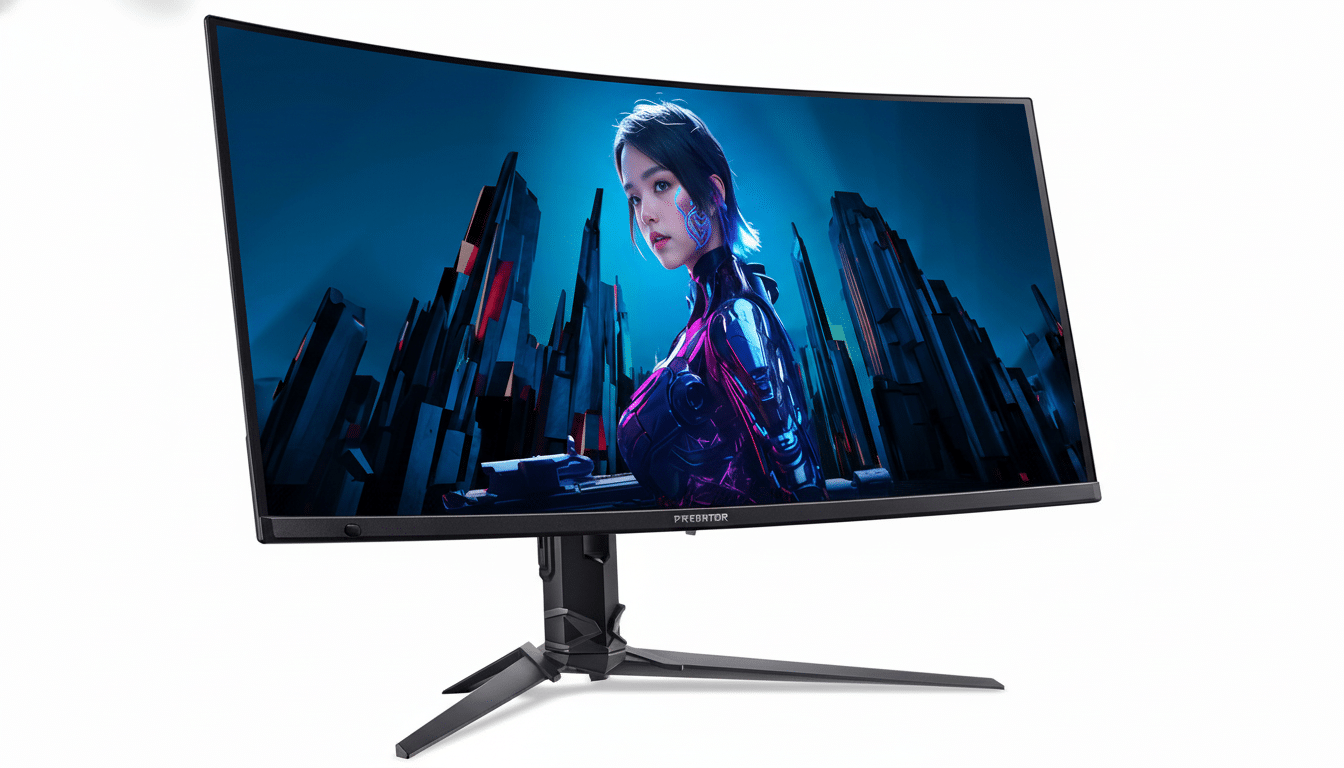
A Real 1,000Hz Mode Arrives, But There Is a Catch
The headline spec is a dual-mode approach: 500Hz at QHD for more mainstream high FPS play and 1,000Hz at 720p for the esports types prepared to trade pixels for speed. Let’s be honest: serious competitors are already running lower resolutions and gutted settings to eke out frames in titles like Counter-Strike 2, Valorant, and Overwatch 2. The mainstream gamer will not be discouraged by moving to 720p if it will lower latency and help movement category definition in fast-paced aim duels.
Handy touches include support for AMD FreeSync Premium as well as a portable little handheld remote for the on-screen display, letting you bounce between modes or profiles without hunting down tiny rear-mounted buttons — a small quality-of-life win that seems custom-crafted with tournament desks in mind.
Why 1,000Hz Actually Matters for Competitive Gaming
Refresh rate isn’t just a vanity spec — it directly impacts input-to-photon latency and how clear motion looks. At 1kHz, each refresh costs you a millisecond (500Hz is 2ms; the new Blade Pro’s 360Hz is ~2.78ms; true old-school Blur Busters–approved native 240Hz blur-reduction science museum lasers are ~4.17ms). Even if your game isn’t running at 1,000fps, a faster scanout shortens the time between moving your mouse and an updated image being displayed on screen. That shaved latency stacks with high mouse polling (4K–8KHz USB polling can drop input granularity to 0.25–0.125ms) and low-latency pipelines from features such as Nvidia Reflex or in-engine render-queue schemes.
Nvidia’s work on display research has been saying for years that ultra-high, super refresh rates are still providing measurable gains in responsiveness even beyond what most think of as the visual plateau. Independent motion-clarity testing communities like Blur Busters have observed comparable trends: higher refresh reduces sample-and-hold blur and can make tracking targets feel more “locked in.” At 1,000Hz and with a swift IPS response time, motion-picture response time (MPRT) dips closer to 1ms, at which point hand-eye feedback nearly feels instant.
The Technical Hurdles Behind Driving 1,000Hz Displays
Driving 1,000fps is crazy hard on even modern engines, but that isn’t the requirement to get an improvement. Overdrive without overshoot, stable VRR at the wide end of its range, and link bandwidth are all things which need to be tuned the entire way through — the system is generally far more complex than display technology. This is likely Display Stream Compression (DSC) over DisplayPort or HDMI to enable 1440p and 500Hz, keeping it within transport limits. With 720p at 1,000Hz, bandwidth is much less of an issue and this also helps the top mode to work.
Panel tech matters, too. IPS has evolved with “fast IPS” designs that promise sub-1ms gray-to-gray transitions, but real-world performance is all about how aggressively overdrive is tuned across refresh ranges. Acer has been mum on strobing/backlight scanning options, so anticipate the usual sample-and-hold behavior; it’s strictly the refresh rate doing the work as far as clarity is concerned here.
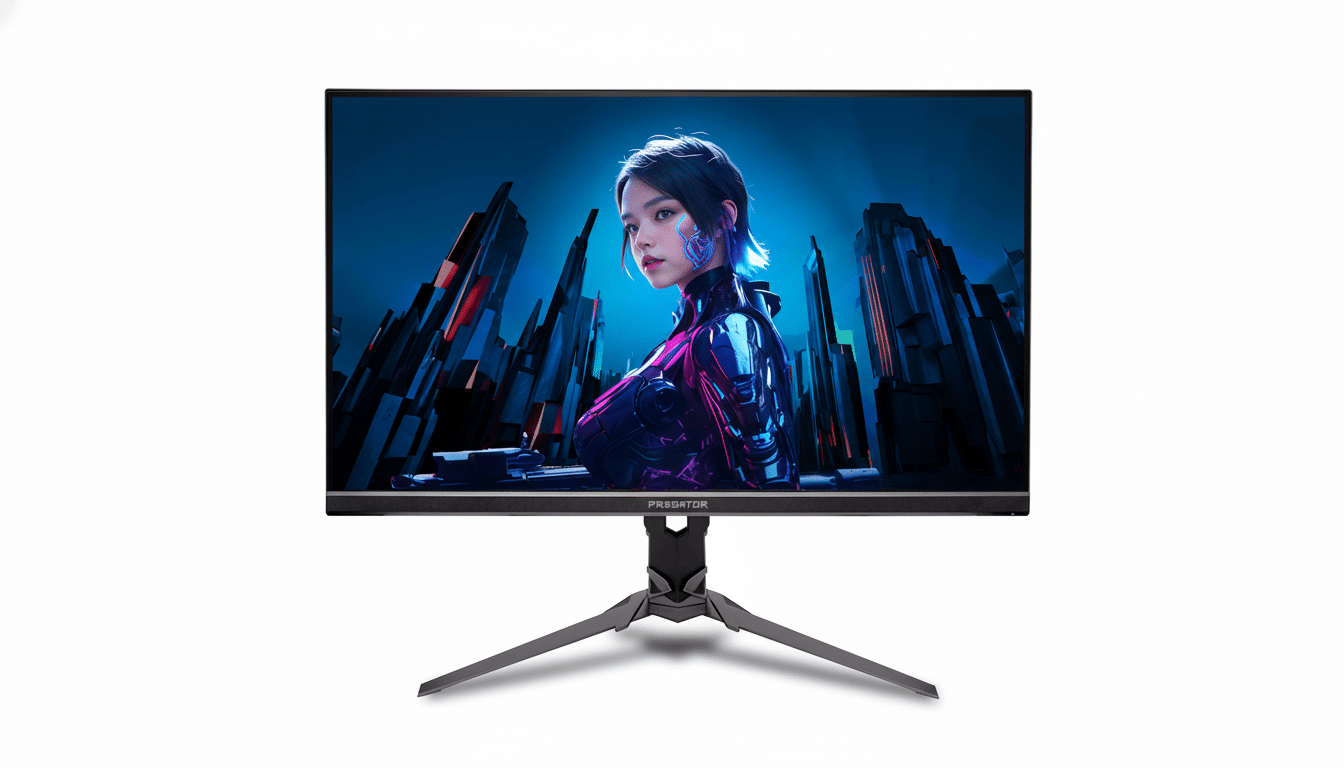
How It Compares With the Average/Leading Competition
Do note that up until now the most ridiculously high retail figures we have seen for panels on sale came from the likes of 500Hz 1080p esports displays and just a handful of 540Hz TN-based models. OLED has taken pixel response to the next level, yet traditional OLED gaming monitors have maxed out at 240–480Hz (size- and resolution-dependent). Panel makers AUO and BOE have shown 480Hz-class OLEDs, but shipping products at those levels are few in number. Acer takes a different tack: you break the 500Hz barrier with a resolution toggle, not an exotic panel type.
For perspective, tourney organizers and developer competitive teams have traditionally focused on frames and latency over fidelity. And Riot Games — as well as ESL, which runs many of the biggest Valorant events — will often point out that pro players prefer lower settings to keep frame pacing tight. There is a 1,000Hz option here that speaks to that philosophy, even if it’s in a specialized mode.
The Small Things That Competitors Care About
The mini OSD remote may sound trivial, but not when you can switch from practice at 500Hz QHD to a match at 1,000Hz 720p in seconds. Throw in the ergonomic benefits of a 27-inch chassis that many gamers already strongly prefer, FreeSync Premium support for tear-free motion when FPS vary, and familiar color stability inherent to IPS panels, and you have a total package built for both scrims and streams.
The price — $799 — is also a factor. As always, high-refresh esports monitors launch at a premium before trickling down. And coming in at less than four digits brings true latency experimentation to a wider range of teams, arenas, and serious ladder climbers.
Should You Upgrade to a 1,000Hz Esports Monitor Now?
If you’re playing more narrative- or visually heavy games, a 240–360Hz 1440p or 4K 120–240Hz OLED may still be the better balance of sharpness and image quality in action that this price range can offer. But if your universe centers on aim trainers, sprays, and micro-corrections in duels, this monitor is a milestone. Even below four-digit frame rates, a 1,000Hz scanout eats into latency and motion blur in ways that you can feel more than count.
What’s perhaps just as remarkable is that the industry has been marching toward this point for a decade, and research funded by GPU vendors as well as by independent testers has repeatedly shown dividends from faster displays. And yet, really, what is even 1,000Hz? Acer’s Predator XB273U F6 not only asks that question but provides the answer to it for competitive players willing to chase every millisecond.
