


A new $69 retro handheld is generating considerable buzz over how it’s able to promise the best of both worlds: Linux for plug-and-play emulation and Android for your mobile games. The Abxylute E1 ships with dual-boot support and a nifty software trick to make up for a big omission. It’s a bold move in a year when there are already tons of budget-friendly handhelds, but it’s different enough to catch eyes.
What We Like Most About This Budget Handheld
The hook is straightforward. Linux starts the user out in a curated experience that is emulator-first and core-centric, where cores and front ends can be preconfigured before the end user has ever touched it; Android gives access to a huge app library and cloud services. That duality is typically something you get in pricier devices, or only if someone in the community figures out a hack. With operating systems saved onto a microSD card, it also means that you can switch them in and out at will to your heart’s content. Of course, the concept has since been popularized by builds such as ArkOS and JelOS on consoles.
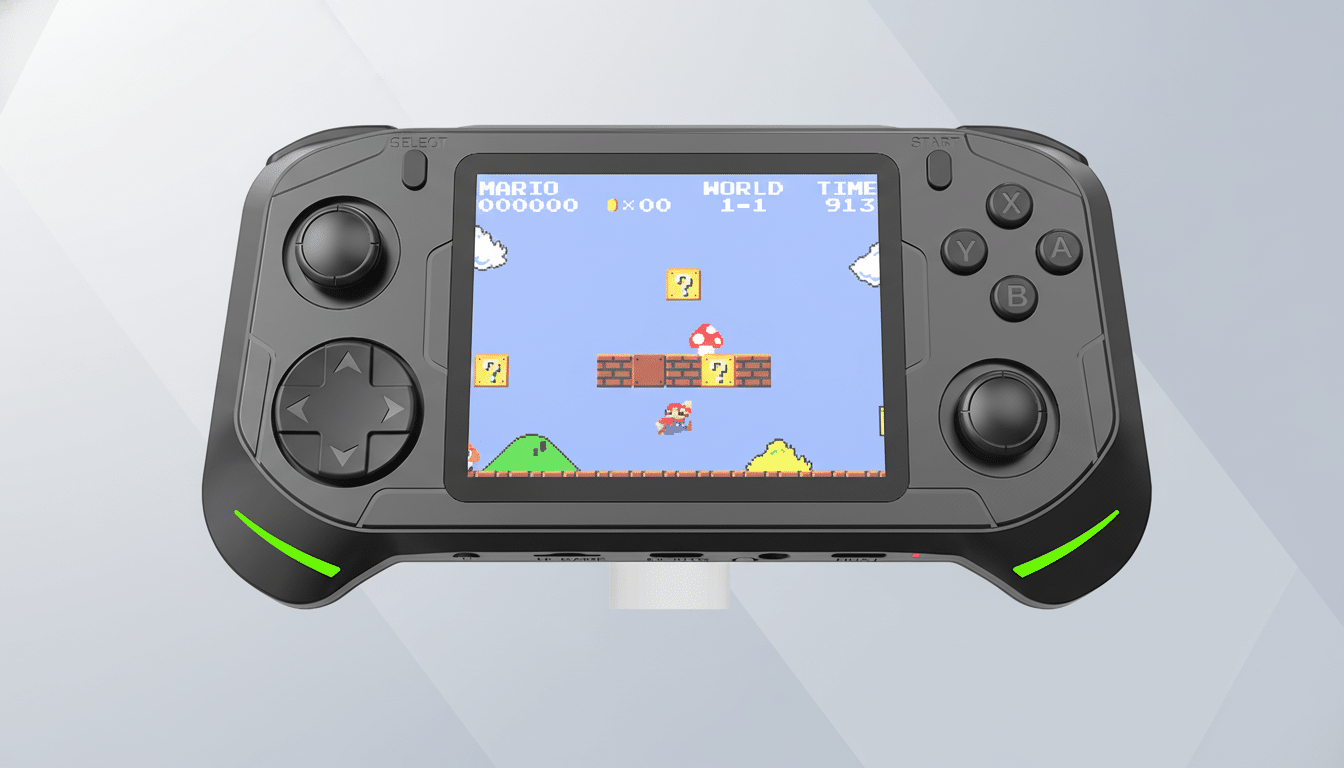
Abxylute’s pitch is about software polish. The company earned a reputation for user-friendly UX with its earlier One Pro streaming handheld, which reduced setup friction for platforms such as GeForce Now and Remote Play. Assuming those lessons carry over, the E1 could eliminate a lot of the trial and error that frightens people off from experimenting with emulation.
The Big Catch: Navigating Android Without Touch
Here’s the rub: the 3.5-inch IPS display isn’t touch-enabled. That’s a true constraint on Android. So many setup flows, storefronts, and game UIs will be tap-focused. The analog stick-based “mousing” is awkward to the extreme in places, and damn near broken in others.
To compensate, Abxylute created a companion-style workflow that delegates discovery and downloads to your phone, which then pushes content across the network to the handheld. If done right, this dodges the ugliest of Android’s touch-first ergonomics. It also teases a guided pipeline for getting emulators, BIOS files, and per-core configs installed—a sore spot even for experienced users. The trade-off is trust and longevity: phone-first funnels require continued app support, permissions, and a reliable backend.
Detailed hardware specs and expected performance
Under the hood, the E1 has a Rockchip RK3566 with 2GB of RAM. It’s efficient and has good old Linux support, so it is now one of the most common SoCs used for inexpensive retro handhelds. Also, expect good-enough performance on 8-bit, 16-bit, and 32-bit game consoles such as the PlayStation and N64 under lightweight Linux distributions. Some Dreamcast and PSP games might be serviceable, but this is no GameCube or PS2 killer.
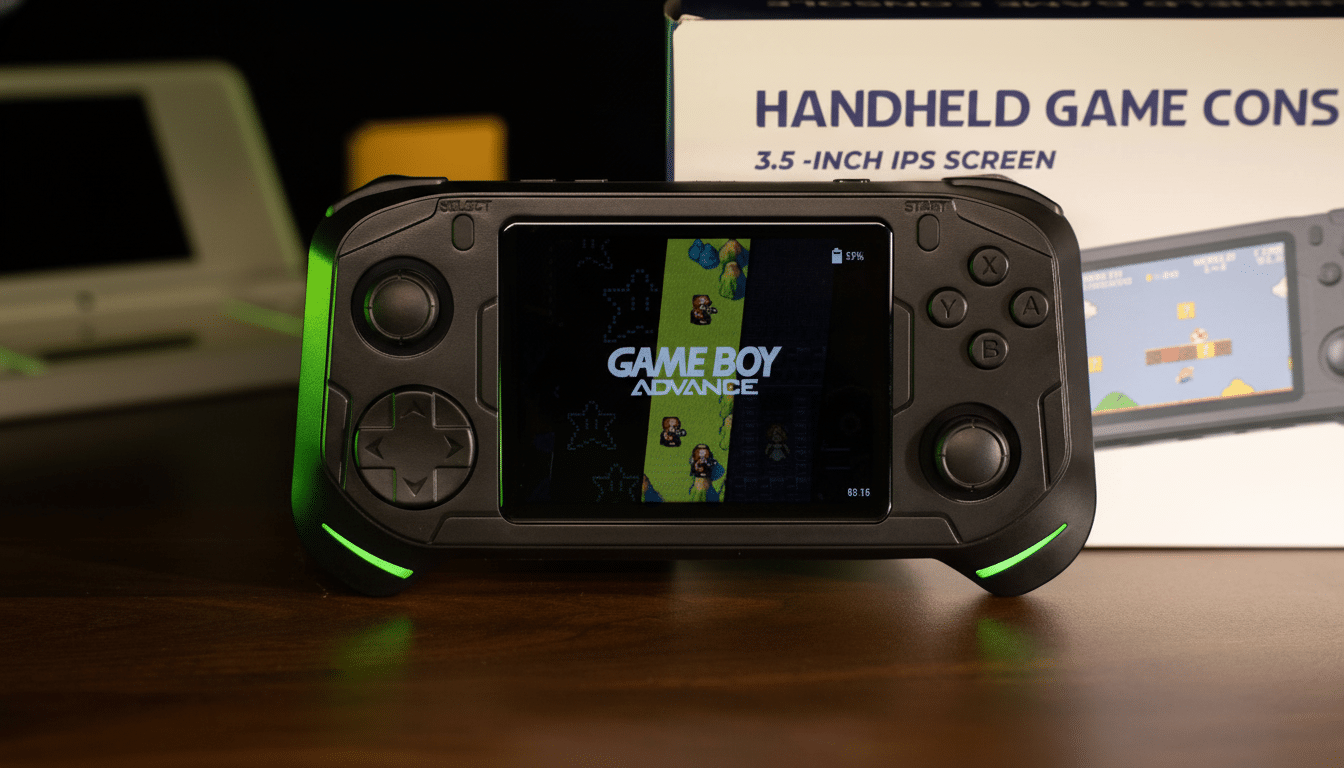
The device retains a classic 4:3 aspect ratio on a 3.5-inch IPS panel—perfect for retro libraries—as well as asymmetrical analog sticks.
A 3,000mAh battery boasts a five-hour runtime, which, if the past is anything to go by, aligns with similarly configured handhelds running 16-bit and PS1 workloads. The bizarre top-left analog stick placement also suggests Abxylute is not just leaning toward emulation but streaming or Android-native action titles where current stick ergonomics are supported.
Software strategy, companion app, and ecosystem
Linux builds on systems like this tend to come with front ends such as EmulationStation or RetroArch, allowing users to dive right into their libraries instead of bumping up against action menu tedium and luchador-grade rattling with the core selection window and controller mapping. It’s on the Android side that the E1 takes an unconventional turn. Rather than sidestepping the touch absence, the “one-stop” phone-to-handheld guided path offered by Abxylute is designed to orchestrate installs, updates, and simplify configuration, with the companion pathway as its central thrust.
For newbies, that could be life-changing. Power users take note: OS images based on microSD mean you’re still going to be able to flash community firmware, swap storage, and do all that fun tinkering. Retro handheld communities recommend this as it reduces the probability of bricking your device and keeps everything reversible.
Market context and key budget competitors
The E1 falls into a busy end of the market where it seems everyone is pushing a sub-$100 device. Lower-cost options such as the Anbernic RG35XX series compromise in price but only work with Linux, while devices that do use Android and better mainstream CPU silicon—i.e., Retroid’s T618 offerings—typically begin above $119. By providing dual-boot at $69, Abxylute is walking the tightrope between capability and price, gambling that software ease of use can matter as much as raw horsepower.
Zooming out, handheld interest has boomed on the back of hybrid ecosystems. As Steam Deck, Windows-based portables, and other premium rigs fight their way into the headlines, the long tail of retro handhelds has continued to expand through affordable hardware and open-source software. Analysts and industry trackers have noted that handhelds are one of the remaining bright spots in gaming hardware, also citing the nostalgia factor and a cheaper entry point compared with full consoles.
Price, availability, and early outlook for the E1
Abxylute is currently offering early-bird pricing of $69 with complimentary shipping through their online shop. The company has not said when the introductory price will end. Historically, broader marketplace availability is not far off after these initial batches ship.
If the phone-based installer is reliable, then the E1 might be an easy recommendation to potential new users who want Linux simplicity with a safety net of Android installation. If not, then you’re stuck with the remote and its clunky navigation, which severely limits Android’s utility to just streaming content and a few controller-friendly apps. Either way, at this price, the E1’s dual-boot proposition and RK3566 base make it one of the more interesting budget handhelds of 2022.
