


XReal is launching a new pair of AR smart glasses called the 1S, and what they can do has our brains melting down with ideas for applications that can algorithmically convert almost anything you watch or play into stereoscopic 3D. The company calls that feature Real 3D, and it’s got impressive depth on games in early demos but still needs work for video.
In addition to the glasses, XReal is debuting a smaller Neo adapter for consoles and mobile devices as well as a 240Hz gaming-oriented model that’s designed in collaboration with Asus ROG.
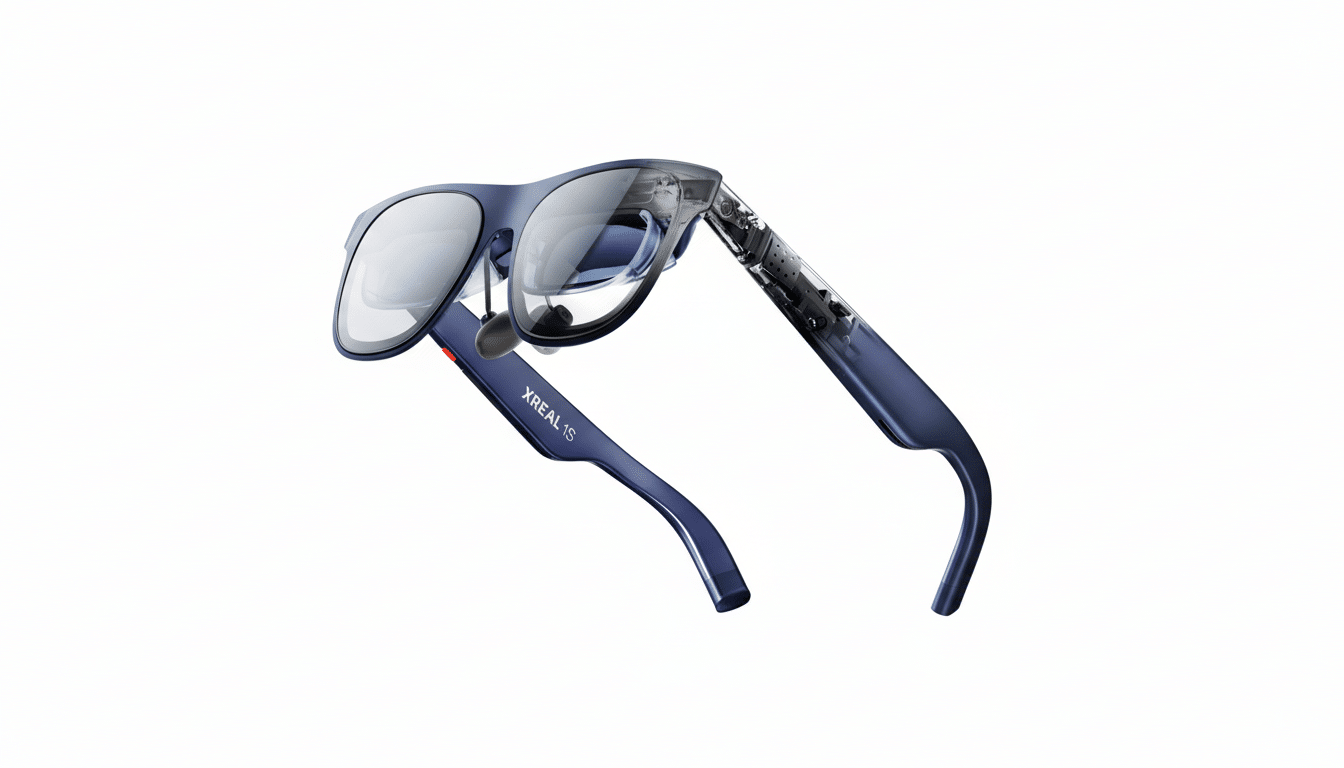
How Real 3D Works and Where It Truly Excels
Real 3D is powered by XReal’s X1 spatial processor, which processes a pair of slightly different images (one for each eye) to generate depth without need of special 3D content or app support. If you like, think of it as real-time depth estimation and reprojection on top of a regular video signal. The payoff is most obvious in games; challenges like Mario Kart World and Yooka-Laylee take on a diorama-like sense of space, while 2D platformers like Hollow Knight Silksong and Rogue Legacy 2 receive an elegant pop that makes the sprites and foreground elements feel as though they’re physically separated from the backdrop.
Setup is extremely low friction because the conversion is happening on the glasses—no game patches, no toggling a console mode, no media library re-encoding. The 1S also inherits an ultrawide mode from XReal’s more expensive models, which enlarges the virtual screen when you want a filmlike experience.
Where It Stumbles: Video and Frame Pacing
Films and TV are tougher. Depth cues of live-action, of course, change from shot to shot, and so the system occasionally misreads a scene, and you get subtly wrong inversion errors where backgrounds are foregrounds. For me, one instance in Fallout saw a backlit character briefly “appear” behind the wasteland; a reminder that computer-generated 3D is always making educated guesses. And when it happens, the effect is more distracting than enveloping.
Performance overhead is the other hitch. Switching on Real 3D can induce frame rate jerks, flicker, and visible processing artifacts, and overall sharpness is diminished over 2D mode. Extended viewing can bring eye fatigue to some; ophthalmology groups like the American Academy of Ophthalmology point out that conflicts in depth and flickering are usual factors with stereoscopic displays. The upside: XReal says there are updates on the way and that even recent firmware visibly runs smoother than early demos, so with better frame pacing and artifact suppression, the company can claw back stability.
Key Specs, Pricing Details, and Availability Info
The 1S aims for a happy medium on brightness and contrast, promising a quoted 700 nits peak and a 52-degree field of view. That FOV is wider than the 50-degree field of view from the previous-gen XReal One but less than the One Pro’s 57 degrees. Color performance, as you might expect, matches recent XReal models, and its familiar 3DOF head tracking can create the impression of a virtual screen pinned to the world.
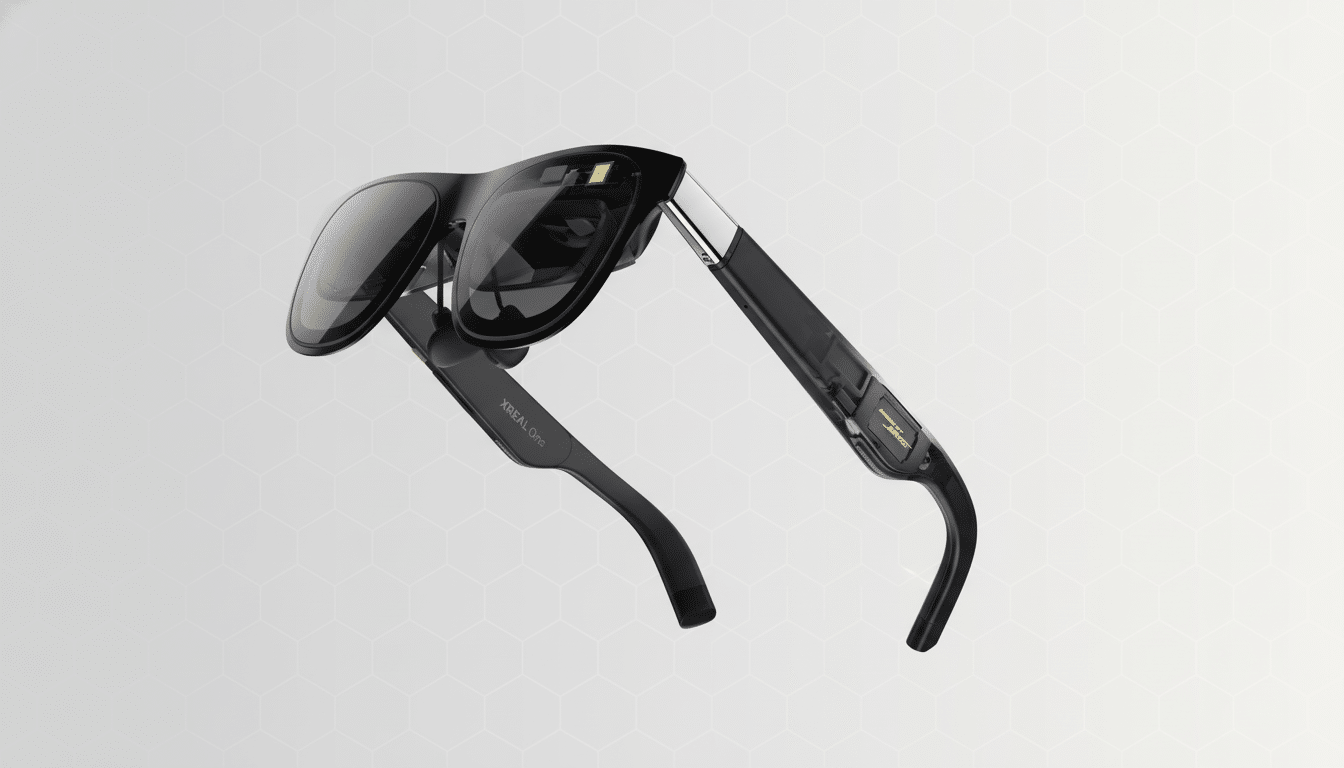
Pricing comes in at $449, which is $50 cheaper than the original XReal One, and $200 less expensive than the One Pro. The glasses are available now. XReal’s $99 Neo adapter launches alongside it, helping expand device support and reduce the dongle clutter often associated with AR glasses at home.
The Smaller Dock and the Gaming-Optimized Variant
Neo pairs a battery and your video adapter to let you use the glasses with your Nintendo Switch or future Switch 2—while keeping all things powered via a USB-C passthrough. The size of the unit is a compact 4.6 by 2.8 by 0.7 inches, which is far smaller than other Nintendo Switch docks on the market like Viture’s Pro Mobile Dock and RayNeo’s JoyDock, with measurements more around 6.9 x 3.9 x 0.5 inches, respectively. Rather than a clunky snap-on frame, Neo employs a magnet-and-ring mounting system that’s lighter—and agnostic between devices, if not as mechanically secure.
For fans, the Asus ROG XReal R1 advertises itself as the world’s first 240Hz AR smart glasses for PC gamers pursuing ultra-high frame rates. It has the same 57-degree FOV of One Pro, runs the same X1 processor, and features 3DOF tracking, with electrochromic (auto-darkening) lenses that darken and lighten based on ambient light. The R1 is a nod to that and skips Real 3D and ultrawide mode in favor of refresh and responsiveness. It is not priced yet and is due in the first six months of 2026.
Why This Could Be 3D’s Promising Second Act
A decade ago, the 3D television boom petered out because of a lack of content and an inconsistent experience. XReal’s pitch is to do something a bit different—make 3D ubiquitous, one-button, and seamless, that adds value on today’s games and shows. If the company can nail frame timing, reduce artifacts, and maintain clarity, Real 3D could be the kind of feature that folks leave turned on—especially for games where the depth effect is already effective.
Firms like analyst outfit IDC have been pointing toward the steady progress of light AR wearables as brighter displays and compute become more efficient. The 1S pushes that dynamic further, turning wearing 3D into a daily possibility, rather than an occasional special-event extravagance. For now, the promise is real and palpable; we won’t know if it’s prime-time ready until several more firmware updates are seen.
