


The stealthy CES laptop cherry deserves more attention
With so many flashy foldables and concept PCs making headlines, one of the more intriguing thin-and-light announcements at the show is underappreciated: the updated Asus ZenBook A14. And while it retains the best elements of last year’s breakaway model, there’s new silicon here (if not much), a slightly larger sibling, and a handful of practical upgrades that make it a legitimate MacBook Air challenger for travelers and students alike.
Why it matters in the ultraportable race
The new ZenBook A14 is based on Qualcomm’s Snapdragon X2 Elite platform with a 14-core CPU configuration (12 Prime cores, six Performance cores) and an 80 TOPS NPU. That last number is significant: Microsoft’s Copilot+ PC baseline requires a minimum of 40 TOPS of on-device AI acceleration, so this arrangement provides spare processing overhead for live transcription, image generation, and background AI effects without beating the battery mercilessly.
- The stealthy CES laptop cherry deserves more attention
- Why it matters in the ultraportable race
- One MacBook Air alternative, by the numbers
- Build quality and everyday ergonomics details
- Ports and connectivity you actually use every day
- Market context and what to watch in the months ahead
- Early verdict: a sleeper contender among thin-and-light laptops
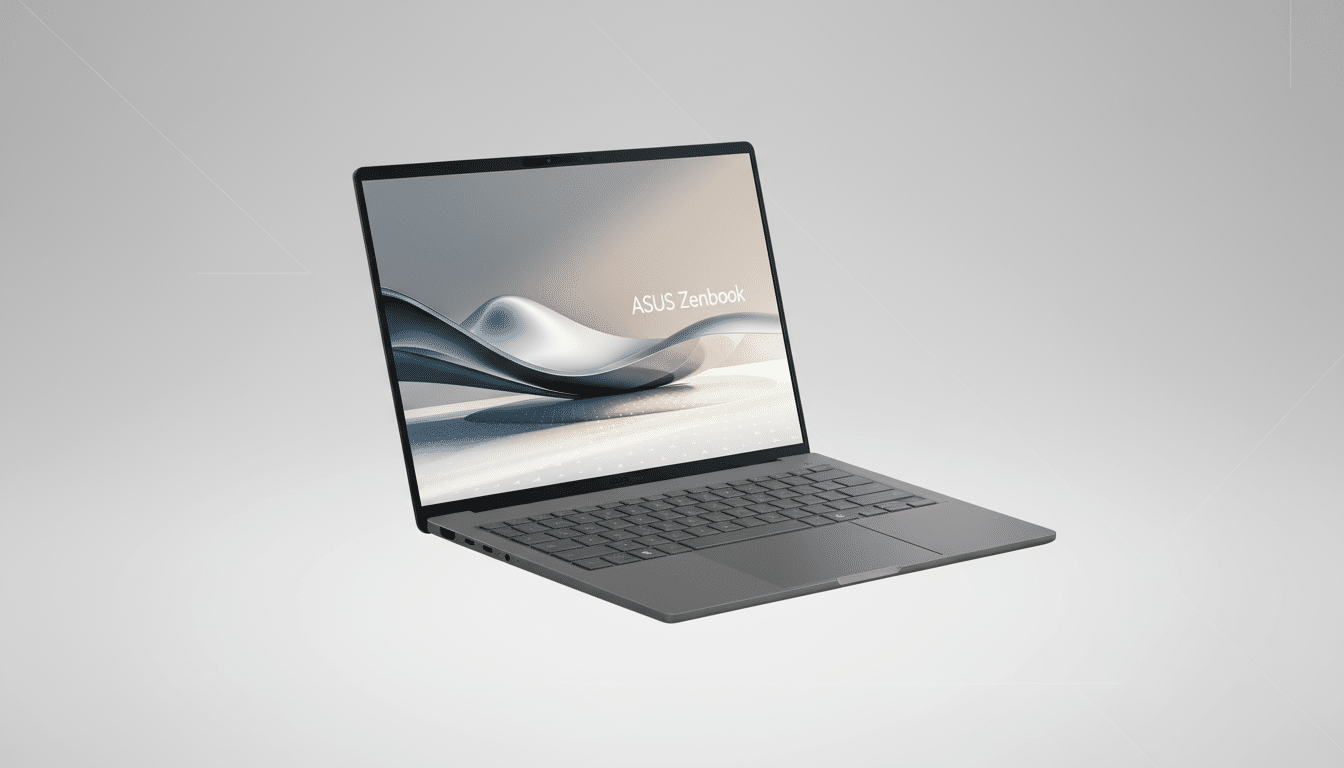
Asus mates the chip with a methodical dual-fan thermal design tucked into a 0.63-inch pyramid, which is a practical remedy to sustained-load throttling that afflicts many fanless ultraportables. It might not be silent like the MacBook Air, but that approach should maintain peak performance longer in creative apps or during hour-long video calls.
One MacBook Air alternative, by the numbers
The 14-inch variant runs in at 0.98 kg, meaning it’s lighter than the 13-inch MacBook Air by around 21% in weight. There is also a new 16-inch option for users who want more screen real estate but aren’t ready to leap into the world of workstations. The trade-off: the A14’s OLED panel is full HD, not a higher-resolution pixel-per-inch you get with Apple’s Liquid Retina. Nonetheless, OLED carries with it true blacks, rapid response times, and superior contrast for media and UI clarity.
Battery life claims are eyebrow-raising. The A14 gets a rating of more than 28 hours of video playback from a 70Wh pack, according to Asus. On paper, that’s—up to a certain point—~56% longer than Apple’s video playback number for the MacBook Air (one test methodology does not equal the other and there will be variance in real-world mixed use). And even if the final number comes in lower, a 70Wh battery inside a sub-1 kg shell is going to make for a compelling travel tale.
Build quality and everyday ergonomics details
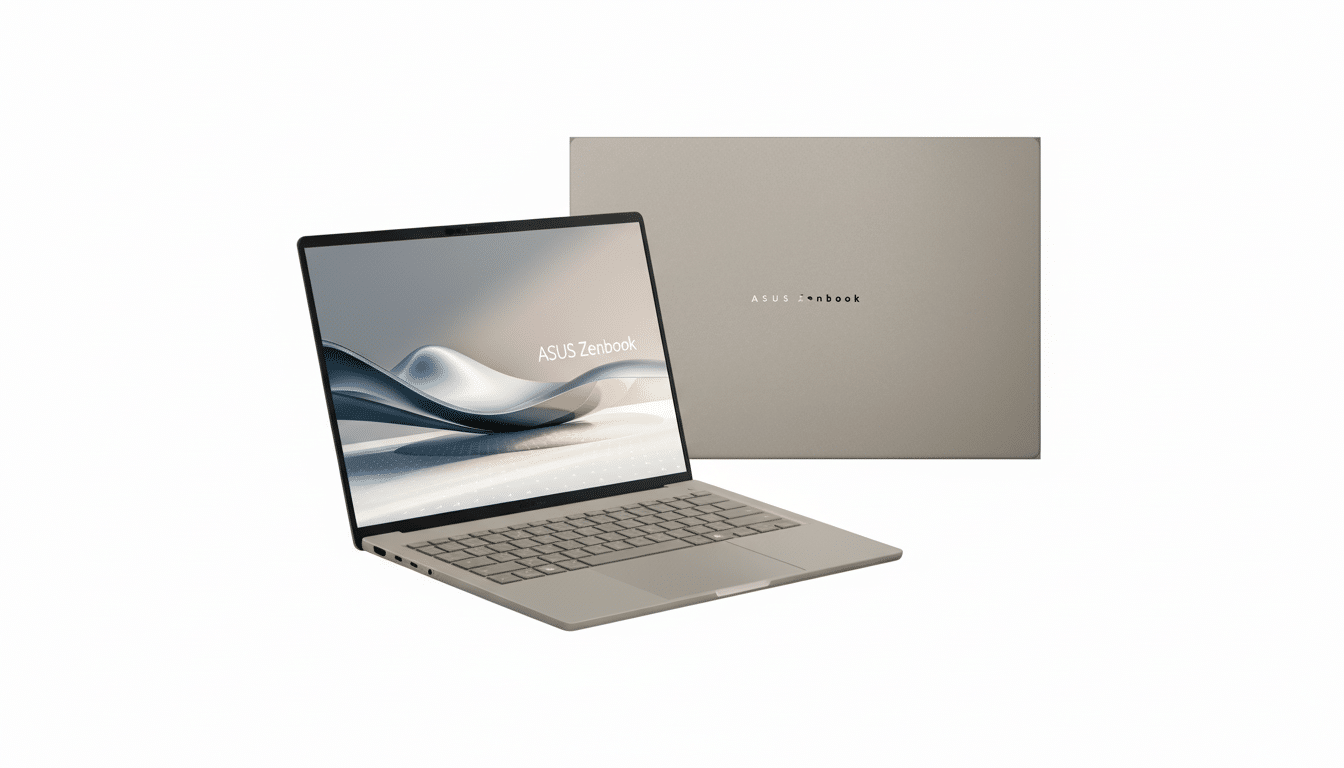
Asus continues to use its Ceraluminum, which it says fights off scratches from day-to-day use and cuts down on fingerprints. The chassis is durable but also meets MIL-STD 810H certification, while the EasyLift hinge allows for one-handed opening. A tighter hinge tension this time around means less screen wobble when tapping at speed, and the expansive touchpad handles smart gestures and palm rejection without fuss.
Everything is straightforward in two configurations:
- 24GB RAM and 512GB storage
- 32GB RAM with 1TB
It is a good fit for the kinds of creative and productivity tasks common to users, and mirrors the unified memory ceilings potential buyers are contemplating on the MacBook Air.
Ports and connectivity you actually use every day
Port selection is where the A14 ekes ahead of many ultralights. You get the following:
- USB 3.2 Type-A
- Two USB 4.0 Type-C with display and power delivery
- HDMI 2.1
- 3.5mm audio jack
That translates to skipping the dongle dance for plenty of office or classroom scenarios. Wireless is future-proofed with Wi-Fi 7 and Bluetooth 5.4, one step further from the Wi-Fi 6E you’ll find in most high-end notebooks today.
Media and conferencing get thoughtful touches: the OLED panel is tuned for video playback, audio supports Dolby Atmos and Snapdragon Sound, and the FHD camera includes facial recognition through Windows Hello.
Apple’s cameras are still great, but log-in through the webcam and biometrics is a nice convenience advantage for Windows users.
Market context and what to watch in the months ahead
Analysts for IDC and Gartner have observed a resurgence in demand for premium PCs, as users opt to go longer between upgrades while likewise expressing interest in AI-ready notebooks. Windows on ARM is a huge part of that recovery, with Qualcomm’s newest platforms in hot pursuit of Apple’s efficiency-per-watt leadership. If battery life and apps land where they ought, the ZenBook A14 could be a reference design in this wave: slim, light, AI-centric—all that jazz without the price tag of performance-first machines.
Pricing is going to be the swing factor; Asus has not announced it. The company’s ZenBook line historically has jousted aggressively with Apple on its entry and mid-tier configs, and that positioning will matter as buyers compare OLED depth, port versatility, and AI computing to the MacBook Air’s polish, higher-res display, and fanless quiet.
Early verdict: a sleeper contender among thin-and-light laptops
The redesigned ZenBook A14 isn’t shouting for attention, but it deserves to be noticed. It weighs less than a MacBook Air, carries a big battery, modern connections, and an 80 TOPS NPU—it seems designed for commuters and frequent flyers who want endurance and versatility without having to carry adapters. If a 16-inch version can manage the same juggling act on an even bigger canvas, this might wind up as a sleeper hit in thin-and-light laptops for the year.
