


A group of Korean creators is subjecting Samsung’s most ambitious foldable to a marathon test for durability, streaming thousands of open-and-close cycles live in an effort to provide an answer to a simple question with big implications for buyers. The inner display of the Galaxy Z TriFold is still going, though the hinge is now beginning to behave differently in a fashion that will be noticeable for real users as it goes past 160,000 folds.
Inside the relentless livestream stress test of the TriFold
Across the OMG_electronics channel, you can watch many hosts spend the last several days opening and closing the TriFold’s two hinges on camera. The pace is relentless: hours-long sessions, meticulous logging, and on-the-fly notes when something changes. At the 60,000 mark, they reported the first noticeable creaks from the hinge assembly. A little before 145,000 cycles, the resistance began dropping visibly — the hinge started to feel nearly “liquid” instead of having that solid feel it did earlier in its run.
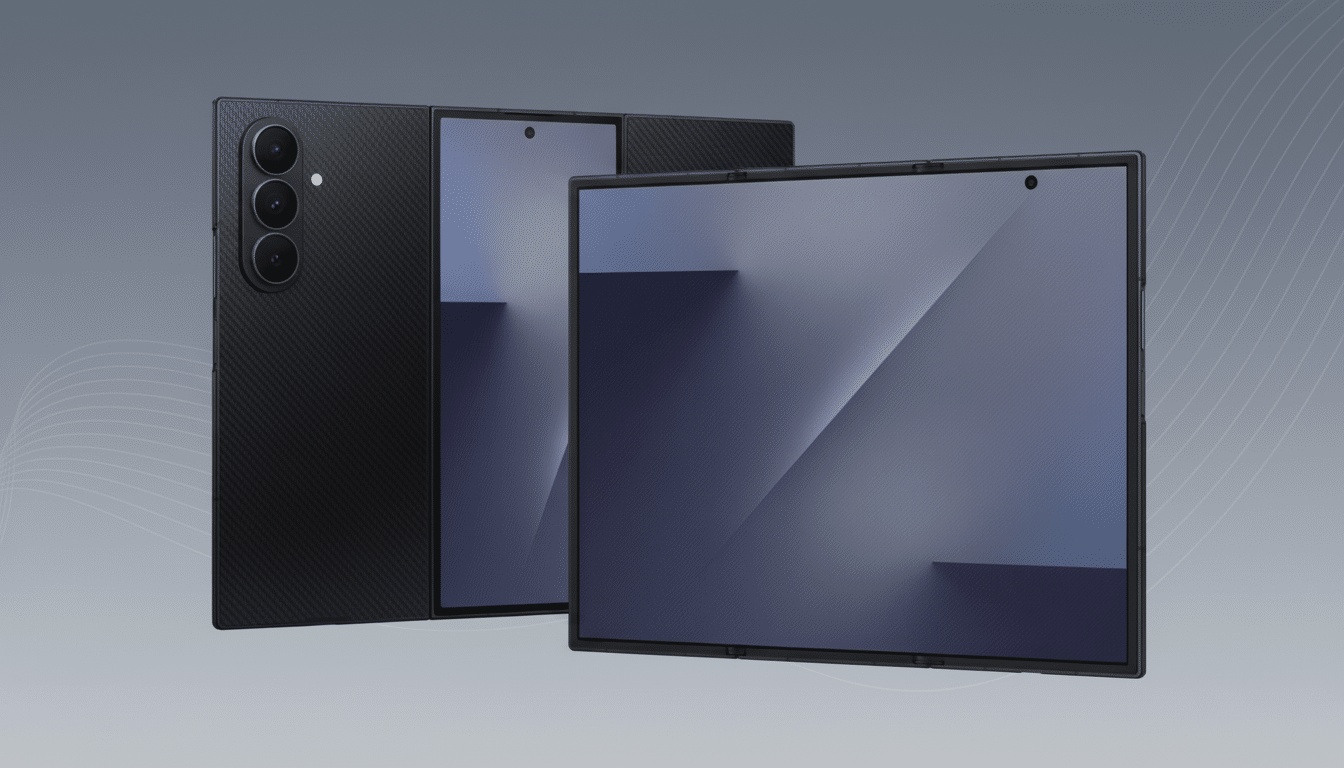
After an eighth straight day of folding, the count ticked past 150,000 cycles. As the stream dragged on into the next session, the foldable’s inner screen kept flickering to life and touch input continued to respond, with no glaring dead spots or artifacts visible on camera other than, you know, those crease reflections.
What Samsung promises for display and hinge endurance
For its own part, Samsung’s published number for the TriFold highlights the panel, not the equipment that slides it back and forth: The inner display is good for 200,000 folds. In the real world, that’s about 100 open-close motions a day over five years — a lot more than people will see with something like a book-style foldable. That same company’s separate claim for the Galaxy Z Fold 7 is even higher at 500,000 folds, a measure of just how far hinge engineering has advanced in the more traditional form factor.
Independent stress tests conducted on recent Samsung foldables have seen them reach or surpass 200,000 manual folds, but the same can’t be said about the TriFold. There are now two hinges, more moving parts, and a larger internal display that feels like the one on an undersized tablet. That complexity ups the stakes for mechanical wear over time, even if the screen itself survives.
How hinge behavior differs from the inner display’s life
The livestream makes clear a pernicious separation between related behaviors: Panel endurance and hinge durability don’t necessarily degrade in lockstep. Although the OLED layer and digitizer continue to register taps and swipes after 160,000 cycles, the hinge’s waning resistance makes for a less pleasurable physical experience. A sloppy hinge can mean a less predictable device when propped up at certain angles, louder creaks over time, and even potential premature failure if dirt or micro-abrasion gets into the mechanism.
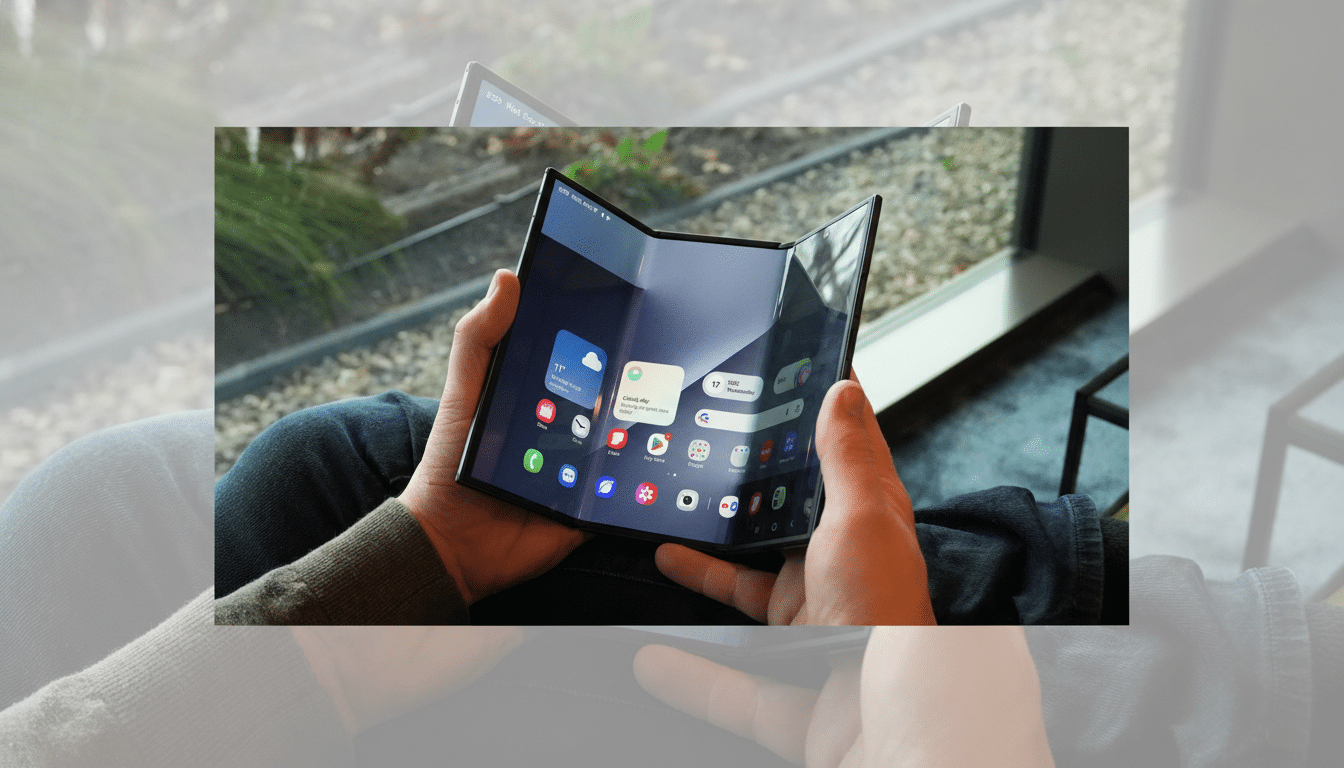
That’s important on a $2,400 device that has numerous postures — phone, mini-laptop, and tablet — which each depend on hinge tension to keep them in place. The YouTubers’ setup is an environment-controlled studio with low dust and humidity. Real-world environments are more brutal than that; from pockets filled with lint to sand-strewn spots on beaches. Any intrusion could probably hasten the sort of creaking that first began to be heard at about 60,000 cycles.
How many folds most people will rack up in daily use
Usage habits vary, but both studies of smartphone habits and prior foldable telemetry imply that most people will not get anywhere close to 100 folds in a day.
I have a lot of what are probably fairly typical days like this, some in the dozens and with spikes while traveling or on workdays heavy on multitasking. The TriFold’s spacious canvas might push that number higher; it encourages more frequent switching between compact and tablet modes. Even still, the achievement of the 150,000-fold likely eclipses years’ worth of normal consumer usage.
Where the fold count stands now in the ongoing stream
As of the last rounds, OMG_electronics is still livestreaming and counting each cycle. The headline result so far is a nuanced one: the Galaxy Z TriFold’s display has outlasted 160,000 folds (it continues to work normally), yet hinge rigidity began to drop off after around 145,000 and you could hear creaks even earlier. That trade-off doesn’t doom the device, but it does sharpen the trade-offs built into tri-fold designs.
The next large checkpoints are clear. If the stream is able to make it to at least that 200,000-fold figure from Samsung, then it will confirm the handset’s fold claim while also giving us some live intelligence on how the hinge is working out. For now, potential buyers will have to weigh how enticing the promise of a tablet-class screen that fits in a pocket is against the mechanical reality of double the hinges and double the potential wear points — and watch for where it all lands.
