


YouTube has released its first official app for Apple Vision Pro, bringing the platform’s vast video library natively to Apple’s headset after a long stretch of browser-only workarounds. The app is available through the App Store for Vision Pro models powered by Apple’s M2 and M5 chips, and it supports the full YouTube experience—from subscriptions and playlists to Shorts—inside a theater-like virtual environment.
What the Vision Pro YouTube App Delivers
The new app drops videos into a spatial, cinema-style setting where viewers can scale the screen, anchor it in their room, or watch against one of visionOS’s immersive backdrops. Crucially, it behaves like YouTube on other major screens: your account, watch history, and personalized recommendations carry over, and key discovery surfaces like Home, Subscriptions, and Shorts are built in for lean-back browsing.
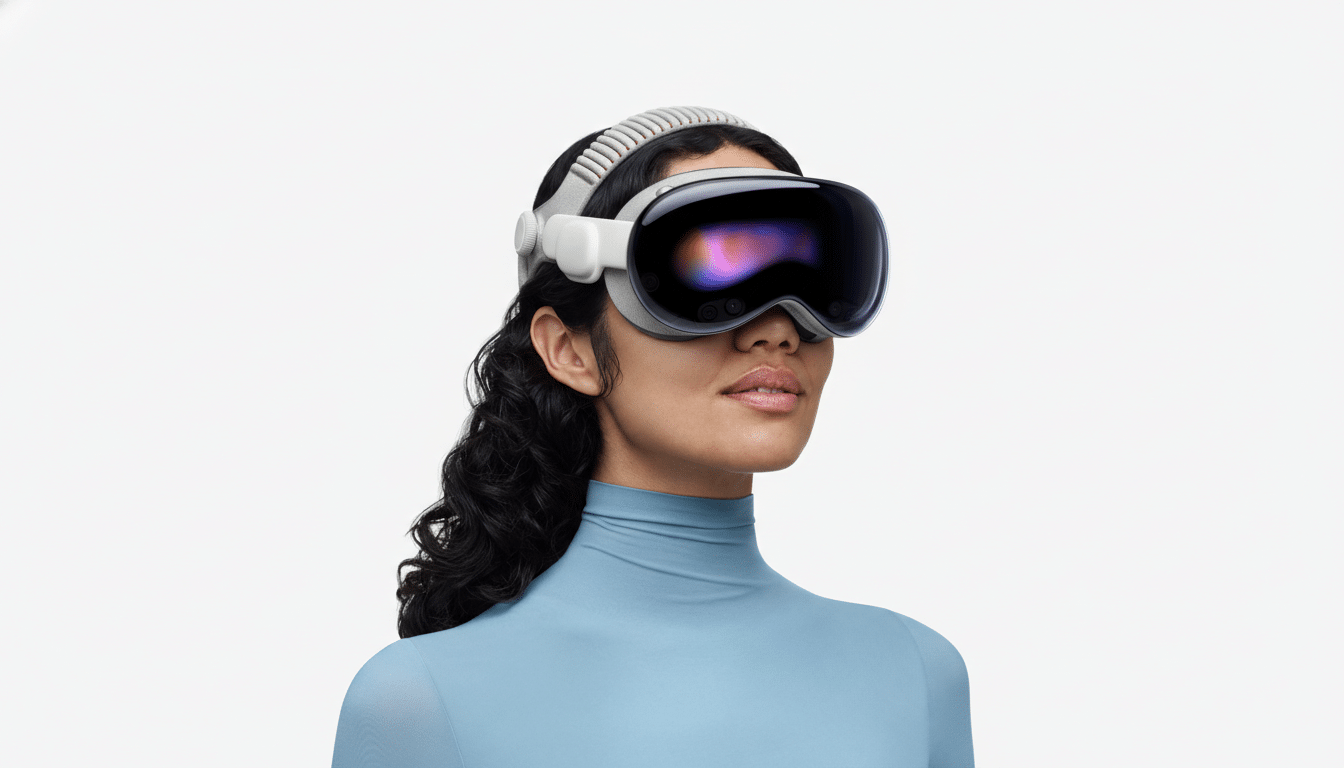
On M5-equipped Vision Pro units, the app can render videos up to 8K when available, a notable showcase for creators who publish ultra-high resolution footage. While the 8K catalog remains specialized, nature demos, cityscapes, and product reels are increasingly common on YouTube, and Vision Pro’s pixel density combined with high-bitrate streams can deliver striking clarity. For most viewers, 4K HDR content—abundant on YouTube—should be the practical sweet spot.
Navigation leans on eye tracking and hand gestures, so common actions like scrubbing, adjusting captions, or jumping through a queue are designed for quick, controller-free input. In practice, this means everyday YouTube habits—letting the algorithm run, bingeing creator playlists, or catching up on late-night highlights—translate cleanly to a spatial canvas.
Why This Matters for Vision Pro Owners and Everyday Viewing
For a device built around premium visual experiences, the absence of a native YouTube app had been a conspicuous gap. YouTube is where casual viewing, creator-led programming, and niche interests converge. The platform reports more than two billion logged-in monthly users worldwide, and Nielsen’s The Gauge has repeatedly ranked YouTube among the top destinations for TV viewing share in the U.S. Bringing that habit to Vision Pro, without the friction of a browser, is a meaningful quality-of-life upgrade.
It also strengthens Apple’s pitch for visionOS as an everyday media device, not just a showcase for first-party apps or tentpole partners. Disney+ and Apple TV were early proof points for immersive video, but YouTube fills the “default daily” slot—what people watch when they aren’t sure what to watch. That shift can lift session time and engagement, two signals that matter to both Apple’s platform strategy and developers deciding whether to invest in spatial apps.
The Backstory and Timing Behind YouTube’s Vision Pro App
Until now, Vision Pro owners turned to Safari for YouTube, and a handful of third-party clients tried to bridge the gap with varying success. YouTube previously indicated to reporters at The Verge that a visionOS app was in development, and the platform’s existing footprint on headsets like Meta Quest suggested it was only a matter of time before Apple’s device joined the lineup. Today’s release finally aligns the world’s largest video platform with Apple’s most ambitious new hardware category.
The launch also underscores a broader trend: major services are moving cautiously but steadily into spatial computing. Building for eyes-and-hands input, optimizing for giant virtual canvases, and tuning playback for new display characteristics all add engineering overhead. YouTube’s arrival signals that the audience—though still early—has matured enough to justify that work.
What to Watch Next as YouTube Expands on Apple Vision Pro
Early adopters will be looking for how quickly the app iterates. Live sports and multiview via YouTube TV, expanded support for 360 and VR180 content, and deeper integrations with watch-along features would all play naturally in a spatial context. It’s not yet clear which of these are planned, but Vision Pro’s interface is well-suited to side-by-side feeds, ambient viewing, and large-format immersion—core scenarios for YouTube’s future on headsets.
Bottom line: YouTube’s official jump to Vision Pro doesn’t change what the headset is, but it meaningfully changes how often many owners will use it. For a platform defined by moments of everyday viewing, this is the missing app that makes Vision Pro feel more complete.
