


Startups can get lost in the noise at CES. YC-backed Bucket Robotics didn’t. The San Francisco company muscled through bad weather, DIY logistics, and a week of nonstop pitching to turn its first appearance on the show floor into real traction with manufacturers and investors — and, more importantly, to validate a product aimed squarely at one of industry’s toughest bottlenecks: surface quality inspection.
A Rain-Soaked Road to Las Vegas Saves the CES Booth
When flight delays threatened the team’s booth plan, founder and CEO Matt Puchalski loaded the display into a Hyundai Santa Fe and drove through heavy rain to Las Vegas. It wasn’t glamorous, but it meant Bucket Robotics arrived intact and on time in the automotive-focused West Hall — the right neighborhood for a startup selling factory vision software to carmakers and their suppliers.
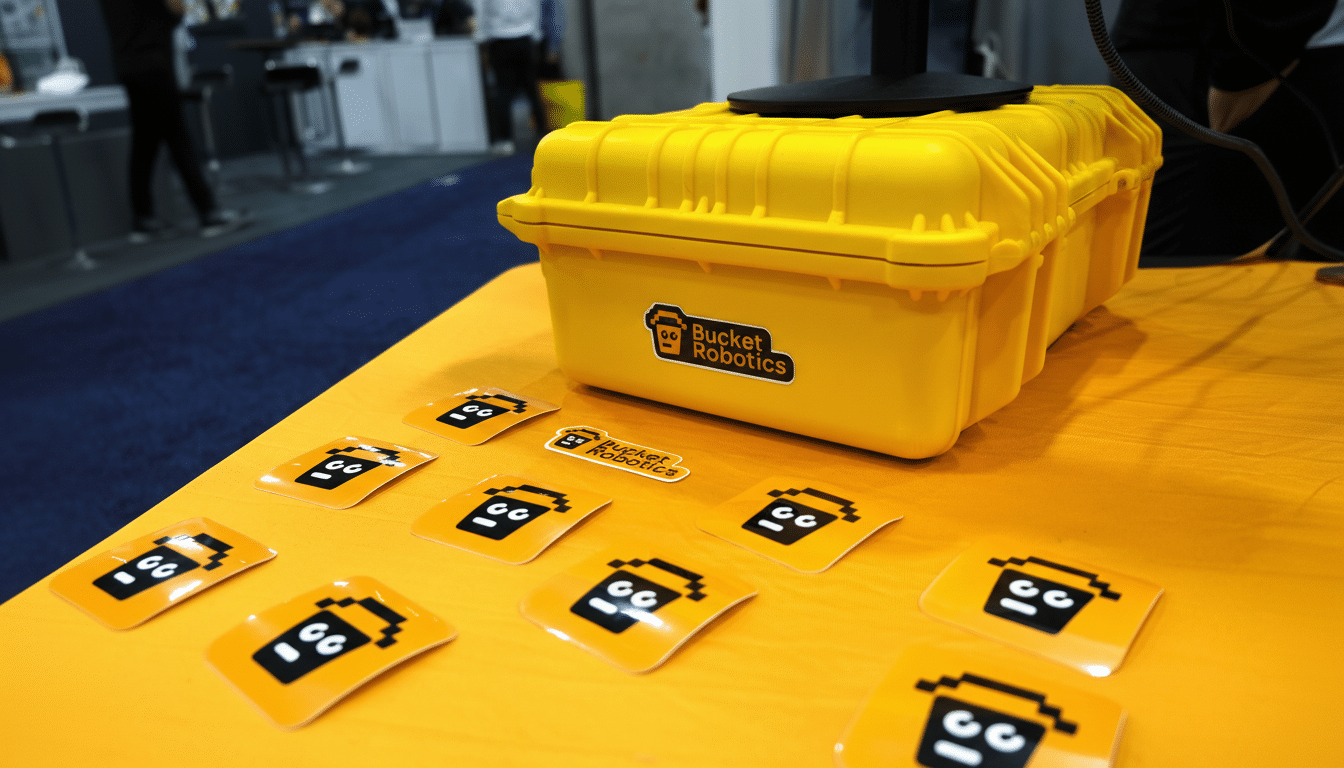
Puchalski’s background gave the pitch credibility. An engineer who spent the past decade across autonomous-vehicle programs at Uber, Argo AI, Ford’s Latitude AI, and Stack AV, he understands the unforgiving demands of real-time perception and production-grade reliability. That translated into a relentless CES presence — breakfast pitch run-throughs, media day hustle, and late-night networking with veterans from mobility and robotics.
Inside What Bucket Robotics Builds for Surface Inspection
Bucket Robotics develops computer vision software that automates surface inspection on production lines — think door handles, bezels, painted panels, and other consumer-facing parts where cosmetic defects can tarnish a brand. Structural checks are mature; surface perfection is the stubborn frontier, where human inspectors still dominate because lighting, texture, and color can trip up conventional machine vision.
The company’s edge is data. Rather than wait for thousands of real-world defects, Bucket starts from the CAD model, generates physics-aware synthetic flaws (burns, scuffs, bumps, color shifts), and trains perception models that can be deployed quickly. No manual labeling. No months-long data collection loop. The software is designed to plug into existing cameras and stations, minimizing new hardware and keeping change-management risk low for plant managers.
This matters economically. The American Society for Quality estimates the cost of poor quality can run 15–20% of sales for manufacturers. MarketsandMarkets expects the machine vision market to top $20B mid-decade, powered by inspection use cases. And the International Federation of Robotics has documented a record installed base of industrial robots — a backdrop that favors software layers improving throughput and yield without retooling entire lines.
On the show floor, Puchalski used everyday examples to make it tangible: a customer touches a door handle daily, so tiny imperfections get noticed. Bucket’s value proposition is catching those flaws at line speed and tracing them to root causes, so a supplier’s quality team spends less time firefighting and more time fixing upstream variation.

Why CES Mattered For A Seed-Stage Startup
CES can be a lead-generation mirage, but this year it delivered signal. From opening bell, the Bucket booth drew steady foot traffic from manufacturing, automation, and robotics teams looking for inspection that flexes with product refreshes and variant complexity. Conversations went beyond demo gloss into integration pathways, lighting constraints, and the seconds-per-part calculus that governs assembly lines.
The team also benefited from showing up where their buyers were. The Consumer Technology Association routinely draws more than 100,000 attendees and thousands of exhibitors, and the West Hall concentrates automotive and industrial tech decision-makers. By the time the lights dimmed, Bucket had a week’s worth of follow-ups lined up — both commercial and investor — the right outcome for a first-time exhibitor.
Dual-Use Strategy Without Extra Hardware
Bucket Robotics is already courting both automotive and defense customers, positioning itself as a dual-use software vendor. That’s a pragmatic lane: programs within the U.S. defense ecosystem increasingly seek commercial technologies that can deploy rapidly and iterate in the field. A software-first approach that rides existing sensors fits procurement realities and cybersecurity constraints better than forklift upgrades.
Crucially, the company frames automation as augmentation, not displacement. Experienced inspectors don’t just spot defects; they infer causes and feed process improvements. By taking the repetitive detection workload and standardizing it across shifts, the software frees quality engineers to work on prevention — a message that plays well as manufacturers reshore and look to stabilize yields without ballooning labor or capital spend.
The Hard Part Starts Now: From Pilots to Production
Surviving CES isn’t the same as scaling. Bucket still has to convert pilots into production contracts, navigate long industrial sales cycles, and prove durability in messy factory environments where glare, dust, and line changes break fragile models. Success will hinge on continuous learning from CAD-driven synthetic data plus rapid adaptation to real-world edge cases — and on championing customers willing to bet a station’s takt time on new software.
As a first outing, though, the playbook worked: arrive no matter what, keep the pitch technical and concrete, and integrate with what factories already run. For a YC startup trying to turn vision research into yield, that week in Las Vegas wasn’t just a debut — it was proof that the market is ready to talk about surface perfection at production speed.
