


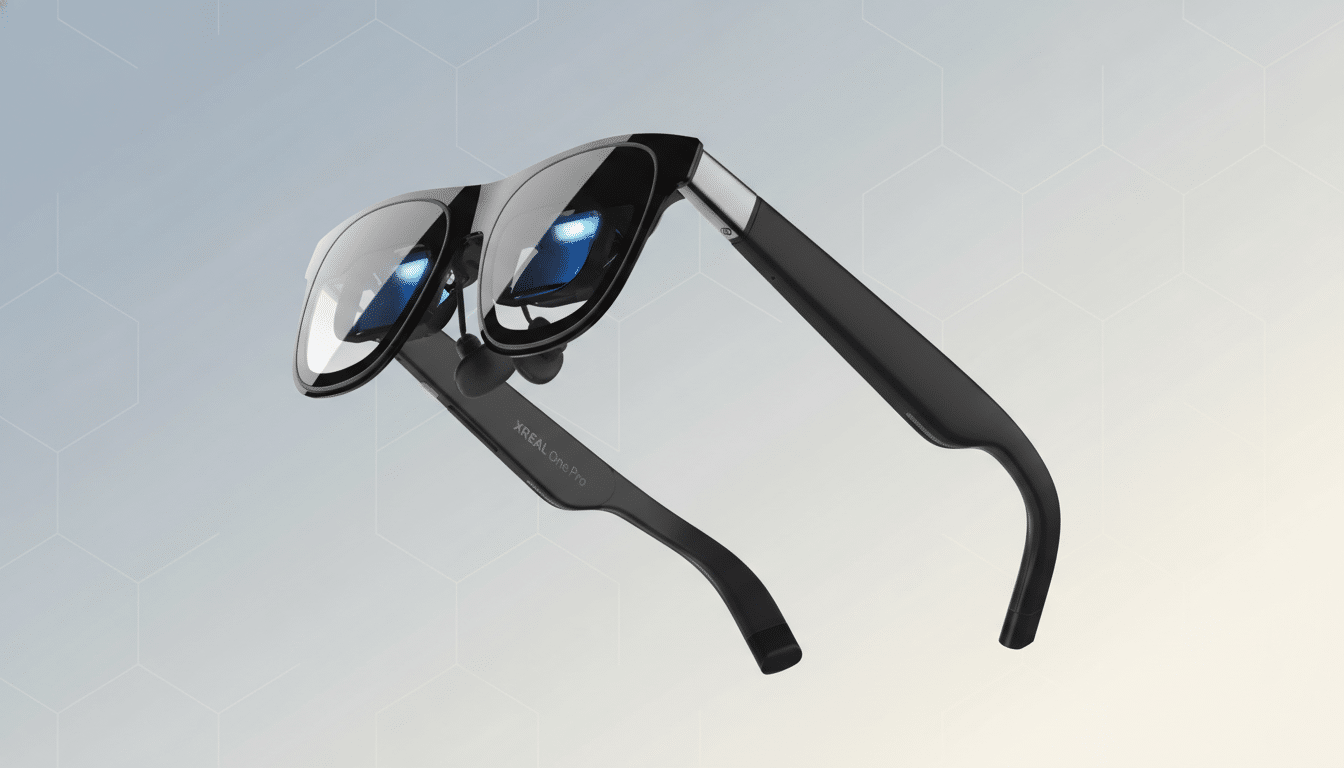
The Xreal One Pro has quickly become the rare XR wearable that can stand in for a pair of physical monitors, and now it’s $170 off. The sale brings the glasses to $599, a 22% discount, making this one of the most compelling opportunities yet to try a virtual desktop that travels with you.
In testing across flights, hotel desks, and café tables, the One Pro let me ditch my usual dual-monitor setup without feeling cramped. It wasn’t just novelty; it was practical, repeatable productivity. That’s the promise of extended reality when it works: a consistent, personal workspace that snaps into place wherever you are.
Why These Glasses Replace Dual Monitors for Work
The secret is the optics. Xreal’s flat prism design delivers a wide field of view—among the broadest you’ll find in a consumer AR wearable—so you’re not peering through a keyhole to read text or track spreadsheets. The larger canvas makes side-by-side windows feel natural rather than forced.
Enable the ultra-wide workspace mode and your apps reappear where you left them, arranged like a familiar dual- or even triple-monitor layout. In practice, I kept a code editor centered, Slack pinned to the left, and a browser to the right, jumping between tasks with minimal head movement. That continuity is what separates a neat demo from a tool you can live in all day.
Pair the glasses with the optional Xreal Eye accessory and you unlock 6DoF anchoring, so your virtual screens hold position in the real world, much like what you get on Apple Vision Pro or Meta Quest 3. It means you can look away, glance back, and everything is exactly where your muscle memory expects it to be.
For context, Jon Peddie Research has long reported that multi-monitor users see productivity gains around 42%. The One Pro’s ability to simulate that multi-display flow on a plane tray table or a small hotel desk is the most convincing pitch for XR at work that I’ve used to date.
Visual and Audio Experience in Daily Use
Text clarity and color fidelity are strong enough for spreadsheet marathons and video edits alike. The flat prism optics add some heft compared with lighter micro-OLED glasses, but the trade-off is a noticeably wider, more immersive workspace. I found that brightness held up against overhead office lighting, and reflections were manageable with the included light shields.
Audio is handled via an open-ear system developed with Bose. You get surprisingly full-bodied sound without sealing off your environment, a boon for safety on commutes and for hearing your name called in an office. There’s some inevitable audio bleed at high volumes, but at typical work levels it stays discreet enough for shared spaces.
Compatibility and Setup Across Phones and PCs
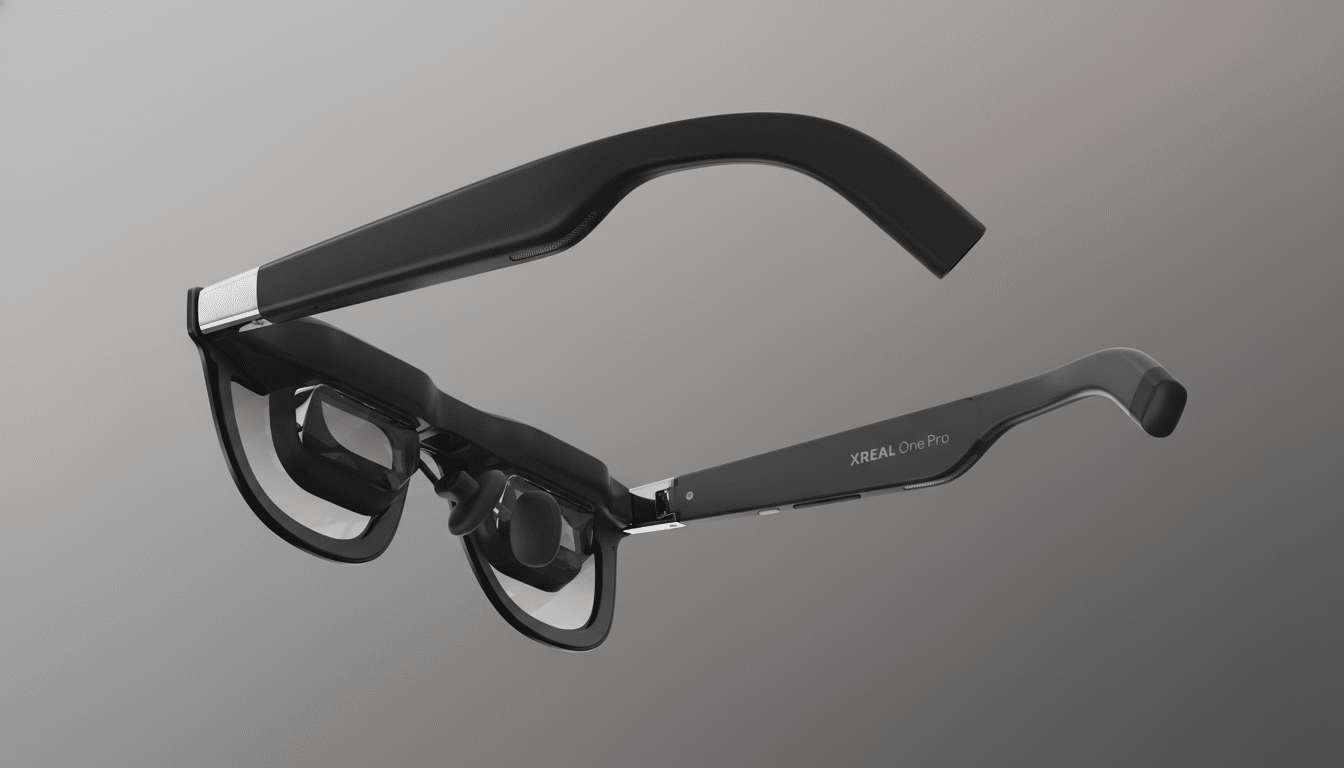
Setup is straightforward. The One Pro mirrors or extends displays from iPhone 16 and newer, recent Android phones, PCs, Macs (including iMac), and handheld gaming devices like Steam Deck. On modern USB-C devices that support display output, it’s essentially plug-and-work. Older hardware may require a compatible adapter.
Fit matters with long sessions, and Xreal offers two sizes: medium (57–66mm) and large (66–75mm). The included nose pads and arms allow fine adjustments, and I could wear the glasses comfortably for a cross-country flight, swapping in a lighter nose bridge for desk days.
Productivity Gains For Travelers And Hybrid Workers
If you’ve ever tried to manage a full workload on a 13-inch laptop screen, you know the friction. With the One Pro, I kept a persistent multi-window layout during a week of travel that mirrored my home office. No more reshuffling windows at every gate change, no privacy filters, and no cramped UI elements. It’s a quality-of-life upgrade that stacks up over time.
And because the glasses present a private virtual screen, shoulder-surfing is effectively nullified. For anyone handling sensitive documents in public spaces, that’s meaningful—particularly in regulated fields where data exposure is a constant concern.
Price Cut and Value Snapshot for Xreal One Pro
At $599—down from $769—the One Pro hits the same pricing we saw during major holiday sales, and it’s the most accessible on-ramp to a serious XR workspace right now. The discount equates to 22% off, narrowing the gap between these glasses and buying two quality portable monitors, with the added benefit of privacy and portability.
There are trade-offs: the frame is bulkier than minimalist AR glasses, and if you don’t add the 6DoF accessory, your workspace won’t anchor in space. But weighed against the convenience of a consistent, multi-window setup anywhere, the value case is strong—especially for frequent travelers, commuters, and anyone juggling tasks beyond what a single laptop display can comfortably handle.
Bottom Line: The Case for Buying Xreal One Pro Now
The Xreal One Pro doesn’t just stream movies on a virtual screen; it credibly replaces dual monitors for real work, and the current $170 discount makes it far easier to recommend. If your workflow thrives on multiple displays and you’re tired of being tethered to a desk, this is the rare XR deal that can actually change how—and where—you get things done.
