


I tried out Nintendo Switch games in stereoscopic 3D on XReal’s prototype and found the experience to be really trippy — freaky cool (no glasses required), even.
The flagship feature, called Real 3D, transforms flat games into itsy-bitsy scenes with depth that you can look inside as though it were some kind of handheld diorama. It’s a cathartic lunge for consumer AR and when it connects, the feeling is that of bumbling into an inkling of the secret mode each game has been hiding all along. When it doesn’t, you’re reminded of why doing 3D well is this unfathomably difficult thing.
How stereoscopic 3D can live inside a flat 2D game
Real 3D is XReal’s on-glasses processing that guesses depth based on 2D frames. It relies on cues like parallax, edges, lighting, and HUD separation to create left- and right-eye views on the fly — much as the 2D-to-3D conversions that TV makers attempted a decade ago but tuned for interactive content. In fast, cartoony games such as Mario Kart or character platformers like Yooka-Laylee, the effect can be stunning: tracks recede into the distance, characters loom off the screen, and environments feel layered instead of painted on.
Side-scrollers and roguelites benefit too. In Hollow Knight and Rogue Legacy 2, foreground platforms even got a shadowbox feel by having them slightly removed from backdrops. And since none of those games are composed with stereo in mind, it’s pretty impressive to see scenes remain stable without weird double images for 90% of my time with the game.
Video, however, exposes the limits. Scenes from Fallout could grow depth, but high-contrast shots now and again would have you turn the scene inside out — a backlit figure “behind” the horizon, emerging. That’s a classic failure mode for algorithmic depth estimation, and it breaks realism fast.
Performance and comfort trade-offs with Real 3D mode
About 10 minutes in, I’d usually switch Real 3D off. The encoding overhead can also add things that may chew up fps, like stutter, in certain units. I also saw softer edges and the work of artifact processing — halos or “shimmer” around quickly moving objects. None of this is out of the ordinary for real-time stereo conversion, but it does rob clarity compared with a pristine 2D feed.
Comfort is the other variable. I hardly ever get motion sick wearing AR glasses, but after some extended sessions with Real 3D I had sort of a low-grade headachy feeling, transported back to the heyday of 3D TV. Optometry groups have long observed that stereoscopic cues can be painful for users with more subtle binocular vision problems, so sensitivity varies from person to person. The good news: This build felt slightly smoother compared to an earlier demo I tested months ago, and if that means anything, future firmware updates might resolve many of the stuttering and artifacting.
Switch support arrives via XReal’s compact Neo adapter
The party trick — playing Switch and Switch 2 on glasses — relies on XReal’s new Neo, a pint-size battery-and-video adapter that takes care of USB-C video output and power passthrough. It enables you to power the console and the dock while driving the displays, a convenient upgrade since handhelds and tablets can be dead in minutes during full-sized sessions.
Instead of the bulkier docks from its rivals, the Neo has a MagSafe-like magnetic mount (no wireless charging) along with stick-on metal rings. It’s not as mechanically secure as a snap-on shell, but it’s less fussy and not device-specific. At 4.6 by 2.8 by 0.7 inches, it’s significantly smaller than dock-battery combos from the likes of Viture and RayNeo, which run closer to the footprint of a Joy-Con-less Switch. In short, this is the first Switch-friendly glasses adapter I’d throw in a jacket pocket without hesitation.
Specs, pricing, and competition against AR glasses rivals
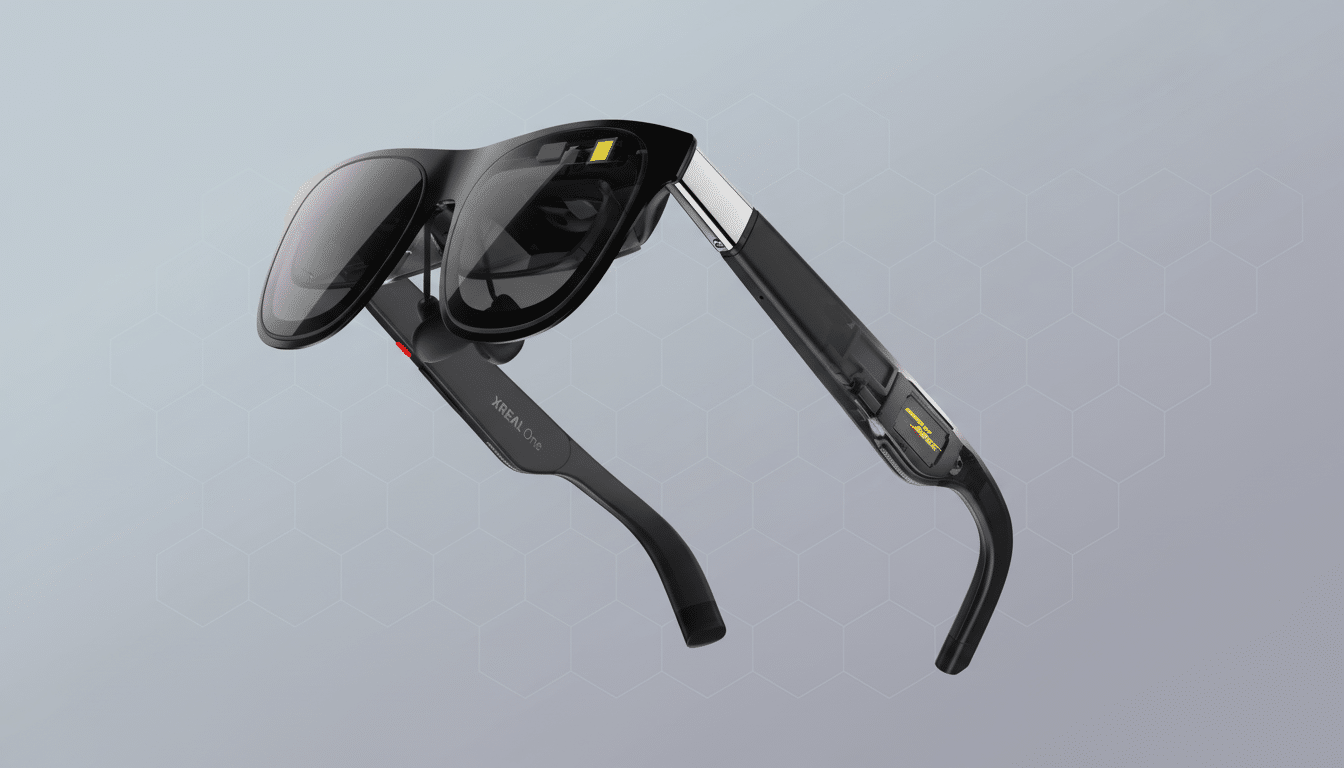
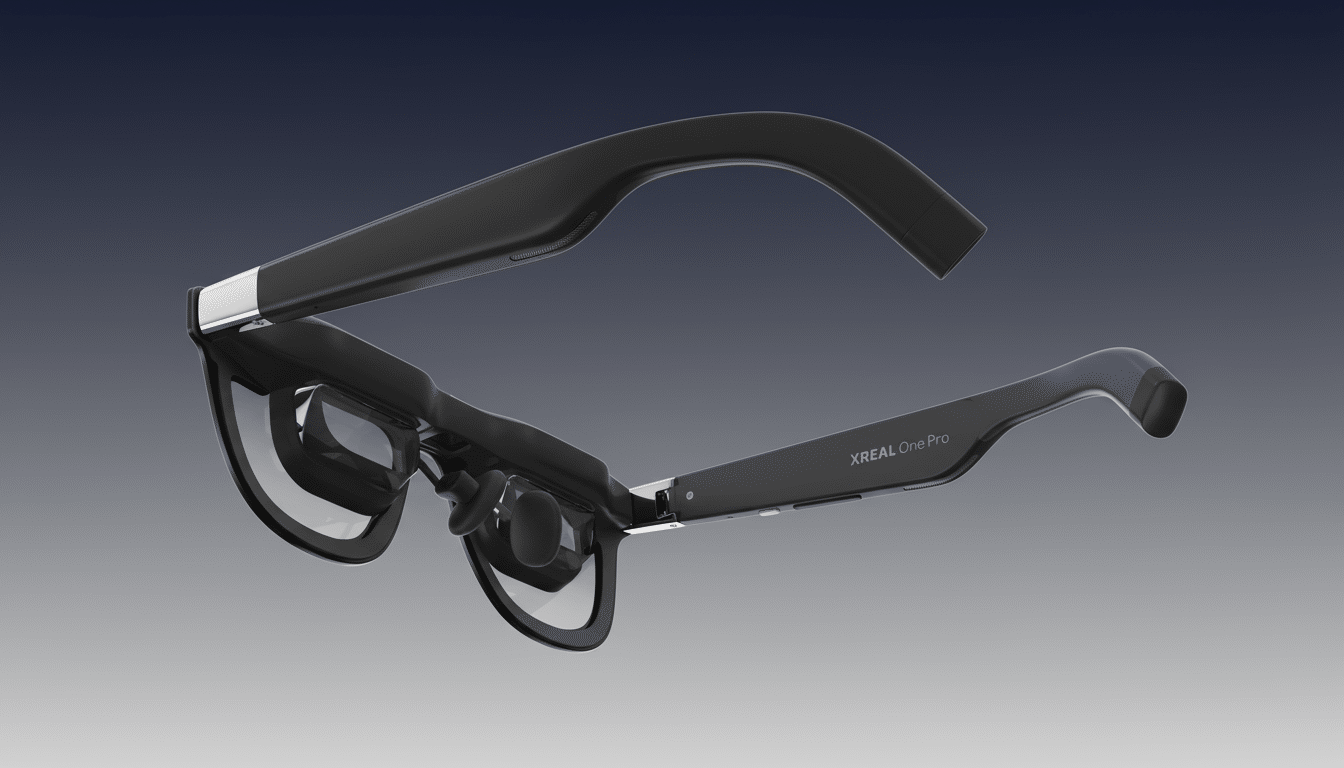
Real 3D aside, the XReal 1S behaves much like its predecessors from the company. Its brightness is claimed to be 700 nits, the same as on the aforementioned XReal One Pro. Field of view comes in at 52 degrees — a bit wider than the One’s 50 degrees but narrower than the Pro’s 57. There’s even an ultra-wide mode for a more cinematic screen, a feature carried over from the Pro.
XReal also showed off the Asus ROG XReal R1, which it touts as the industry’s first 240Hz AR smart glasses. The 240Hz refresh is an obvious wink at PC gamers chasing super-high frame rates, and its 57-degree FoV lines up with the Pro’s bigger canvas. The R1 possesses the same X1 spatial processor and 3DOF head tracking to hold a virtual screen in place, as well as new electrochromic lenses that auto-dim depending on surrounding light. Big caveat: The R1 passes on Real 3D and ultra-wide for the moment.
Pricing is aggressive. The XReal 1S is $449 — that’s $50 less than the original XReal One and a $200 discount on the One Pro. The Neo adapter is $99. There’s no word on a price for the R1; it’s available in the first half of 2026. Versus rivals from Viture and RayNeo, XReal’s value pitch is obvious: new accessories that are smaller at the entry price and with one main feature no one else has done before.
Early verdict: promising but uneven Real 3D on XReal 1S
And when Real 3D works its magic, it’s just lovely — your favorite flat games suddenly spring to life, normal Switch titles feel like spectacles that handhelds rarely achieve.
But today, it’s also erratic: There are visual-performance costs here and there, and occasional depth reads that get wrong-footed by the wow. If XReal can nail down frame rate, sharpen the image, and tame some of the artifacts via updates, Real 3D may go from neat demo to regular feature.
The strategy makes sense: with a base of installed consoles well over 130 million Switches, according to the investor disclosures Nintendo is required by law to file, even a small portion of those could make glasses-based big-screen gaming an actual category. That said, I’d call XReal’s 3D a thrilling proof of concept nestled in some promising hardware. It’s wild, it’s weird, and with a veneer of shine, it might just stick.
