


Xiaomi’s newest T‑series flagship ticks all the regular spec boxes — and adds an offline voice mode that allows two phones to talk to one another, phone‑to‑phone style, with no cell service or Wi‑Fi needed.
The company says the 15T Pro can make device‑to‑device calls at distances of up to 1.9km, while its standard cousin, the 15T, maxes out at around 1.3km in ideal conditions. It’s a head‑turning promise for hikers, festival‑goers, and cruise travelers who are often confronted with spotty coverage or pricey shipboard connectivity.
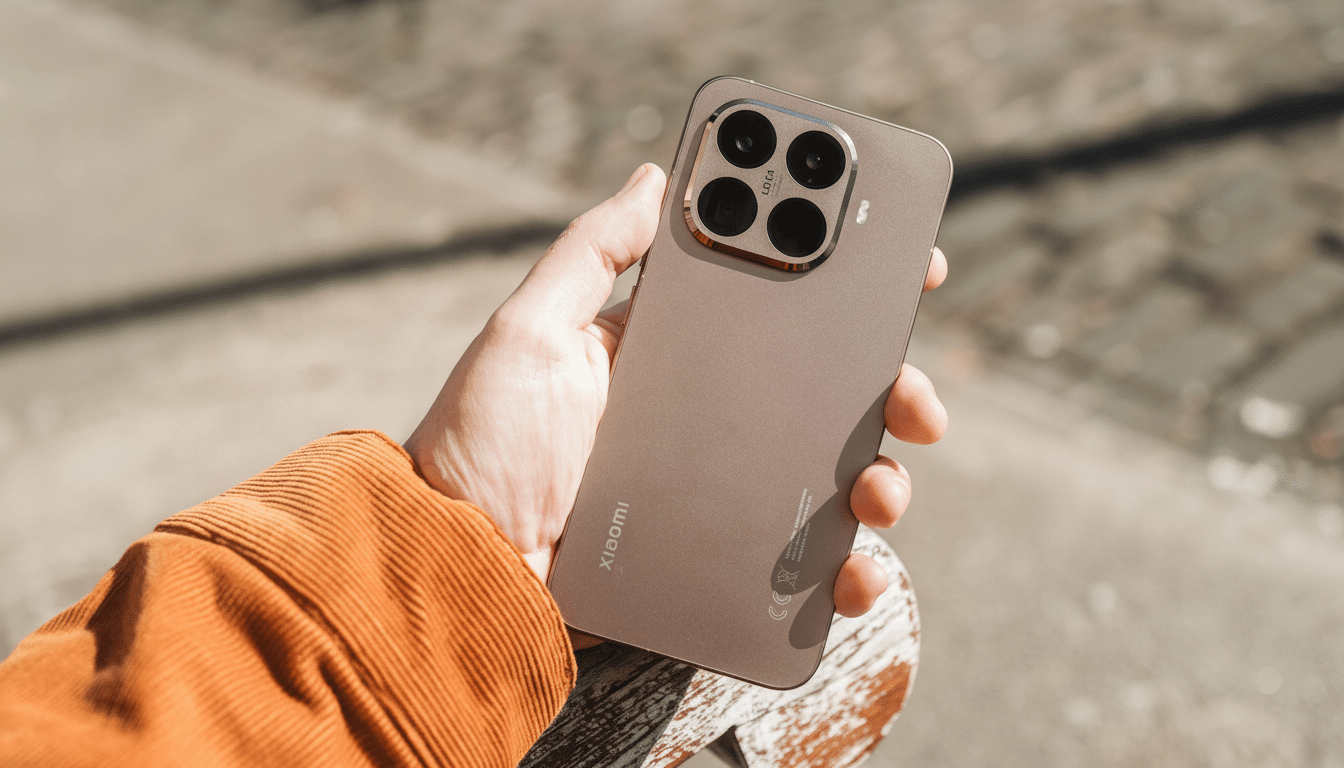
How the off‑grid calling feature really works under the hood
Rather than a traditional two‑way radio, Xiaomi relies on an enhanced short‑distance radio chain instead. The feature is a marquee part of the company’s larger Astral Communication suite, which derives its power from custom hardware — an accessory called the Surge T1S tuner and something called a Super Antenna Array — aimed at wringing more range and stability out of Bluetooth, Wi‑Fi, GPS, and cellular signals.
In reality, the offline calls are transmitted on the 2.4GHz band via a point‑to‑point Bluetooth connection. The Bluetooth Special Interest Group’s guidance is for around 100 meters using a standard antenna, but in practice, with antenna gain, radio tuning, and smart beam management, that number can be an order of magnitude or two larger in open line‑of‑sight situations. Xiaomi’s claimed ranges are in look‑Ma‑no‑wires territory compared to the 10–200m we’ve seen from comparable phone‑to‑phone features such as BeaconLink, which is found in some OPPO and OnePlus handsets.
The upside is simplicity: tap to connect, and talk. You give up that, so both ends can play matchmaker, hence 15T‑to‑15T. It doesn’t rely on carrier infrastructure, and there’s no need for a data plan because it is strictly a peer‑to‑peer link.
Caveats and real‑world range for off‑grid calling claims
That headline‑figure range is best case. At 2.4GHz, radio propagation and reception are incredibly sensitive to signal obstruction — trees, buildings, and terrain can dramatically impact performance. Early hands‑on reports claim hundreds of meters are possible in mixed environments, with solid obstacles able to stop a call after just a few city blocks. Test distance will depend on elevation, interference, and whether or how you hold the phone.
It’s also a closed system. Both 15T devices are required, and there is no interoperability with other brands at launch. Think of it as a tool you’d use to let your hiking party know who’s bringing what or trying to find friends in a crowd at an amusement park — not something that’s going to replace satellite SOS services or licensed two‑way radios (FRS/GMRS/PMR446). Data from search‑and‑rescue operations by the U.S. National Park Service lists more than 3,000 incidents a year; in genuine emergencies, purpose‑built gear and well‑established protocols still do count.
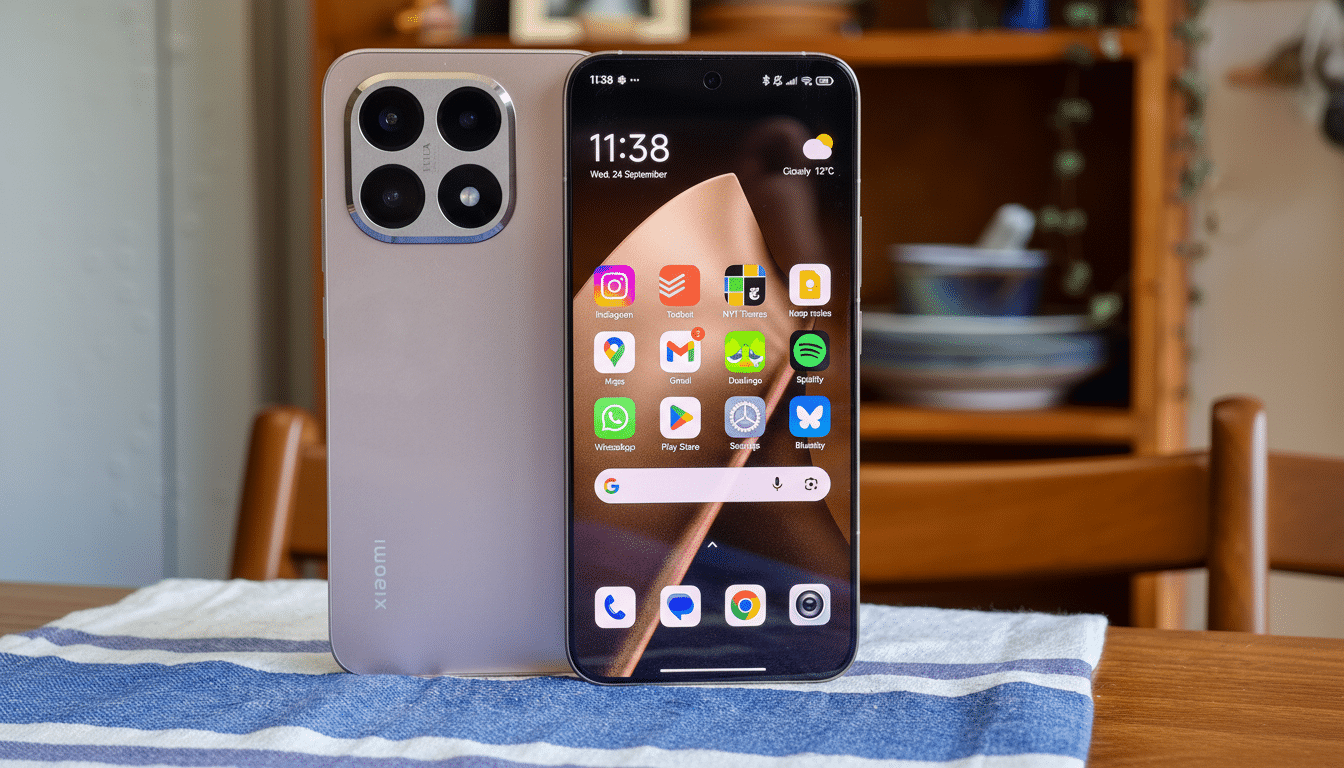
The phones that made it happen: Xiaomi 15T series details
Outside the off‑grid party trick, the 15T Pro reads much as any modern flagship would. It includes a 50MP 5x periscope to go along with a 50MP main and a 12MP ultra‑wide lens, expanding coverage from about 15–230mm equivalent. Xiaomi heaps on computational tools, too: improved portrait bokeh options and an “Ultra Zoom” algorithm that cranks detail at higher magnifications, in addition to HDR10+ video shooting at up to 4K30.
The front is all screen thanks to a 6.83‑inch OLED at 2772×1280 with a claimed 3,200‑nit peak and a 144Hz refresh rate, with very thin borders surrounding it. In the engine room is the MediaTek Dimensity 9400+, along with LPDDR5X RAM and UFS 4.1, managed by a custom 3D vapor‑loop system to stay cool. There’s a 5,500mAh battery inside that supports both 90W wired and 50W wireless charging (with compatible chargers). It supports Wi‑Fi 7 and comprehensive 5G bands, as well as dual physical SIM and eSIM options.
The standard 15T mirrors the design but cuts a few of the specs: you’ll find a 120Hz screen, 67W wired charging (but no wireless), and a Dimensity 8400 Ultra chip inside, with a less robust camera stack that does not include the Pro’s 2x telephoto. Both are running the company’s Android‑based software, and both have a roadmap to the next significant Android version.
Pricing comes in at €799 for the 15T Pro and €649 for the 15T, with available colors of Black, Gray, and Mocha Gold. That places the Pro as a value‑minded flagship, and it retains offline calling across both models.
Why this could matter for everyday users and rivals
Device‑to‑device connectivity is a rapidly emerging battleground. The subject of direct sidelink communication has been licked by the mobile industry for 3GPP’s 5G standards, but rarely do consumer phones expose those capabilities in an obvious way for everyday people to use now. By shipping a down‑to‑earth, voice‑first off‑grid mode, Xiaomi could persuade rivals to reconsider how phones speak to each other when the network vanishes.
If that promised range holds up in the real world, this is the sort of feature people remember — nothing flashy for a demo, but actually useful when service drops and you still need to coordinate something. It’s not going to replace a radio in the backcountry, but as a built‑in safety net that doesn’t cost anything to use, it’s an ingenious way to make a modern smartphone feel just a fraction less fragile.
