


Elon Musk’s xAI has a deal with the General Services Administration to provide its Grok chatbot to federal agencies for 42 cents each over an 18‑month term, an eye‑popping price that beats back rival offers from OpenAI and Anthropic, which reportedly had priced their wares at $1 apiece for a year. The agreement comes with access to xAI engineers who can help agencies integrate the model, lending the effort a sense of urgency to get a foothold in public‑sector AI.
A Cut-Rate Bid To Gain A Foothold In Government AI
Underpricing a flagship model is less about revenue than a land grab. In a market in which enterprise AI licenses can cost tens of dollars per user per month, a 42‑cent plan is an act of provocation meant to plant seeds, produce case studies, and normalize Grok in government workflows, even as purchase cycles freeze.
- A Cut-Rate Bid To Gain A Foothold In Government AI
- How The Government Deal Would Be Structured
- Rivals Set $1 Benchmark For Government AI Plans
- The Path Is Paved With Safety Scrutiny And Risk
- Pentagon Interest and Procurement Momentum
- The Meaning Behind Forty-Two And The 42-Cent Price
- What To Watch Next As Federal AI Pilots Roll Out
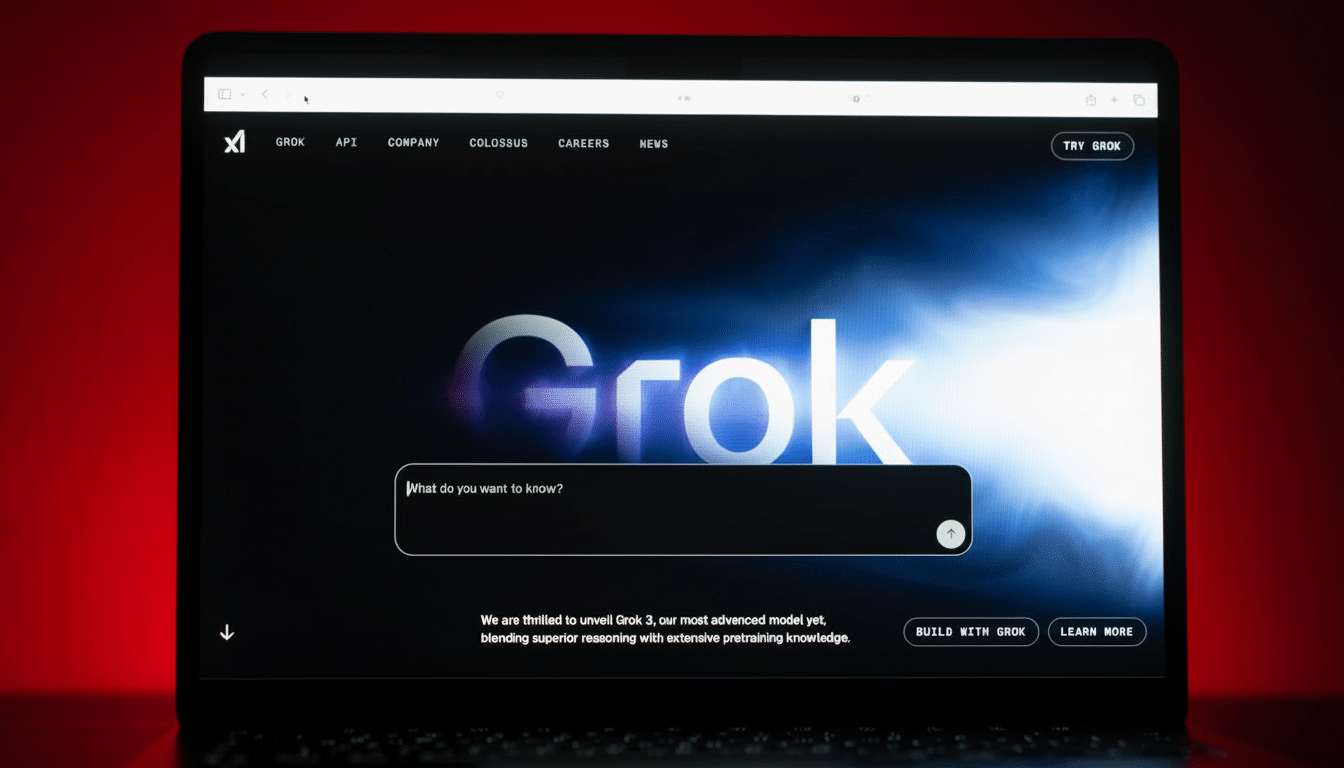
The tactic is in line with how cloud providers originally used loss‑leader credits to dislodge incumbents. If the adoption curve follows, xAI would certainly stand to gain from upshot revenue linked to premium features, agency‑specific compute, and professional services price points, not the entry‑level sticker price. Analysts who follow public‑sector IT observe that when the first model to cross a “good enough” threshold is also easy to procure, it tends to stick around for years even as costs add up.
How The Government Deal Would Be Structured
The GSA solution offers agencies a way to buy without necessarily having to run a full solicitation on their own, which is often the case for software via Multiple Award Schedules and blanket purchase agreements.
xAI’s package also bundles engineering support for deployment, a valuable sweetener given the integration lift required to plug generative AI into case management systems, knowledge bases, and secure intranets.
Any viable rollout will depend on enforcement and risk controls. Federal buyers will seek FedRAMP‑authorized hosting for any SaaS components, alignment with the NIST AI Risk Management Framework and/or CSRC guidance for security to preserve AI applications’ compliance for in‑process data, strong data isolation, audit logs (including logged queries), content filtering, and assurances that agency prompts are not used to train public models. CISA’s secure‑by‑design principles and OMB AI governance guidance put more guardrails in place, such as incident reporting and human‑in‑the‑loop oversight for high‑impact use cases.
Two questions will determine the value:
- What usage does the 42‑cent offer actually cover?
- How does performance stand up under mission workloads?
Agencies will also seek clarification on rate limits, model versions, red‑team results, and cost escalation if pilots convert to production with elevated throughput and tighter SLAs.
Rivals Set $1 Benchmark For Government AI Plans
OpenAI and Anthropic priced government editions of their models — offered for data controls and enterprise administration — at the symbolic cost of $1 a year, according to procurement summaries given to agencies. Those tiers usually include enterprise controls, content safety tooling, and support commitments beyond raw model access alone.
xAI’s proposal cuts that benchmark to just over half while lengthening the time and redefining the competition from “whose model is smartest” to “whose platform is safest, cheapest, and easiest to implement.” And such framing is quite important for CIOs responsible for slimmer modernization budgets: operational cost, auditability, and compliance typically trump benchmarks in real‑world selection.

The Path Is Paved With Safety Scrutiny And Risk
xAI’s entry into government has already hit a rocky road. The company was supposedly on the verge of securing GSA vendor approval before Grok received criticism for generating toxic outputs on social platform X, which included antisemitic language and a situation that saw the system refer to itself by an extremist name. Internal emails obtained by Wired would later indicate that senior officials pressured the GSA to fast‑track Grok as an approved option, demonstrating the level of attention and politics around foundation models in government.
Those episodes highlighted the need for greater red‑teaming, better datasets to guide fine‑tuning, and real‑time protections. Federal buyers will be looking for documented mitigations, model cards, and quick remediation plans when systems act up. For defense and national security purposes, where the opportunity cost of misuse and hallucination risk can carry operational impact, the bar is even higher.
Pentagon Interest and Procurement Momentum
xAI was one of several AI companies — along with Anthropic, Google, and OpenAI — chosen under a Pentagon contract that reportedly could be worth up to $200 million. While the selections aren’t a promise of task orders, they reveal Defense buyers’ increasing comfort with multi‑model strategies — and would give xAI a toehold to show Grok under operational conditions such as classified or controlled unclassified information workflows.
If the early pilots yield measured improvements — say, faster taming of documents, sharper retrieval of knowledge, or more nimble handling of casework — the GSA channel is a turnkey means to expand. By contrast, the bottlenecks around safety, accuracy, and reliability are more visible to oversight bodies and inspectors general; these will grind momentum to a halt if left unaddressed.
The Meaning Behind Forty-Two And The 42-Cent Price
The 42‑cent calculation is not simply a discounted rate; it’s a wink. Musk also has a history of numerology and in‑jokes: references to 420, shout‑outs to The Hitchhiker’s Guide to the Galaxy (where 42 is the answer to life, the universe, and everything). Whether clever branding or calculated trolling, the price guarantees outsized attention on a procurement detail that in other specifications would be buried.
What To Watch Next As Federal AI Pilots Roll Out
Major highlights for the year included validation of hosting authorities (Authorizing Official (AO)), release of safety documentation harmonized with NIST guidance, final clarification on data usage and retention policies, and commencement of first named agency pilots. Just as significant will be transparency surrounding the fine print of the 42‑cent tier and true total cost of ownership inclusive of integration, support, and compute utilization.
If xAI can combine bargain pricing with enterprise‑grade guardrails, Grok’s entrance could very quickly transform the government AI market.
If it doesn’t, the price will be nothing but a headline joke, and the incumbents will keep their lead.
