


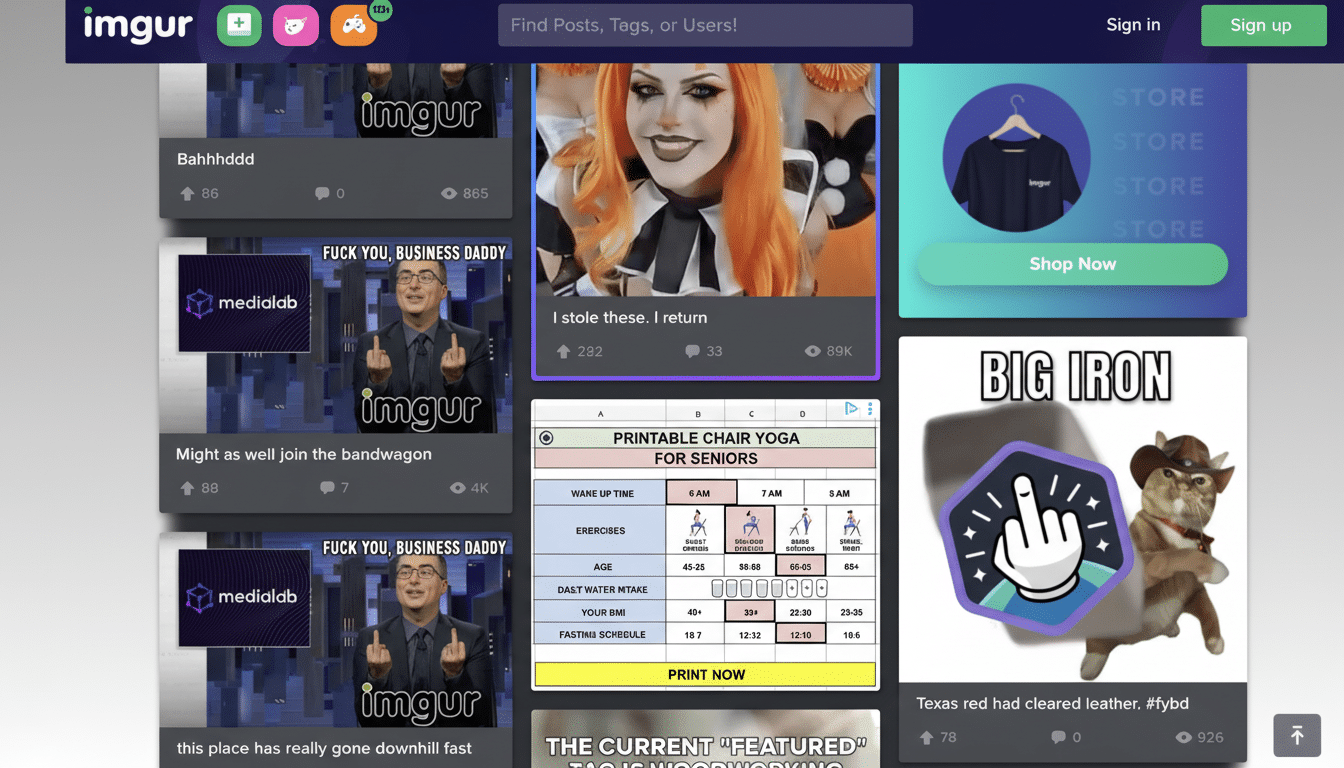
The photo-sharing website’s access has been blocked in the United Kingdom and users are not able to log in, view galleries or upload material. The limitation also means images hosted on the service will not appear when embedded in third‑party sites for UK visitors. The shift has led to a simple question with an intricate answer: why is it blocked?
What UK Users Are Currently Experiencing on Imgur
Users who are visiting the site from UK-based IP addresses will now see a regional availability notice. Accounts can’t be reached, uploads are turned off, and existing share links don’t work for UK audiences. Sites that are partly publishers, partly community forums, will have slots where images were embedded, deadening archives, guides and long‑running discussion threads.
- What UK Users Are Currently Experiencing on Imgur
- The Regulatory Backdrop Driving Imgur’s UK Block
- ICO Scrutiny and Children’s Data Practices at Imgur
- Why Block UK Access Rather Than Build Full Compliance
- What Happens to Imgur Embeds and User Data in the UK
- Implications for the Broader Web and Online Communities
- What to Watch Next as UK Regulators Clarify Rules
The Regulatory Backdrop Driving Imgur’s UK Block
Two threads of UK regulation provide the backdrop for this decision. Under the Online Safety Act, this approach creates new obligations on services which host user‑generated content in relation not only to age assurance, but also audience suitability and risk assessment. The communications regulator Ofcom is to introduce in the coming months detailed codes of practice that will ensure platforms protect children from harmful content and demonstrate they are doing so.
Second, UK data protection law, including the Children’s code (formerly known as the Age Appropriate Design Code), set by the UK regulator – Information Commissioner’s Office (ICO) – mandates that platforms can only be accessed by children if they enable high privacy standards by default. That entails reducing data collection, limiting profiling and verifying ages in relation to risk. These responsibilities can be particularly onerous for open, semi‑anonymous image hosts whose content can run the gamut from memes to NSFW material.
The stakes are significant. “Under the Online Safety Act Ofcom has power to fine companies up to a percentage of their global turnover for repeated failure to comply and ICO can impose significant fines if organisations breach data protection obligations.” For the kind of service that has a global footprint and legacy content, compliance isn’t a cheap or easy patch.
ICO Scrutiny and Children’s Data Practices at Imgur
As part of an undercover probe, the ICO has been examining how some social and content platforms are treating children’s personal information, including how registration, login, and age checks work for a 13-year-old signing up independently.
It has opened a case into the image‑sharing service’s practices along with other big online platforms and it has issued a notice of intent to fine the company’s US-based parent, MediaLab, over provisional findings related to the Children’s code. The regulator has stressed limiting access to the UK does not absolve responsibility for past breaches and its probe is ongoing.
Importantly, the ICO has also characterized the platform’s UK exit as a business-led choice. In other words, it wasn’t an order to shut down from the regulator; the company simply elected to geo‑restrict as opposed to operating under existing compliance and enforcement expectations during the time period of a continuing probe.

Why Block UK Access Rather Than Build Full Compliance
The implementation of strong age-verification and privacy protections is problematic for an open image host. Effective steps generally are based on ID documents or face‑based estimation, processes that challenge the service’s tradition of low‑friction, pseudonymous workflows. Introducing identity gates can intimidate users, raise support costs and add more data protection liabilities. It also needs system-wide alterations to tagging, filtering and recommendations for the under-18s not to be fed adult content.
There’s also the long tail of back content. A decade of uploads — much of it scattered across forums, wikis and news sites — would require reliable classification and controls to avoid inappropriate exposure. For a platform known for viral posts shared off‑site, that is quite an engineering and policy lift. When confronted with regulatory risk and uncertain timelines, a temporary pullout from the UK market can seem like the least legally disruptive option, even though it angers users and partners.
What Happens to Imgur Embeds and User Data in the UK
UK users continue to have rights under UK GDPR, which includes the right to access a copy of their personal data and delete their account. Despite the block, the service said it would fulfil these requests.
For site owners, there’s not much of a workaround: If you have an audience in the UK, embedded images hosted on the platform don’t show up. Transferring important assets to an alternate host is unnecessary, but it may be the only way to restore visibility for UK readers.
Implications for the Broader Web and Online Communities
The move highlights a broad trend: region‑by‑region splintering as global platforms weigh compliance costs and market access. Image hosts, forums and niche social media apps that rely on anonymity to hide behind permissive content policies are right at the vanguard of this change. Final clarifications on age assurance from Ofcom and enforcement decisions from the ICO will determine whether other services double down on compliance or fall in line with geo‑blocks.
What to Watch Next as UK Regulators Clarify Rules
- The timeline Ofcom sets out for companies on their duties under the Online Safety Act
- Any new commitments from the company on its age assurance and children’s privacy protections
- The ICO’s final decision on MediaLab
If compliance methods are further spelled out — or relaxed — the platform may revisit its position. For now, the UK block is an emblem of open, user‑generated ecosystems crashing into a harder safety and privacy regime — with a platform choosing risk management over iterate fast and break things in just one market.
