


Waymo’s driverless cars shut down across portions of San Francisco after a major power outage disrupted traffic and forced the company to suspend its robotaxi service while crews dealt with the grid failure.
About 33 percent of residents lost power following the fire at a Pacific Gas and Electric substation, local reports said. With traffic signals out of service and connectivity spotty, a number of Waymo vehicles came to a halt in travel lanes or near intersections, causing traffic jams as human drivers tried to make their way around the blackout. The local news sites The San Francisco Standard and Mission Local reported the company’s move to suspend operations in the city, which lasted as long as the outage.
What Happened in San Francisco Streets During the Blackout
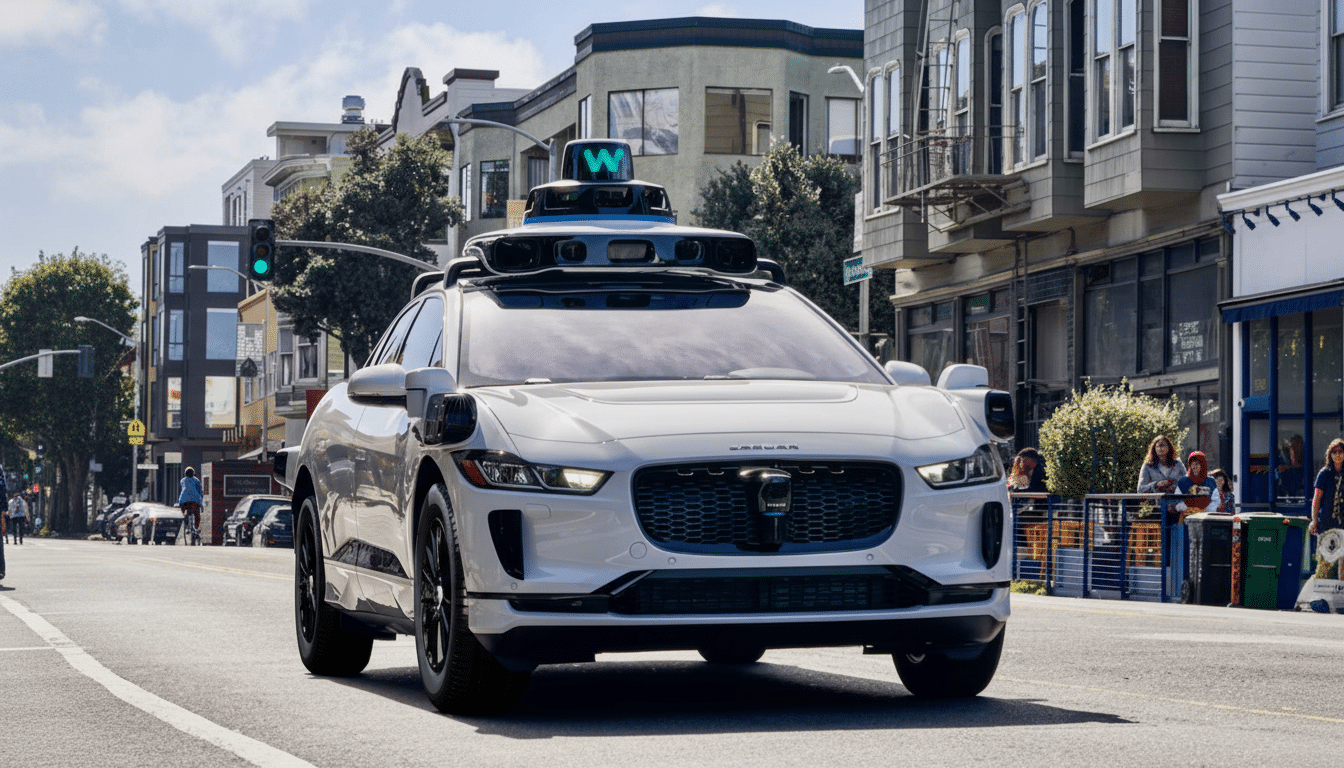
Local users shared photos and videos of unoccupied robotaxis piled up in major arteries, some blocking crosswalks and points of egress off multi-way intersections. The clustering usually took place where signals were out or traffic control was unusual, like hand-directed officers or ad hoc four-way stops.
Human drivers frequently communicate to each other against dark signals through eye contact and unwritten rules. Self-driving cars, by definition, are programmed to drive defensively, and that defensive driving can jam up when other drivers break the mold. And with several AVs converging on the same intersection, conservative decision-making can snowball into a gridlock-like scenario if support from the outside is slow to arrive.
Why Autonomous Cars Can’t Reason Like Humans
Waymo’s vehicles run at SAE Level 4, relying on lidar (like radar but with laser light instead of radio waves), radar, cameras and high-definition maps to plan safe maneuvers. Abnormal behavior of traffic infrastructure (when signals go dark, temporary closures are installed, or police offer manual directions) forces the system to compare sensor data against map priors and right-of-way rules. In the case that confidence falls below a safety threshold, the car is put in what Waymo calls a “minimal risk condition,” which frequently involves stopping and waiting for additional human input.
Blackouts can also disrupt cell networks that keep fleets coordinated and that supply human-in-the-loop assistance. If bandwidth — or calls for guidance that queue up — hit a low point, it takes specialists longer to take a look at an image and authorize a new path, thereby keeping the rovers stationary for longer. GNSS will still work, but communications friction and dynamic street conditions could hinder recovery.
Another factor is operational geofencing. Businesses match their service areas to known, predictable conditions. Big, abrupt infrastructure changes — darkened corridors, flash congestion, emergency vehicles staged to deploy — can send the system beyond its normal envelope and automatically shut it down until conditions stabilize.
Waymo Response and Safety Context After the Blackout
Local coverage said that Waymo had suspended service citywide as the outages spread, which is standard practice to keep vehicles from adding to traffic and to allow retrieval teams time and space to move cars safely. The company has historically taken a safety-first stance, with remote operators and field staff trained to safely remove vehicles from sensitive areas when incidents occur.
The blackout interruption comes on the heels of several other headlines about robotaxis in recent weeks. There have been social media clips of unusual maneuvers under abnormal circumstances, one Los Angeles rider reported finding a stranger in the trunk and the company had to pull its software after reports surfaced that its cars were improperly passing stopped school buses in Austin. In San Francisco, animal rights groups condemned the company after a driverless car killed a local cat. Federal and state regulators, such as the National Highway Traffic Safety Administration and the California Public Utilities Commission, keep on monitoring the performance of AVs in these edge cases.
Waymo’s safety argument also relies on a large amount of real-world driving. The company points to millions of driverless miles across several cities and extensive simulation, and independent analyses have found lower rates of injury-causing crashes in some operating domains compared with human-driven baselines. Nonetheless, events like a systemwide blackout test the boundaries of today’s autonomy and playbooks for recovery.
What to Watch Next for San Francisco Robotaxi Service
City transportation officials are certain to scrutinize how the AVs responded to dark signals, and whether more curbside fallback rules should be established. One simple (if broad) step: mandate that AVs clear intersections and pull over to the nearest safe shoulder or dedicated spot if signals are disabled, as opposed to staying put in-lane. Collaborating with SFMTA, DEM, PG&E and law enforcement will be critical to aligning AV behavior with incident command procedures.
Regulators may also begin demanding more reliable failover:
- Better detection of de-energized corridors
- Swifter remote-assist triage
- Standardized signals from first responders that AVs can confidently understand
In the longer term, enhanced infrastructure, such as traffic signal backups that don’t rely on power and vehicle-to-everything pilots, can reduce uncertainty when the grid goes dark.
Riders in such situations are often refunded and rescheduled once service resumes. For the industry, this blackout should be a reminder that autonomy doesn’t operate in isolation — even when the city’s systems stagger, the smartest cars will still need smarter playbooks.
