


Video of Tesla’s Optimus humanoid tipping over in public is rapidly spreading on social media, reigniting old debates about how much what the robot does can really be called autonomous.
The video, shot at an event called Autonomy Visualized in a Tesla store in Miami, shows the machine dispensing water, then listing and toppling over backward—an awkward moment for something that is supposedly going to be a factory worker of the future.
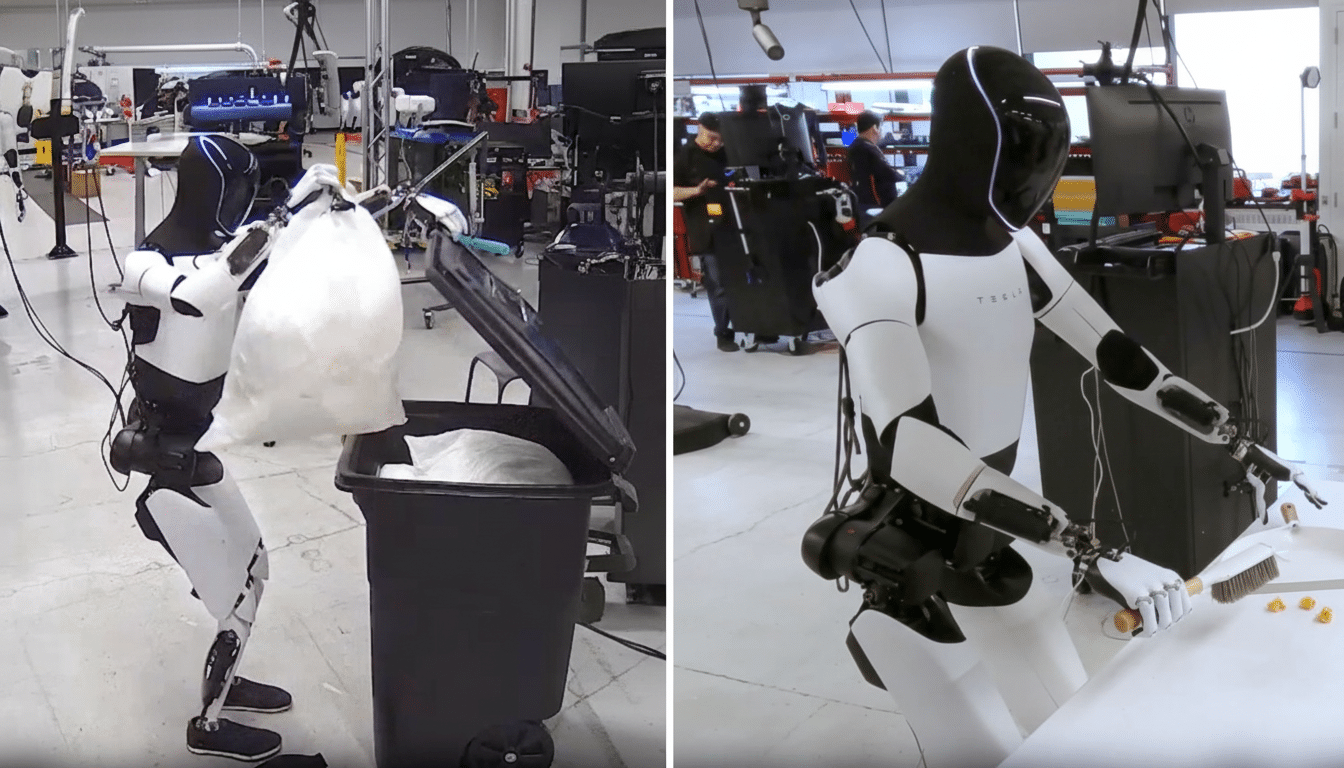
What the viral Tesla Optimus video actually shows
In the video, an Optimus unit eXtends toward a table full of bottles, knocking some to the floor before toppling over.
When it begins to fall, the robot spreads its arms and makes a motion similar to that of someone removing a headset with their hands from their head. The video initially appeared on Reddit and rapidly proliferated on X and other platforms, racking up millions of views within hours.
Attendees described the event as a showcase of Tesla’s improvements to its Autopilot and Optimus programs, a framing also cited by Electrek. Although staged demonstrations may have safety tethers or handlers, this one seemed to be working loose in front of a crowd—exactly the kind of environment in which failure modes like these tend to manifest.
Teleoperation debate reignited by the headset gesture
The headset-style gesture in the clip has led to speculation that Optimus was being remotely controlled by a human.
Tesla’s teleoperators themselves use VR headsets when commanding robots, and robotics engineers regularly work with “human-in-the-loop” systems, training or validating their models. Elon Musk has outwardly claimed that recent Optimus demos are “AI, not teleoperated,” but the viral trip-up has critics demanding a clearer exhibition of fully autonomous behaviors at public demos.
It is important to differentiate supervised autonomy from direct teleoperation. Many labs employ hybrid modes: AI takes care of locomotion and grasping, but a remote operator can take over for safety or complicated decision-making. Without details from what the company referred to as “team-enabled autonomy”—was there an active network link, for example, or could the robot be running pre-scripted primitives—it’s hard to say how autonomous the system was at Miami.
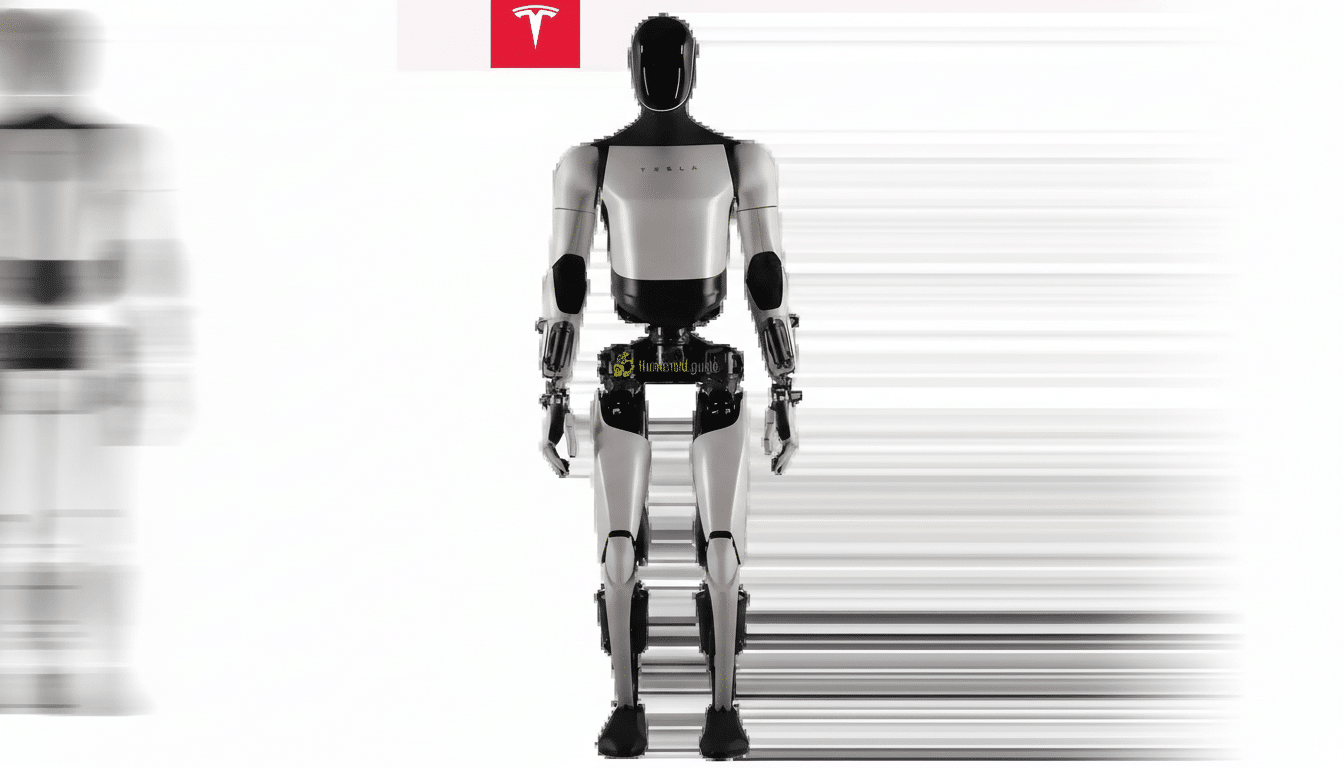
Why robot falls matter for humanoid autonomy claims
Falls are part and parcel of humanoid growing up. Biped locomotion control also requires fast and accurate control by means of IMUs, force sensors, and zero-moment-point (ZMP) control for the center of mass (CoM), foot locations, and ground contact forces. Even the highest-end platforms will sometimes fall over when a hand snags on an object, or a foot slips, or the controller misreads friction—and nowhere is that failure more costly than in VR pornography.
Public perception, however, does not always reflect that nuance. Even during the DARPA Robotics Challenge, teams with cutting-edge hardware still had spectacular falls that ruined runs and were chronicled far and wide by IEEE Spectrum. There has also been behind-the-scenes video of its Atlas repeatedly failing to learn acrobatics before eventually mastering a routine. In this framework, Optimus falling is not technically shocking—but it’s reputationally expensive when the message is near-term utility on factory floors.
The stakes for Tesla and the Optimus humanoid program
Tesla has positioned Optimus as a long-horizon growth pillar, with the possibility of deployment in its own factories preceding broader commercialization.
But investors regard humanoids as a big opportunity in the coming decade, and several banks and research firms predict a multibillion-dollar market as labor shortages and aging populations become more acute. Winning that race will require platforms to show reliable locomotion, dexterous manipulation, robust perception in cluttered environments, and safe interaction with humans—reliably and not just on curated videos.
Tesla published videos of Optimus completing object-sorting tasks and guided pick-and-place activities, and later versions displayed greater dexterity in its hands, lighter joints, and faster gait cycles. But the Miami viral clip is a reminder of the distance between lab demos and everyday performance: success isn’t measured by how well it goes when everything goes right, but by how infrequently things go as wrong as they can in uncontrolled environments.
What to watch next for Tesla’s Optimus robot progress
Three factors would help clarify Optimus’s progress.
- Live demonstrations of operation modes—whether fully autonomous, supervised, or teleoperated—and what triggers human intervention.
- Third-party benchmarking on clear tasks, including warehouse bin picking, palletizing, or line-side kitting, with metrics like cycle time, grasp success rate, and mean time between falls.
- Safety reporting on fault detection, controlled falls, and how the system ensures that it does not harm bystanders.
For now, the viral fall is a reminder of just how far down the humanoid hill we still have to climb. Whether the Miami snafu was a software bug, an operator drop-off, or just physics finally getting around to catching up, Tesla’s next big public reveal will have to accomplish more than wow—it will need to persuade.
