


A new viral video shot in Austin shows a driverless Waymo robotaxi creeping directly into oncoming traffic and then hesitating before signaling right and veering left into a Shell gas station. There isn’t any collision; it is only a momentary wrong-way on a frontage road along I-35 that lasts long enough to capture the disquieting split second in which it looks like an autonomous car has gotten in over its head.
What the viral footage shows in the Austin Waymo incident
The clip, which has been widely circulated on social platforms, shows a white Waymo using its turn signal in the incorrect direction after coming to a stop with oncoming traffic. It appears to be struggling with poor lane markings and approaching vehicles at high speed, a situation that can challenge perception systems. Near the end, the robotaxi dumps out into a service station, indicating a fail-safe mode to get off the road when confused.
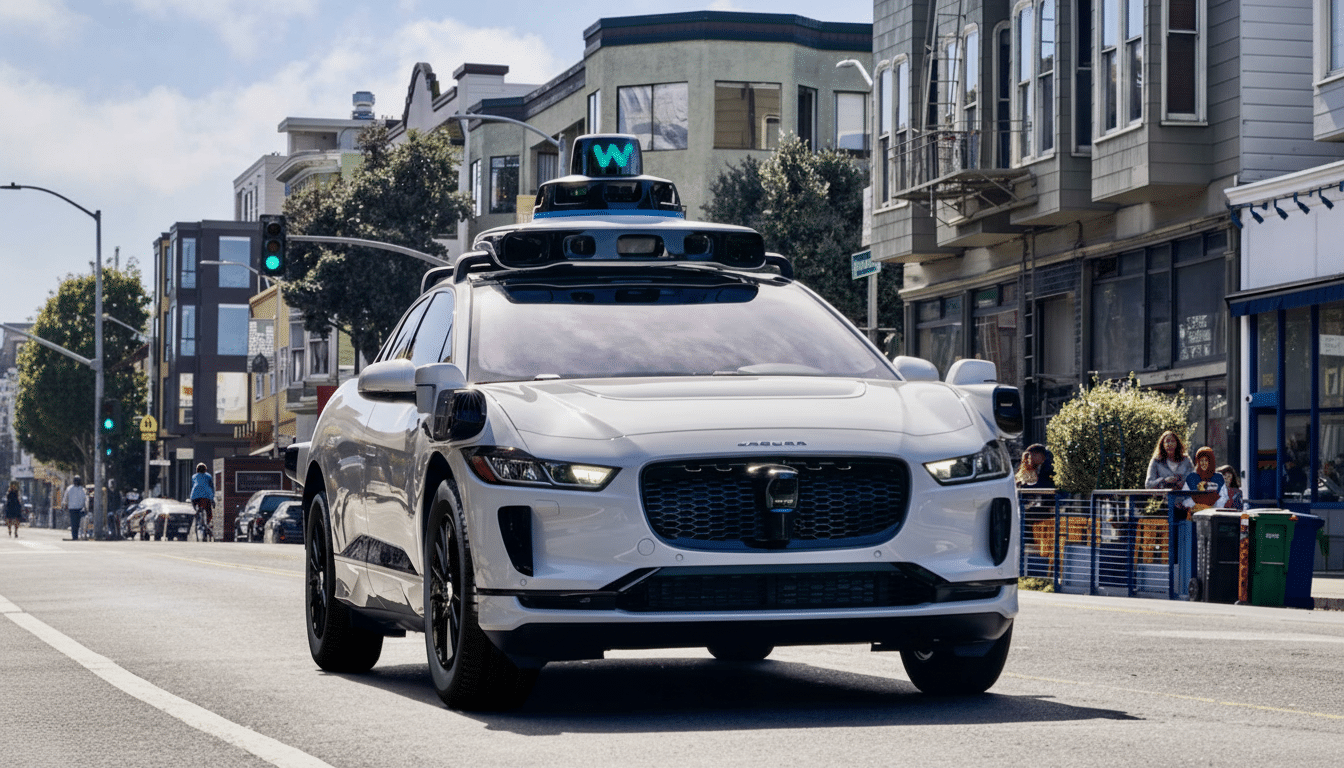
Access lanes and frontage roads are complex for human drivers too, with discontinuous striping, skewed intersections, and spotty signage. For fully autonomous stacks — camera, lidar, radar, and high-definition map fusion — these “edge cases” require the system to classify with greater precision: lanes, dynamic objects, right-of-way (RoW) under time pressure.
Company response and local government in Austin
Local coverage in Austin detailed that the police and the city’s Transportation and Public Works Department had not received formal incident reports connected to the video. Waymo said that safety was its foremost concern, and that it analyzes incidents such as this to improve performance. When there are old, weird behaviors, the company frequently highlights post-incident root cause analysis, updates to the map, and specific software tweaks.
Even without a collision, wrong-way incursion is a high-severity threat. The obvious question is: was this an interpretation mistake, a misread of lane lines, or an attempt to move conservatively back into traffic that put the vehicle in a bad place it needed to get out of? The response defines whether a shallow map patch will do, or it runs deeper into the TCA for further changes.
Safety track record to be reviewed by federal investigators
The viral moment comes as greater attention is being paid. Earlier this month, Waymo issued a software recall after reports that some of its robotaxis were passing stopped school buses with their stop signs extended. That led federal highway officials to compile a list of at least 19 instances in Austin, and a code fix intended to address both bus-detection logic and adherence to the stop rule.
Separately, an inquiry by the National Highway Traffic Safety Administration’s Office of Defects Investigation examined a number of Waymo incidents that involved striking low-profile objects and other breaches of traffic rules, like driving in the wrong lane through complicated intersections. While most of the incidents have not resulted in injuries, the pattern is significant: Regulators are exploring whether what appear to be individual stumbles in planning or perception point to systemic holes.
And Waymo cites millions of autonomous miles and a crash rate that it says is better than human driving in the same places. But the bar is higher for robotaxis — especially around school buses, emergency scenes, and weird geometry — because their mistakes, however infrequent, quickly undermine public trust.
Why self-driving cars have trouble with frontage roads
Frontage roads alongside highways combine several of our quirky designs: broken-up lane markings, numerous driveway cuts, short merge zones, and offset signals. Really, most of these details are painted within the HD maps. But while you have map intent, real-time perception has to reconcile what’s on a map with reality — construction cones on a certain day, those temporary closures, or paint that is so faded it will shift lane centroids by inches. Small mis-categorizations can lead to large tactical mistakes.
State-of-the-art systems build semantic understanding over geometry. That’s learning more than lines, though: it’s context — which way a lane is headed, who has the right of way, and how to safely abandon a planned route when uncertainty flares. The apparent “pull into a gas station” behavior in the video plays like the kind of risk-reduction behavior developers program for ambiguous moments, but the preceding wrong-way stance leaves some questions as to trigger logic and timing.
What’s next for robotaxis in Austin after the video
Waymo surely will be reviewing logs, replaying in simulation the scenario that played out in real life, and pushing targeted updates if the root cause is something it can reproduce. City officials will keep a close eye out for trends, and it is likely that federal regulators will fold the episode into continuing analyses. If the past is any guide, the company will calibrate maps more carefully, tinker with lane-selection thresholds, and refine fallback behaviors so that cars won’t be exposed to opposing traffic.
For riders and other drivers, what matters is trend — not a single clip. Episodes like this can become inflection points, exposing a brittleness or signaling rapid progress. Waymo’s next few updates — and whether these kinds of wrong-way encounters peter out just as science-fair projects do — will say more about the maturity of the system than any viral video ever could.
