


Yet small glitches and freezes in video calls may be doing major harm. A new peer-reviewed study recently published in the journal Nature says audiovisual glitches make people appear less trustworthy and competent — and those snap judgments can carry over into high-stakes moments like job interviews, medical consultations, and even who gets parole.
A Quiet Snafu, With Serious Consequences
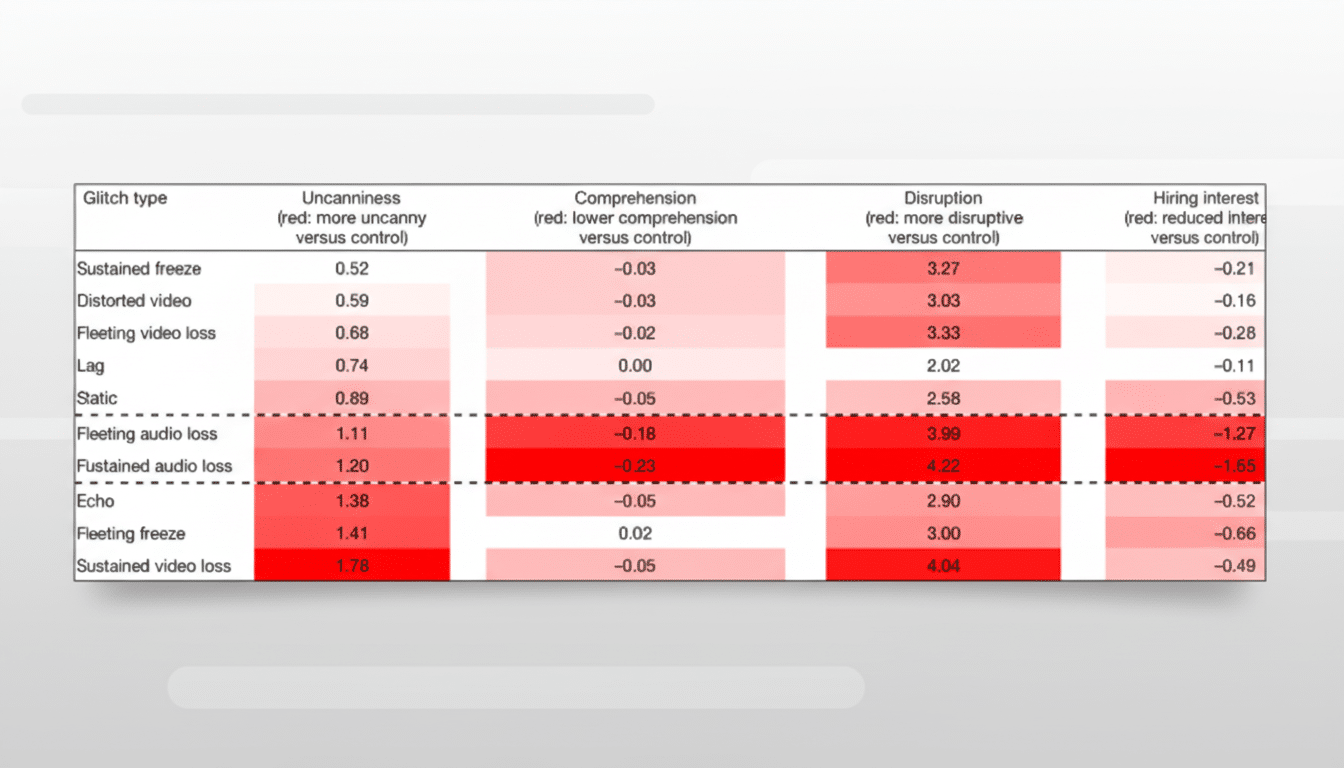
The paper, “Video-call glitches trigger uncanniness and constrain behavior,” determines that when audio breaks up, lips don’t sync with spoken sound, or limited bandwidth causes motions to stop and start — all of which detracts from being able to parse algorithmic affective cues in real time to feel safe while having seemingly face-to-face contact. That uncanny effect consistently reduces warmth and credibility scores, fueling low willingness to hire, follow advice, or extend trust.
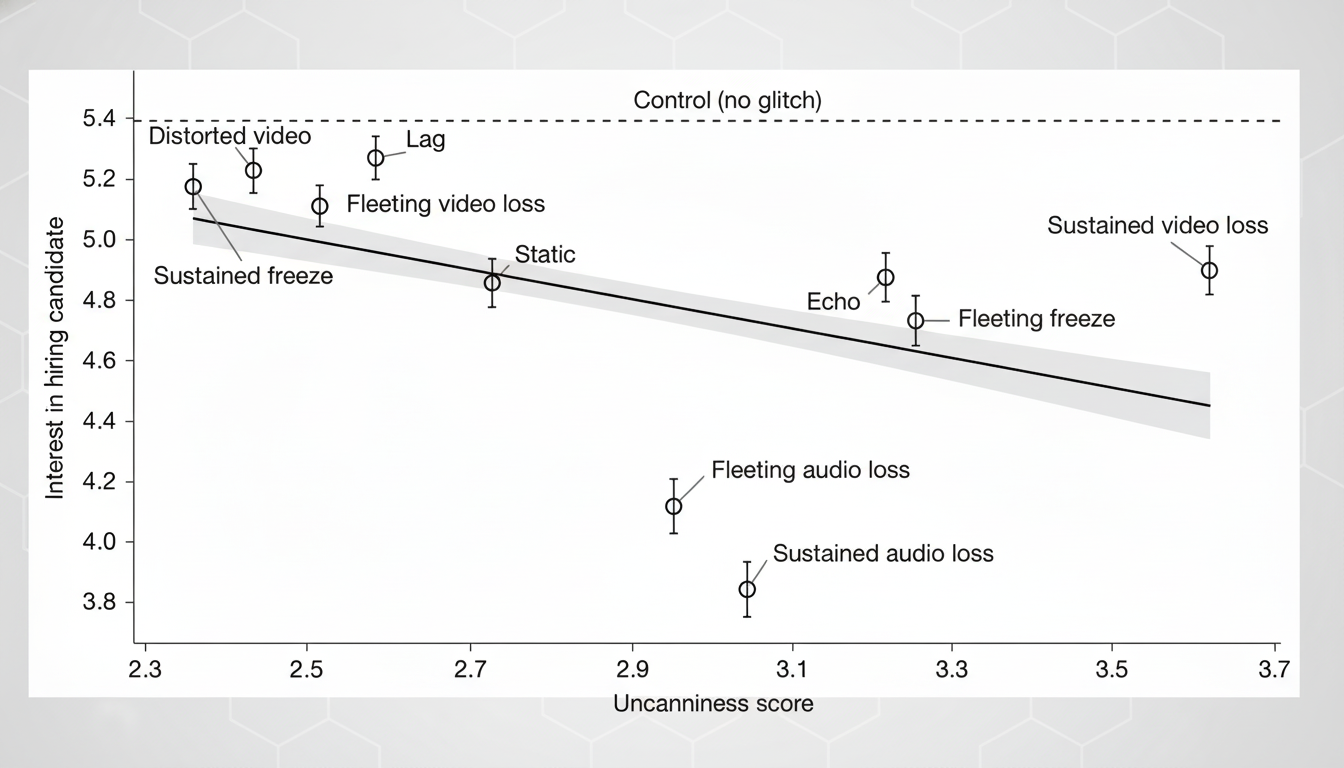
In controlled studies — from casual social interactions to a scripted sales pitch and a simulated health visit — participants who experienced more frequent delays reported lower feelings of social connection and were less willing to re-engage. The result is not just an inconvenience; it’s a cognitive bias. We, as the authors note, subconsciously blame the technical glitch on the person we see on our screens.
For decades, communication scientists have warned that round-trip latency has an outsized impact on the impressions we form. When some applications subject traffic to delays in excess of about 150–200 milliseconds, the International Telecommunication Union has determined that conversational quality diminishes. The Nature study demonstrates how those micro-frictions build into a macro effect.
Hiring And Justice Systems Aren’t Immune
The most sobering thing about the study is its tie to consequential decisions. And when researchers added their experiments to analyses of real-world records, they saw that glitch-prone video appearances were associated with worse case outcomes — for instance, less chance that parole would be granted. The authors do not suggest this is a causal link, but they argue that the pattern fits with the trust penalty created by glitches.
Workplace stakes are similar. Video interviews — a pandemic-era change that stuck — remain common. Many employers are still using video to interview job candidates. Earlier research by Gartner also found that the majority of large organizations implemented virtual hiring processes, and many retained them. Should a candidate’s connection glitch, reviewers might — without even meaning to — ding them for composure or “fit.” That echoes an earlier generation of courtroom research: One well-known study, in Cook County, Ill., found that bail amounts rose about 51 percent after bail hearings were shifted to video, indicating that remote formats can subtly harden judgments.
In medicine, the Nature authors reported diminished receptivity to advice or follow-up after a wonky telehealth visit. Such patterns have also been reported anecdotally by clinicians: When video is out of sync, rapport breaks down and patients check out sooner.
The Bias Is Exacerbated By The Digital Divide
And since unreliable connectivity isn’t uniform in its inequality, nor is the trust penalty. The Pew Research Center has cataloged persistent divides in home broadband adoption, with families living in rural areas and those with lower incomes less likely to have fast and reliable service. Federal estimates also indicate that millions of households continue to have few options for high-speed internet. The need is felt in the same places that have relied on remote courts, telehealth visits, and virtual job fairs to close gaps of distance and cost.
Amid the pandemic, many states moved parole and probation hearings to video, with hybrid models continuing to be common, analyses by justice reform groups found. The Nature study cautions that something meant to increase access might instead cement inequality if technical resistance consistently nudges decisions against people who have the worst connections.
Design And Policy Fixes That Can Help Reduce Glitch Bias
The authors outline practical interventions. Institutions may establish minimal technical requirements for high-stakes hearings, offer connectivity hubs on-site, or reschedule automatically when platforms identify significant jitter and packet loss. Courts and HR teams could formalize guidance that allows decision-makers to simply ignore those glitches, or switch to audio-only if video quality drops below certain thresholds.
And platforms can do more as well: visible quality meters for all participants, proactive nudges to pause and restate after interruptions, and embedded diagnostics that let you know when judgment might have been impaired. Furthermore, recording and displaying such network metrics for interviews or proceedings would provide an audit trail of why performance was good or bad.
Human factors matter as well. The research also suggests small rapport builders — such as a little bit of humor, or explicit acknowledgment that the glitch occurred — can help to mitigate that eerie, almost-but-not-quite-human feeling that fuels distrust. Clear turn-taking, slower pacing, and fewer background effects add to the “real” presence.
The Stakes Of Getting Remote Communication Right
Remote communication isn’t going away. But when life-changing decisions rest on a single frozen frame, institutions have an obligation to engineer for fairness. If so, the Nature findings imply that Big Data’s potential for bias is worse than “irritating” and “troublesome” — even tiny biases, magnified across thousands of interactions with the likes of Mr. Riccardo and Ms. Lauren, compound to form lost jobs, poor health outcomes, and time behind bars.
The solution isn’t to ditch the remote; it’s to make the remote trustworthy by default. That requires better infrastructure, smarter software, and cultural norms that acknowledge one simple truth: A bad connection is not a character flaw, and no one’s freedom should depend on whether their video glitched.
