


Mobile users across the United States are reporting widespread connectivity problems centered on Verizon, with ripple effects visible for people trying to call Verizon numbers from AT&T and T-Mobile. Many affected Verizon devices are showing “SOS” in the status bar, indicating loss of normal cellular service while emergency calling remains available.
Verizon has acknowledged a service issue affecting voice and data for a portion of its customers and says engineers are working on a fix. AT&T and T-Mobile stress their networks remain operational, but customers on those carriers may be unable to complete calls to contacts on Verizon during the disruption.
- Which Verizon services are impacted during the nationwide outage
- How AT&T and T-Mobile customers are affected by Verizon’s outage
- Where outage reports are concentrated across US cities and regions
- What Verizon, AT&T, and T-Mobile are saying about the outage
- If your phone shows SOS status, steps to stay connected
- Why disruptions can spill across networks and affect other carriers
- What we’re watching for as Verizon and partners restore service
Which Verizon services are impacted during the nationwide outage
The most common customer complaints involve failed voice calls, vanishing bars, and mobile data that won’t authenticate or stays stuck at edge speeds. SMS and MMS texts can be delayed or fail when messages traverse Verizon’s network, while app-based messaging over Wi-Fi generally continues to work.
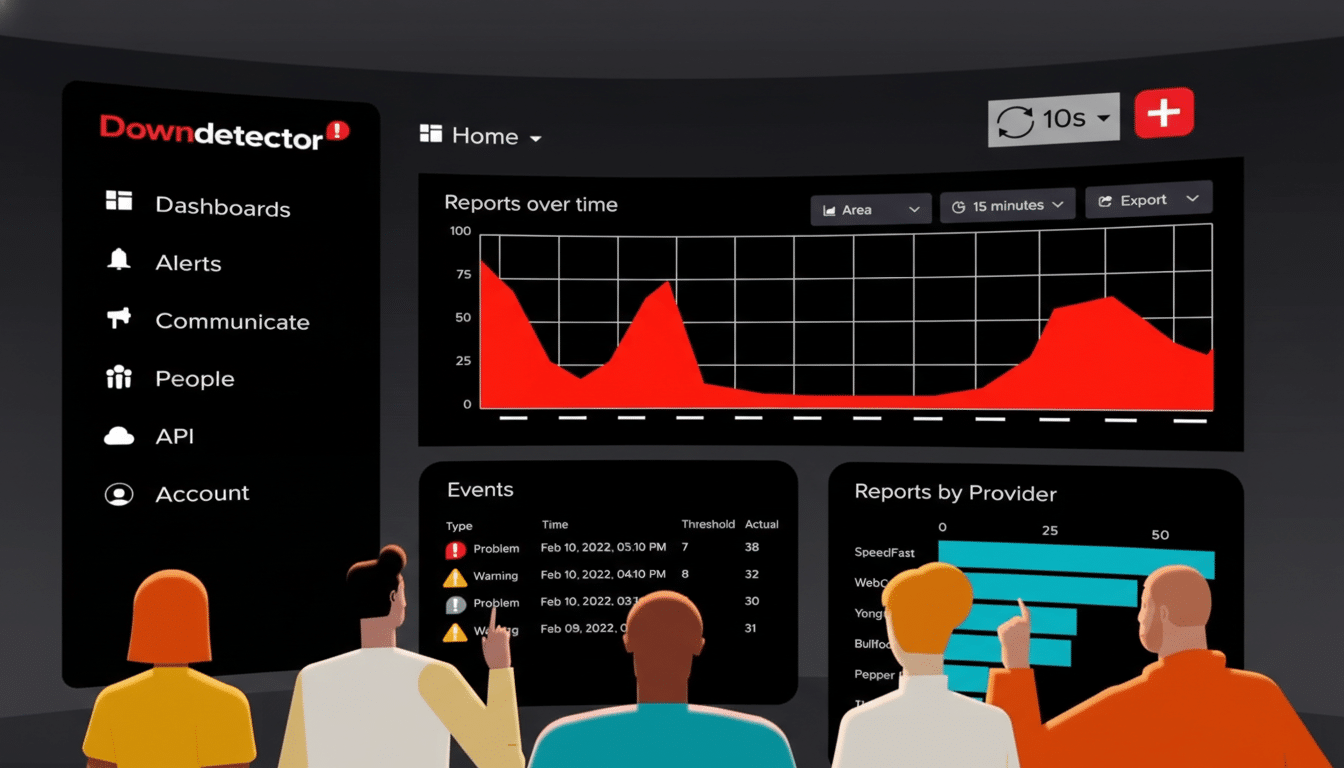
According to Downdetector, a crowdsourced outage tracker, the event triggered a “Very High” severity classification. The service recorded a peak of roughly 178,284 Verizon problem reports in a 15-minute window and more than 1 million total user submissions. Among those, 59% cited mobile phone failure and 34% reported a total loss of signal, an indicator of core network or authentication trouble rather than a single cell-site issue.
How AT&T and T-Mobile customers are affected by Verizon’s outage
Both AT&T and T-Mobile say their networks are operating normally. Still, customers on those carriers can experience call failures or one-way audio when dialing friends, family, or businesses that use Verizon. That’s a classic symptom of an intercarrier interconnection problem: even if your home network is fine, calls can fail at the handoff to the affected carrier’s voice systems.
T-Mobile has told customers on social media that its service is stable but that calls to Verizon subscribers may not complete while Verizon addresses the issue. AT&T has issued similar guidance, emphasizing its coverage is intact and that the difficulty lies beyond its own network.
Where outage reports are concentrated across US cities and regions
Downdetector shows elevated report volumes in New York City and Atlanta, with significant spikes in Charlotte, Houston, and Dallas. That geographic spread points to a national event affecting core network functions, not a localized fiber cut or single-market maintenance window.
Enterprises with large Verizon footprints are also feeling the strain. Contact centers report call completion issues to Verizon lines, and services that rely on SMS to reach Verizon numbers—such as banking one-time passcodes—may be delayed. Many organizations are temporarily shifting to softphone apps and Wi-Fi calling to maintain continuity.
What Verizon, AT&T, and T-Mobile are saying about the outage
Verizon says it’s aware of a problem that is disrupting wireless voice and data for some customers and that its engineers are actively working to identify and resolve the root cause. The company apologized for the inconvenience and underscored the importance of reliable service during the disruption.
T-Mobile reiterates its network is functioning as expected but notes that reaching Verizon numbers may be inconsistent until Verizon completes repairs. AT&T has told customers that its coverage remains unaffected and has pointed to the external nature of the call failures.
If your phone shows SOS status, steps to stay connected
Emergency calling should still work. In SOS mode, most phones attempt to place emergency calls over any available network. On recent iPhones, Emergency SOS via satellite can provide text-based assistance when no terrestrial signal is available, as Apple documentation explains.
- Switch on Wi-Fi and enable Wi-Fi Calling.
- Toggle Airplane Mode off and on.
- Reboot your device.
- Set Voice & Data to LTE if 5G is unstable.
- Use iMessage, WhatsApp, Signal, or other internet-based apps over Wi-Fi.
- If you rely on SMS codes for work, consider authenticators that function offline until service normalizes.
Why disruptions can spill across networks and affect other carriers
Modern voice services run over IP-based cores (VoLTE/IMS) and depend on complex interconnection between carriers for call routing, authentication, and number portability. A fault in a carrier’s signaling planes (think SIP or Diameter), IMS nodes, or routing policies can block calls to that carrier even when the origin network is healthy. Past industry incidents have traced outages to misconfigurations during software updates or backbone routing changes.
Carriers are required by the FCC to prioritize 911 access and file outage information in systems such as NORS and DIRS for critical infrastructure coordination. Trade group CTIA notes that operators typically isolate faults, roll back changes, and reroute traffic to restore service in phases—voice, then messaging, then ancillary services.
What we’re watching for as Verizon and partners restore service
Key indicators of recovery include a drop in Downdetector submissions, restoration of voice calls to and from Verizon numbers, and stabilization of LTE/5G data sessions. Customers can monitor official carrier accounts on X for status updates and should expect incremental improvements as traffic is rebalanced. If disruptions persist after wider recovery, resetting network settings and re-registering to the network can help clear residual glitches.
