


Vera Therapeutics said its Phase 3 trial of Trutakna, a treatment for primary immunoglobulin A nephropathy, showed slower loss of kidney function and fewer kidney-disease progression events over two years than placebo. The results could supply the confirmatory clinical evidence needed for the drug to move beyond its current accelerated FDA approval, although the agency has not yet reviewed the newly announced analysis.
The company reported the findings Sept. 15 from ORIGIN 3, a randomized, double-blind trial involving 428 adults with the progressive kidney disease. Trutakna, also known as atacicept-vymj, was cleared by the Food and Drug Administration in July to reduce protein in the urine, or proteinuria. That approval did not establish that the drug slowed long-term loss of kidney function, a question the two-year data are intended to address.
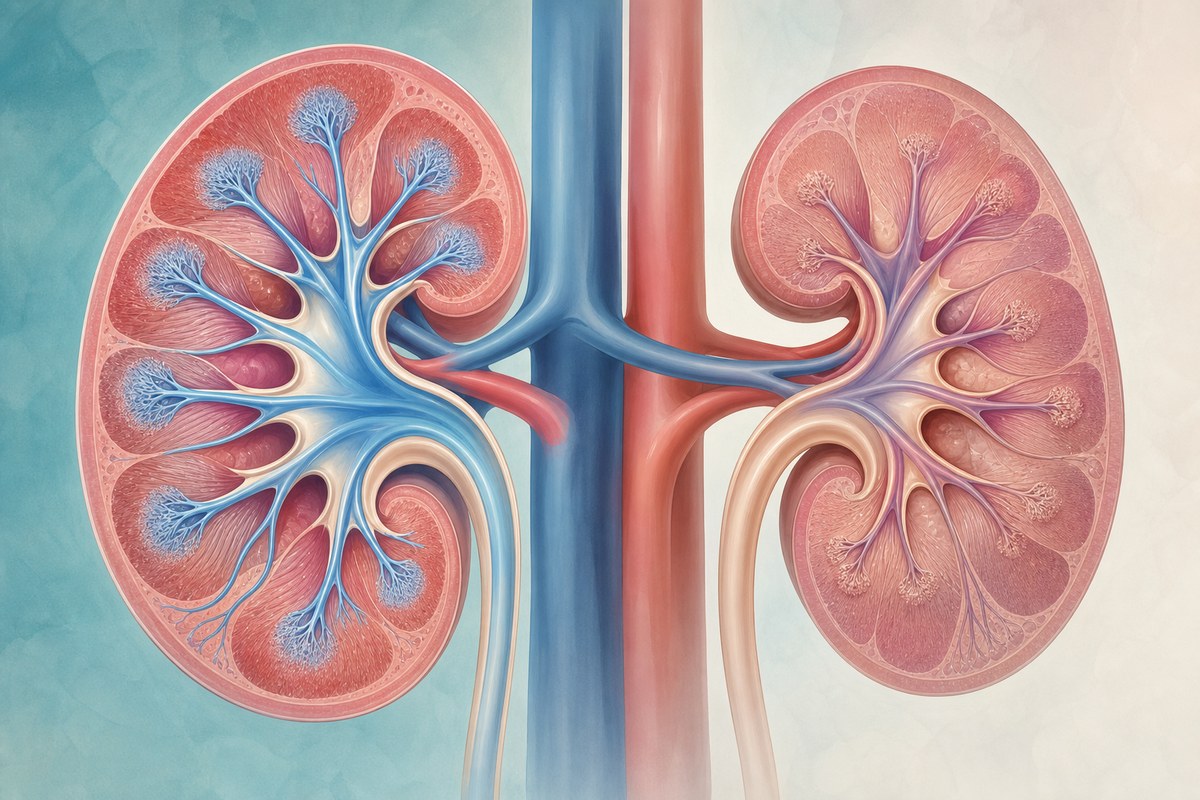
What Vera reported from the two-year trial
According to Vera’s announcement of the final ORIGIN 3 analysis, participants receiving weekly Trutakna had an average estimated glomerular filtration rate, or eGFR, change from baseline of minus 0.1 milliliters per minute per 1.73 square meters at 52 weeks. The placebo group had an average decline of 5.7, producing a reported placebo-adjusted difference of 5.6. The company reported a 95% confidence interval of 3.7 to 7.5 and a p value below 0.0001.
eGFR is an estimate of how well the kidneys filter blood. Lower values generally signal worsening kidney function, though an individual’s readings can vary for reasons including hydration, medicines and measurement conditions. In a clinical trial, the comparison of average changes between randomly assigned groups is meant to reduce the chance that those other factors explain the difference.

Over the full 104-week blinded period, Vera reported annualized eGFR declines of 0.6 with Trutakna and 5.6 with placebo, a difference of 5.0 milliliters per minute per 1.73 square meters per year. It also reported 11 composite kidney-disease progression events in the Trutakna group and 38 in the placebo group, corresponding to a hazard ratio of 0.24. A hazard ratio below 1 indicates fewer events occurred in the treatment group during the follow-up period.
The company did not disclose the full breakdown of that composite outcome in its announcement. It separately reported no events of dialysis lasting at least 30 days, kidney transplant or death in the Trutakna group, compared with eight such events in the placebo group. Those numbers are notable but small, and they do not by themselves establish a definitive effect on kidney failure or mortality.
Why the new endpoints differ from the basis for approval
IgA nephropathy is a condition in which deposits of an antibody called immunoglobulin A accumulate in the kidneys and can lead to inflammation and scarring. Some people have stable disease for years; others face progressive loss of kidney function. Proteinuria is an important marker of kidney damage and future risk, but it is not the same outcome as preserving filtration function or avoiding kidney failure.
When the FDA granted accelerated approval on July 7, it authorized Trutakna to reduce proteinuria in adults with primary IgA nephropathy who are at risk of disease progression. The agency said the approval rested on a surrogate endpoint and that a long-term benefit in slowing kidney-function decline had not been established at that point. Continued approval could depend on confirmation of clinical benefit in a post-approval study.
The sequence explains why Vera’s final analysis has regulatory importance. The company said an earlier prespecified interim analysis found a placebo-adjusted reduction in proteinuria at 36 weeks. The final report now adds eGFR and progression outcomes through 104 weeks. Vera said it plans to submit a supplemental biologics license application in the fourth quarter of 2026 seeking traditional, or full, FDA approval.
That filing is a company plan, not a regulatory decision. The FDA has not publicly said it has examined the final data, accepted a supplemental application or changed Trutakna’s approval status.
What is known — and what remains unavailable
ORIGIN 3 was designed as a multicenter, placebo-controlled Phase 3 study, with participants assigned 1:1 to 150-milligram weekly subcutaneous Trutakna or placebo. The UK Health Research Authority’s trial summary describes a planned 104-week blinded treatment period followed by an open-label extension. The current U.S. label reports a 428-person randomized safety dataset, with 214 people in each group, matching the population Vera cited for its final analysis.
Random assignment and placebo control mean the study is designed to estimate a treatment effect under trial conditions, rather than merely show an association between taking the drug and a better outcome. Still, the latest efficacy figures are company-reported and have not been identified as published in a peer-reviewed medical journal. Vera said detailed results would be presented at an upcoming scientific congress.
The announcement does not provide the complete statistical analysis plan, baseline characteristics, handling of missing data, individual components of the composite endpoint or full adverse-event tables. Those details can affect how clinicians and regulators interpret the size and durability of a reported benefit, including whether effects were consistent across people with differing disease severity.
Safety will also remain part of that assessment. The FDA-approved prescribing information warns that Trutakna suppresses parts of the immune system and may raise infection risk. In the clinical study described in the label, infections were reported in 32% of Trutakna-treated participants and 28% of placebo recipients. Local administration reactions occurred in 30% and 5%, respectively.
Trutakna is approved only for adults, and its safety and effectiveness in children have not been established. For patients and clinicians, the next consequential step is FDA review of the complete confirmatory package: the agency will weigh the two-year efficacy findings, their detailed analyses and the treatment’s safety profile before deciding whether the evidence supports conversion from accelerated approval.

