


Utah authorities have closed the 1974 homicide of 17-year-old Melissa Ann Smith, saying DNA comparisons involving evidence preserved for more than five decades support their conclusion that Ted Bundy killed her. The announcement adds a forensic basis to a case long regarded as a possible Bundy killing, but it does not mean that every unsolved disappearance or death historically associated with him can now be resolved.
Accounts published Oct. 28 by News 9 and Fox News describe a comparison between evidence in Smith’s case and the 1974 killing of Laura Aime, another Utah victim whose case was linked to Bundy. Officials cited the DNA findings alongside the broader investigative record, rather than portraying DNA alone as the basis for the closure.
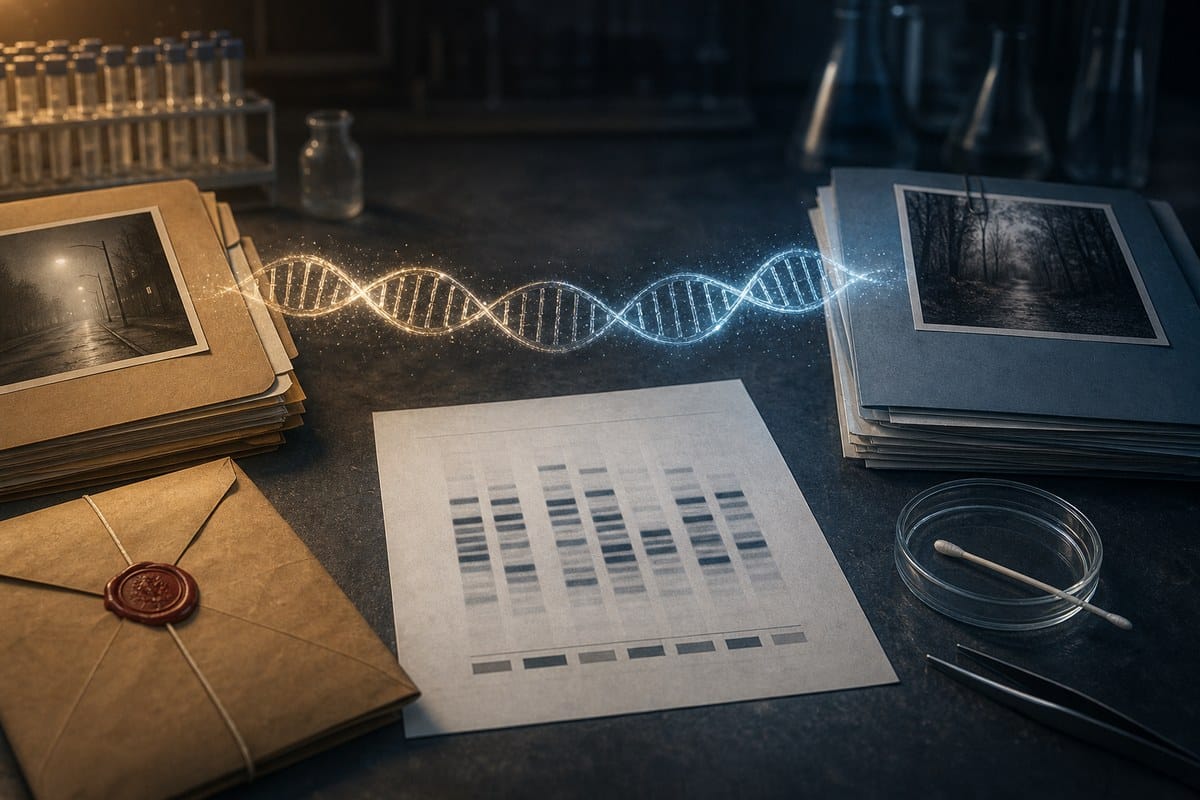
Evidence from two 1974 cases
Smith disappeared on Oct. 18, 1974, after visiting a pizza parlor and restaurant, according to News 9’s account of contemporaneous reporting. Her body was found nine days later in a wooded area near the Summit-Salt Lake county border. The killing remained formally unsolved for decades.
Investigators retained evidence from the original inquiry, including postmortem evidence, Fox News reported. That preservation proved important because the recent work depended on revisiting material collected before modern DNA analysis was available. Bundy, who was executed in Florida in 1989, had long been considered a suspect in Smith’s death, but suspicion and a DNA-supported case closure are different evidentiary steps.
The reported investigative sequence began with a DNA profile from the Aime case being linked to Bundy. Investigators then compared profiles from the Aime and Smith files and found a match, according to Detective Ben Pender of the Salt Lake County Sheriff’s Office. Summit County Attorney Margaret Olson said authorities were satisfied that Bundy was responsible after considering DNA evidence along with what officials described as his pattern, motive, means and opportunity.
The available reporting does not include a laboratory report, a statistical match value, the type of biological material tested, or details of the assay used. Those omissions do not negate the authorities’ conclusion, but they limit how independently the public can assess the technical strength and scope of the comparison. No official forensic validation document or peer-reviewed account of this casework was publicly available in the reports.
Why older DNA can sometimes be tested now
News 9 reported that Utah’s state crime laboratory acquired technology in 2023 that can extract DNA from samples that are small, degraded by age or mixed with DNA from more than one person. Such capabilities can make evidence newly usable when earlier testing either could not generate a profile or could not separate a useful profile from a complicated sample.
That description is significant but necessarily broad. The reports do not identify the technology by name or explain which step produced the new result in the Smith investigation. DNA work on aged material can involve recovering a limited amount of genetic material, interpreting partial profiles, or distinguishing contributions from multiple people. Each situation presents different analytical challenges, and the publicly described facts do not establish which applied here.
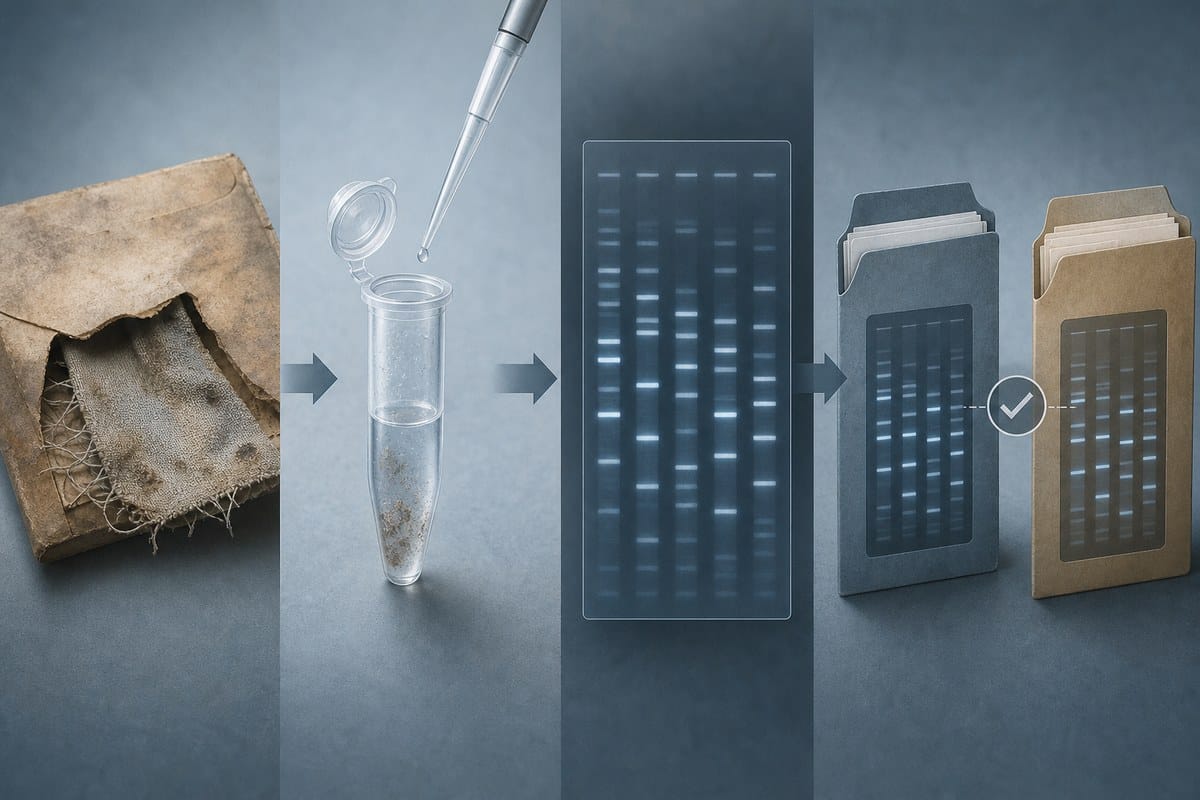
The Smith case nevertheless illustrates a practical reason law-enforcement agencies maintain biological evidence even after a case goes cold. A sample that cannot answer an investigative question at one point may become testable as extraction, profiling and interpretation methods improve. In this instance, investigators reportedly had preserved material from both homicide files and a comparison route through the Aime case.
A closure, not a blanket answer for other cases
The announcement is case-specific. It supports Utah authorities’ conclusion about Smith’s death; it does not establish that Bundy was responsible for all unresolved cases in which he has been suspected, mentioned in investigative leads or implicated by unverified claims. The quality and availability of evidence vary sharply across older cases.
Pender told Fox News that retained Bundy-related evidence could be useful in other investigations, but that a case’s prospects depend on the evidence and information it contains. Biological samples may have been discarded, poorly preserved, too degraded for a usable result or mixed in ways that prevent a clear interpretation. A lack of a DNA result, conversely, would not by itself settle whether a suspect was or was not involved.
That limitation is especially relevant to the disappearance of Nancy Wilcox, which authorities continue to investigate. News 9 reported that investigators have information pointing toward Bundy but are not certain he was responsible. The distinction reflects the standard officials applied in the Smith case: historical suspicion can guide a cold-case review, but a closure rests on the evidence available in that individual file.
There is also an unresolved discrepancy in public accounts about the timing of the Aime breakthrough. Fox News described a DNA profile in Aime’s case being linked to Bundy in July, while News 9 said Aime’s case was resolved in April. The reports may refer to separate milestones in testing and case disposition, but without an official chronology it is not possible to reconcile those dates. What both accounts agree on is the essential evidentiary chain: a Bundy link in the Aime investigation led to a comparison with preserved evidence from Smith’s case, and Utah authorities say that comparison enabled the 52-year-old homicide to be closed.

