


The UK and Ukraine have signed an AI partnership that gives Britain access to Ukraine’s Avengers AI Labs, a battlefield-data platform, and begins with security technology trials at a UK defence site. The agreement, announced by the UK government on 24 August after a signing in Kyiv, is an unusually direct effort to turn lessons and data from Russia’s war against Ukraine into British defence and national-security systems.
Its immediate importance lies less in an abstract promise of military AI than in the projects already named. One planned trial will combine Ukrainian data with a British fibre-optic sensing system intended to detect movement around a defence base. The partnership also opens work on lower-power chips for drones, robotics and autonomous systems. Britain is the first international partner announced to receive access to Avengers AI Labs, according to the government.
From battlefield feeds to a British base
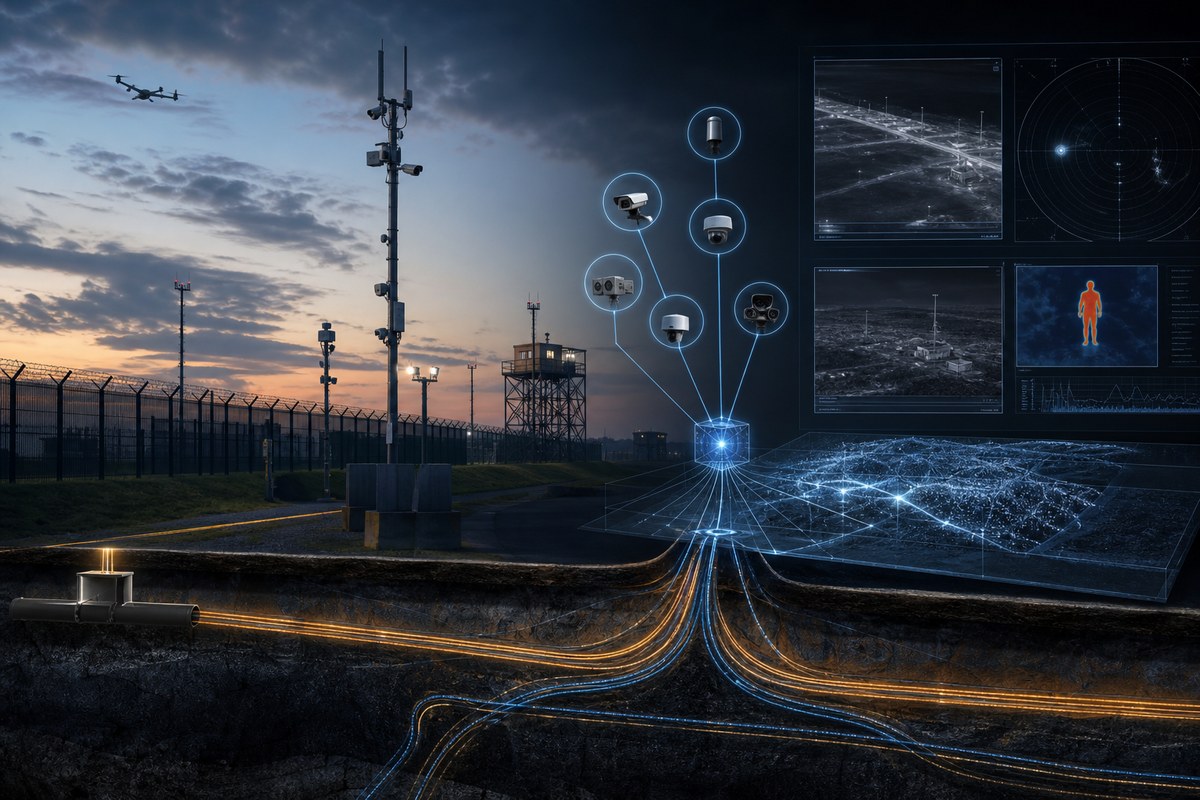
Avengers AI Labs is described by the UK as a platform built from observations collected by thousands of daylight cameras and infrared sensors across Ukraine. Those inputs include imagery and data associated with tanks, artillery, air-defence systems, infantry, aerial objects, Shahed drones and reconnaissance drones. The stated aim is to use this material to train and test AI systems against conditions that are difficult to replicate on a conventional peacetime range.
The first UK pilot involves Sintela, one of three British startups named in the agreement alongside Mind Foundry and Skyral. Sintela’s system uses buried fibre-optic cable as a distributed sensor: disturbances near the cable alter the light travelling through it, allowing software to identify patterns consistent with movement or other activity. In the planned trial, AI trained with Ukrainian data would be used alongside that sensing technology to help protect a defence site.
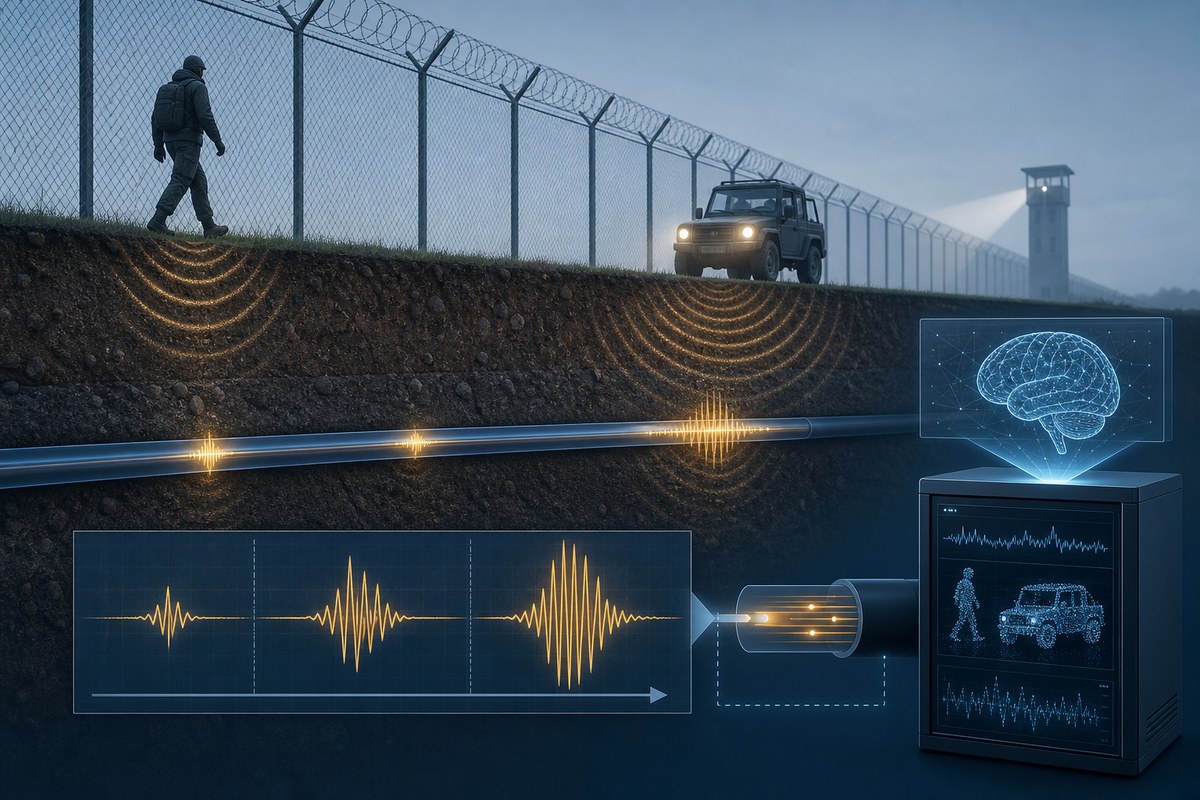
The government says the system could help guard bases against protesters and hostile actors. Those are materially different categories of activity, and the announcement does not set out what data will be retained, how alerts will be reviewed by people, or what safeguards would govern use involving peaceful protest. The proposal is a trial at a defence location, not an announced deployment in public space.
The Guardian’s reporting says the technology could eventually be considered for airports, prisons, railways and energy infrastructure if it works. That is a prospective application, rather than a commitment to roll out the system at those sites. Moving a detection tool from a controlled military perimeter into transport, prison or energy settings would also raise a broader set of operational and civil-liberties questions.
What the platform’s numbers do—and do not—establish
Detailed figures about Avengers have emerged through Reuters reporting, carried by AOL, which attributes them to Ukraine’s Defence Ministry. The ministry describes the resource as an annotated dataset of five million battlefield images, largely drawn from the DELTA combat system. It also says AI models trained using the platform already support an automated target-detection system that reviews more than 100,000 drone-video feeds each month and identifies about 70% of enemy targets in real time.
Those figures help explain why a British government would seek access to the platform, but they should not be mistaken for independently audited measures of accuracy or battlefield effectiveness. The public accounts do not specify how the five million images were selected, how labels were validated, whether data are representative across combat conditions, or how target-identification performance was tested. Nor do they clarify the false-positive and false-negative rates that would matter greatly if similar analytical methods were adapted for security monitoring in Britain.
There is also a difference in emphasis between the two public descriptions. The UK announcement stresses a continuing stream of sensor and camera information that has captured millions of objects; the Ukrainian ministry’s account, via Reuters, refers to a five-million-image annotated dataset. The descriptions may fit together, with one referring to broad collection and the other to a curated training set, but the public material does not independently document the platform’s composition.
That distinction is especially relevant for the fibre-optic trial. Fibre-optic movement detection is not new technology, and Steven Murdoch, a computer science professor at University College London, told the Guardian it was unclear whether Ukrainian battlefield data would substantially improve established approaches. He identified data about newer threats, including drones, as a potentially more distinctive contribution. A model trained to recognize a drone-related pattern is not automatically evidence that it will improve detection of people, vehicles or routine activity around a British base.
A defence collaboration with wider infrastructure implications
The agreement sits within a wider push by NATO members to adopt AI, autonomous systems and other emerging technologies faster. NATO’s technology policy material identifies AI, drones and autonomous systems as areas shaping deterrence and defence, while also framing innovation as a practical challenge of adoption, interoperability and resilience. Ukraine’s experience has made it a consequential source of operational knowledge in those fields.
For Britain, the partnership offers access to data generated under real conflict conditions. For Ukraine, it brings a formal route to work with UK companies and defence technology programmes. The named projects are nevertheless at an early stage. The fibre-optic work is planned as a trial, while the low-power-chip effort is described as exploration for future drones, robotics and autonomous systems.
The announcement does not authorize autonomous weapons or say that British systems will make targeting decisions. Reuters’ account of automated Ukrainian target detection concerns an existing capability described by Ukraine’s Defence Ministry, not a newly announced UK deployment. The British projects should be judged on their own technical evidence, operating rules and oversight arrangements as they emerge.
For now, the most concrete test will be the defence-site pilot: whether battlefield-derived training data yields a measurable improvement over existing perimeter sensing without producing an unmanageable stream of false alarms. The partnership provides access and a framework for experimentation; it does not yet provide public evidence that the resulting systems will work as claimed in British conditions.

