


Lenovo’s CES exhibition highlighted five of the most eye-catching laptops ranging from practical refreshes to envelope-pushing concepts. In this weekly roundup of the best and worst products to cross our lab benches, expect some heavy hitters: a significantly more repairable ThinkPad, a pair of rollables that reinvent screen real estate, a motorized twistable for those fluid workflows, and a sub-2.5-pound OLED ultraportable.
Collectively and in order, the lineup reads like a road map: ease the ability to service premium systems, push displays past clamshell restrictions, and pack silicon that’s ready for AI into thinner, lighter frames.
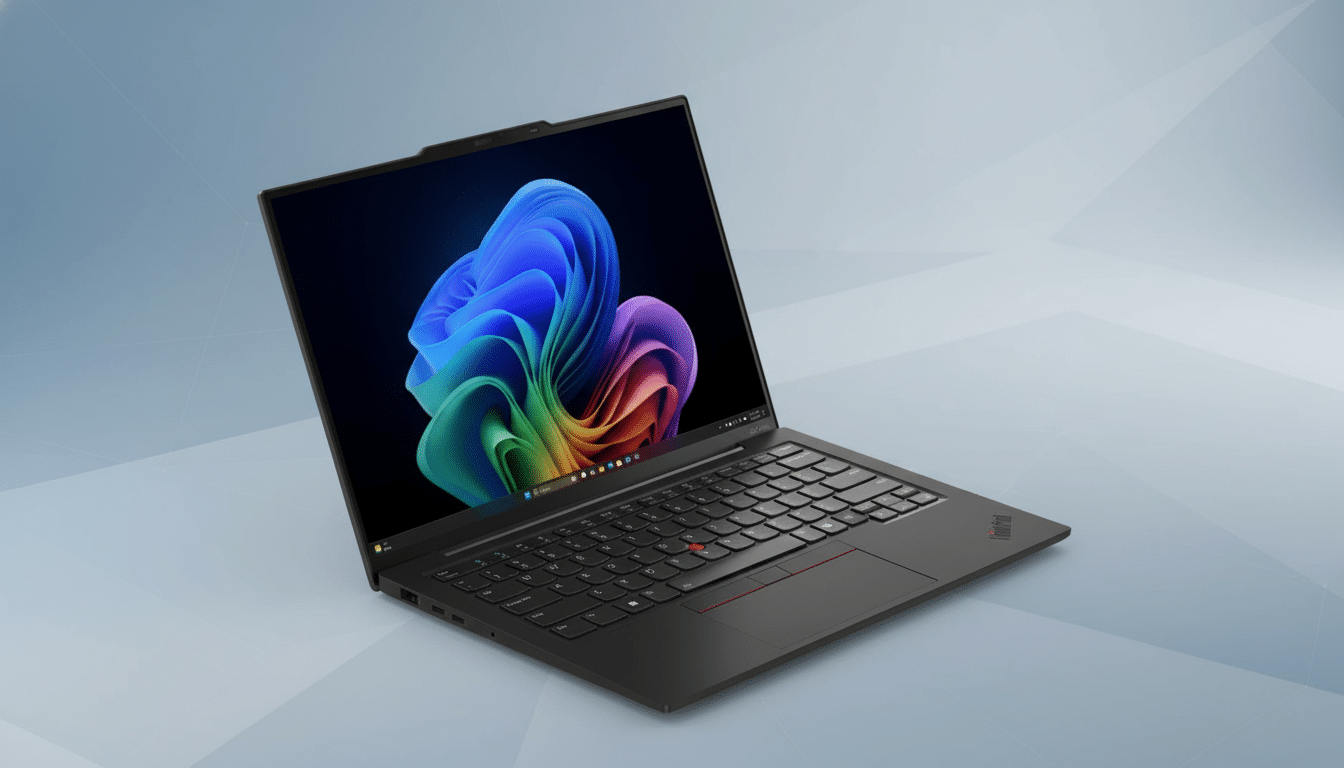
- ThinkPad X1 Carbon Aura Edition boosts repairability and power
- Legion Pro Rollable concept stretches gaming display sizes
- ThinkPad Rollable XD concept reimagines flexible workflows
- ThinkBook Plus Gen 7 Auto Twist brings motorized rotation
- Yoga Slim 7i Ultra delivers a sub-2.5-pound OLED experience
- Why these five Lenovo designs point to laptops’ near future

ThinkPad X1 Carbon Aura Edition boosts repairability and power
The newest X1 Carbon features a “space frame” internal design, with components spread out on either side of the motherboard. The proof is in the pudding — or rather, on the inside: increased packaging density, better access to parts, and high sustained performance. iFixit gave the redesign a 9/10 repairability score — an unheard-of score for an ultraportable and a nod of approval toward right-to-repair momentum.
Inside, Lenovo is touting Intel Core Ultra X7 Series 3 processors, faster LPDDR5x memory up to 9600MT/s, and a bump to 30W sustained power. User-serviceable ports, batteries, keyboards, speakers, and fans increase not just the lives of electronic devices but also productivity, by reducing downtime and thus total cost of ownership for IT teams that keep fleets for 4–5 years.
Legion Pro Rollable concept stretches gaming display sizes
Gaming takes a screen-size stretch with the Legion Pro Rollable, an OLED laptop display that unfurls from its 16-inch size to as wide as 21.5 inches and then to a panoramic 24 inches.
Lenovo even described the stages — titled Focus Mode, Tactical Mode, and Arena Mode (presumably aimed at different kinds of training or competition), where more direct on-screen map data can make decision-making quicker.
It’s a concept in this form, but Lenovo says it’s inspired by the Legion Pro 7i platform for Intel Core Ultra CPU performance and Nvidia GeForce RTX 5090-class graphics with DLSS 4 support. The concept is consistent with Display Supply Chain Consultants’ projection that rollable OLED yields and reliability have been on the rise, although real-world deployment may depend on how well motorized mechanisms and flexible substrates fare over time in the field.
ThinkPad Rollable XD concept reimagines flexible workflows
The ThinkPad Rollable XD has a more business-first attitude toward flexibility. Its screen wraps over the lid for an instant rear-facing display for sharing, then rises from a compact 13.3 inches to a more expansive 16-inch workspace. It’s a dexterous backflip of the two-screen paradigm, without the weight or hinge torture that traditional two-in-one convertibles entail.
Lenovo pitches the XD as a work-in-progress productivity prototype, and spec-wise it’s probably more tuned to be efficient rather than a full-monty powerhouse.
With the dual-facing design, you get the sense this is built with sales calls, brief client demos, and front-of-room presentations in mind — use cases small enough that frictionless collaboration overwhelms raw GPU power.
ThinkBook Plus Gen 7 Auto Twist brings motorized rotation
From devices you might actually be able to imagine on a hot desk, the ThinkBook Plus Gen 7 Auto Twist is probably the one to steal the show. A motorized pivot mechanism mounted in the center allows the 14-inch 2.8K OLED to spin nearly all the way around at the touch of a button, switching instantly from your own work mode to client-facing display mode — no awkward folding-and-reversing dance required by traditional tent or presentation modes.
Below the party trick, it’s a decent daily driver: an Intel Core Ultra 3 series chip, Dolby Atmos-tuned speakers, and a large 75Wh battery. Climb higher, and you can get up to 32GB of memory and a full two terabytes of storage, and Lenovo’s starting price ($1,649) keeps it accessible for design agencies, retail pop-ups, or just the kind of modern conference room where fast context switching pays back in kind.
Yoga Slim 7i Ultra delivers a sub-2.5-pound OLED experience
At 2.2 pounds, the all-white Yoga Slim 7i Ultra is Lenovo’s most assertive ultraportable statement. The matte magnesium alloy body is less of a fingerprint magnet than glossy screens, and the 14-inch 2.8K OLED reaches up to 1,100 nits in HDR, which means portable color work with HDR video should be genuinely usable under bright lights.
Performance isn’t an afterthought. It offers an ultra-thin form factor combined with an Intel Core Ultra X9 Series 3 processor (with built-in Arc graphics) and 32GB dual-channel memory at speeds of 9600MT/s, a combination that makes this Slim something of a lightweight wonder champ at even AI-accelerated creative tasks while working and playing hard without a dGPU on board.
Why these five Lenovo designs point to laptops’ near future
The portfolio rests on two designs: serviceability and screen innovation. The X1 Carbon demonstrates that premium ultrabooks can also be thin and user-repairable, as iFixit and other activists have long argued. On the other hand, rollables and the Auto Twist hinge provide new responses to an age-old laptop question: how do you give people more screen without making it too bulky?
Look for the AI PC storylines to grow heavy in all three. IDC predicts that AI-capable notebooks will make up a majority of shipments in a couple of years, and Lenovo’s decisions around Core Ultra CPUs, increased sustained power, and speedier memory fall right in line with what we expect to see on that path. If just one of those rollable ideas makes it to retail, Lenovo will have one of the most unique display stories in the market — and the twistable ThinkBook already looks like it’s ready to go.
