


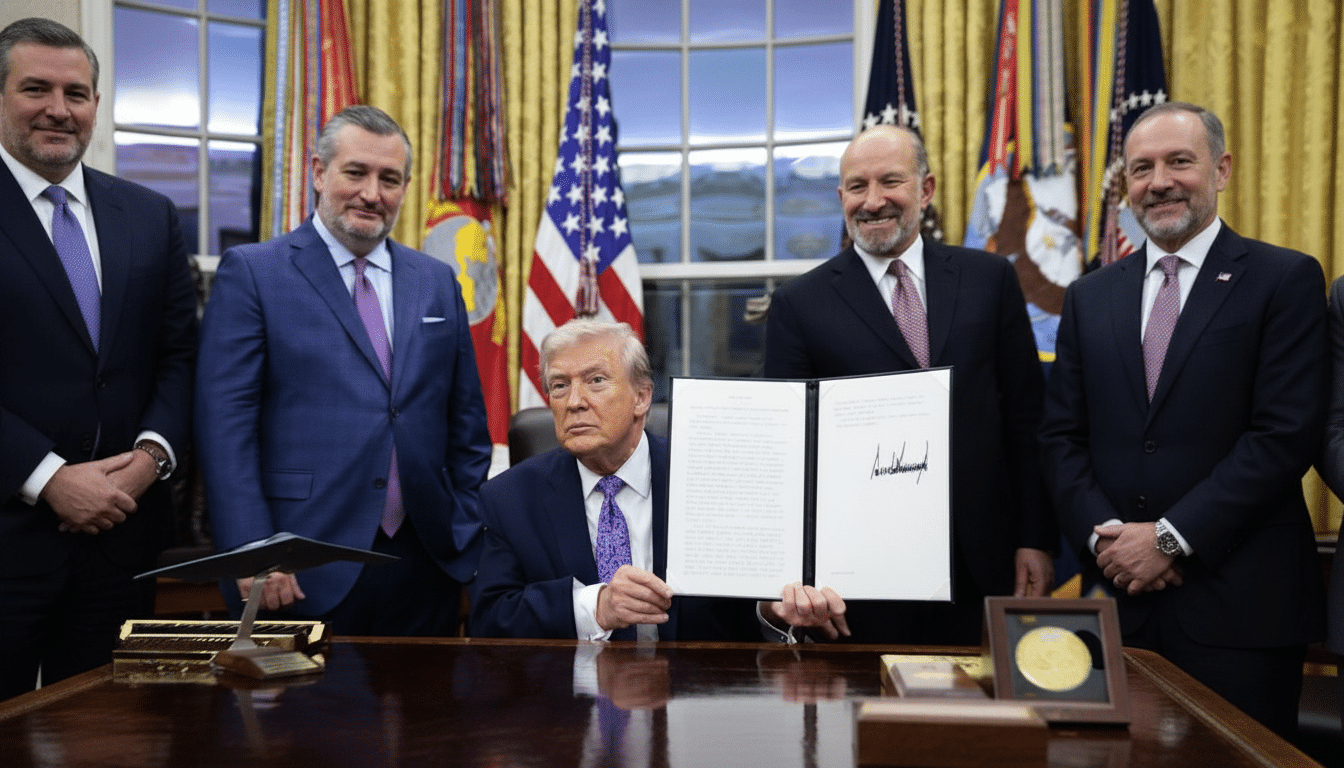
President Donald Trump has signed a wide-ranging executive order directing the government to put new rules in place for artificial intelligence, but the White House’s efforts to make American AI more competitive with other countries are likely to be of little immediate benefit to companies like Google and Amazon that have worked closely with the Pentagon. The order instructs federal agencies to develop a single “national framework” and punishes states that pass laws judged to be at odds with this by withholding some federal funds.
The move comes at a time when states have been accelerating their own AI rulemaking. State legislatures from California to New York have passed measures on transparency, whistleblower protections and guarding young athletes, moving in a vacuum as Congress remains gridlocked. The order is trying to reclaim ground by declaring federal primacy in AI policy and linking compliance to federal grants.
What the executive order does to unify AI policy
The order directs agencies to work together on one, governmentwide AI policy and to employ preemption when state rules are deemed “burdensome” or in opposition to federal aims. It also encourages agencies to make grants conditional on a state’s agreeing not to enforce AI rules that conflict with the new framework. In other words, the White House is betting that one rule for AI will be quicker and more industry-friendly than a patchwork of state mandates.
While the details will come out in follow-on guidance, the thrust is clear: streamline oversight, minimize compliance fragmentation and centralize accountability in Washington. That stands in marked contrast to recent initiatives at the state level, where lawmakers have instead focused on things like algorithmic transparency, disclosure standards and duty-of-care concepts for products used by teens.
A direct challenge to state AI laws and regulations
States have been fertile laboratories when it comes to tech policy. The National Conference of State Legislatures has tallied hundreds of AI-related measures that have been introduced around the country in the last two years, with dozens enacted. The new order threatens to have a chilling effect on that work by declaring that federal policymakers will not be bound by state or local testing grounds for new practices in fields ranging from model safety disclosures to deepfake labeling and automated decision making in hiring and housing.
Legal scholars say the continued life of the order will depend for one thing on how agencies effectuate it and for another on whether courts embrace the agency-preemption theory. The federal government can impose conditions on the grants under what’s known as the Spending Clause, but has said there’s a key restriction for those conditions to be tied to a program’s goals and not be unduly coercive. The order’s opponents contend that linking funding to compliance with AI policies would set the stage for a courtroom challenge, citing precedents such as Dole and the anti-commandeering doctrine.
Broadband funding emerges as a key pressure point
One of the most significant levers in the order is money for high-speed internet deployment, particularly in rural areas. Recent federal programs have committed tens of billions to expanding access, and the order suggests such funding could potentially be used as leverage in negotiations with states that pursue stricter AI rules. That is the trade-off governors and public utility commissions now face: push for aggressive AI safety laws or preserve access to crucial infrastructure dollars.
Who shaped the policy and concerns from civil groups
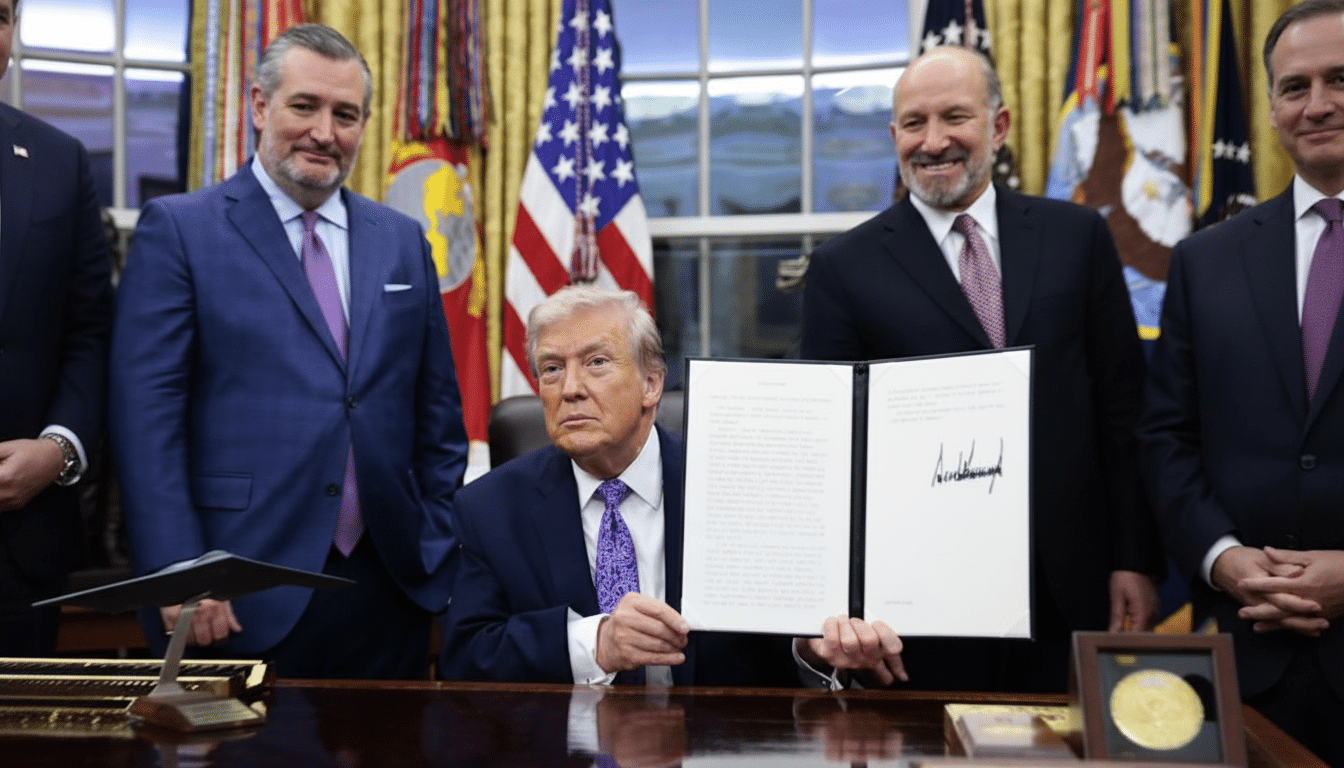
The order was designed with help from venture capitalist David Sacks, the administration’s AI-and-crypto special advisor. Companies with ties to Sacks figure prominently in a recent New York Times exposé about firms that stand to gain the most from a light-touch regulatory approach. The story has stoked arguments from civil society groups that the industry-first policy pits consumers and smaller AI competitors against the biggest AI vendors.
Michael Kleinman of the Future of Life Institute slammed the order as a giveaway to big tech, stating that like other industries, AI companies should have to comply with basic safety standards. Without rules to this effect, firms deploying a majority of AI systems harmfully discriminate and spread disinformation while holding most of the economic power.
To protect kids, the White House casts the national framework as child-safety-focused amid growing interest in how generative AI spreads to children. This claim relates to a surge of lawsuits against OpenAI from the traumatized families of teens who used one of its chatbots to chat with before committing suicide. OpenAI has disputed the allegations, but on the same day the order was signed, child-safety groups released a PSA warning about fatal AI chatbots and calling on the states not to be sidelined. These various sparks demonstrate a core conflict: conformity at the national level versus individual states’ willingness to place a direct regulatory duty on AI products adopted by younger persons.
The executive action comes after a previous legislative effort to halt state regulation of AI for 10 years, a proposal that quickly caught rare bipartisan fire and was shot down by the Senate in an overwhelming vote of 99 to 1. Even within the President’s own political coalition, there are some who want tougher rules or say they fear perceived industry capture. Polling this year found voters were widely skeptical of removing the states from the equation, reflecting concern that innovation not outpace basic safety and accountability.
What comes next as agencies implement and courts weigh in
Agencies will now convert the order into guidance, enforcement priorities and grant conditions. Look for this to be quickly challenged in court by states, advocacy groups and others, as they probe questions as varied as preemption and the boundaries of conditional spending. In the meantime, businesses face two realities: a federal government pledging one rule and a growing list of state laws already on the books.
The degree to which the order creates clarity or more confusion will depend on judges and how closely federal policy tracks with existing standards like NIST’s AI Risk Management Framework, which many companies already coach themselves using. At stake is much more than just the future of a rail line or urban wealth. It could determine what sort of country America wants to be — how it balances innovation and safety, who gets to write the rules and which communities are left out in the cold if and when the funding spigot tightens.
