


The long-teased Trump Phone has finally surfaced in real photos, offering the first tangible look at a project that has repeatedly shifted scope, specs, and even marketing language. In an interview, Trump Mobile executives showed a pre-production unit and outlined a hardware rethink that moves the device closer to mainstream midrange territory, with a price that undercuts many flagships yet leaves key questions unanswered.
First Real Look Points To A Different Design
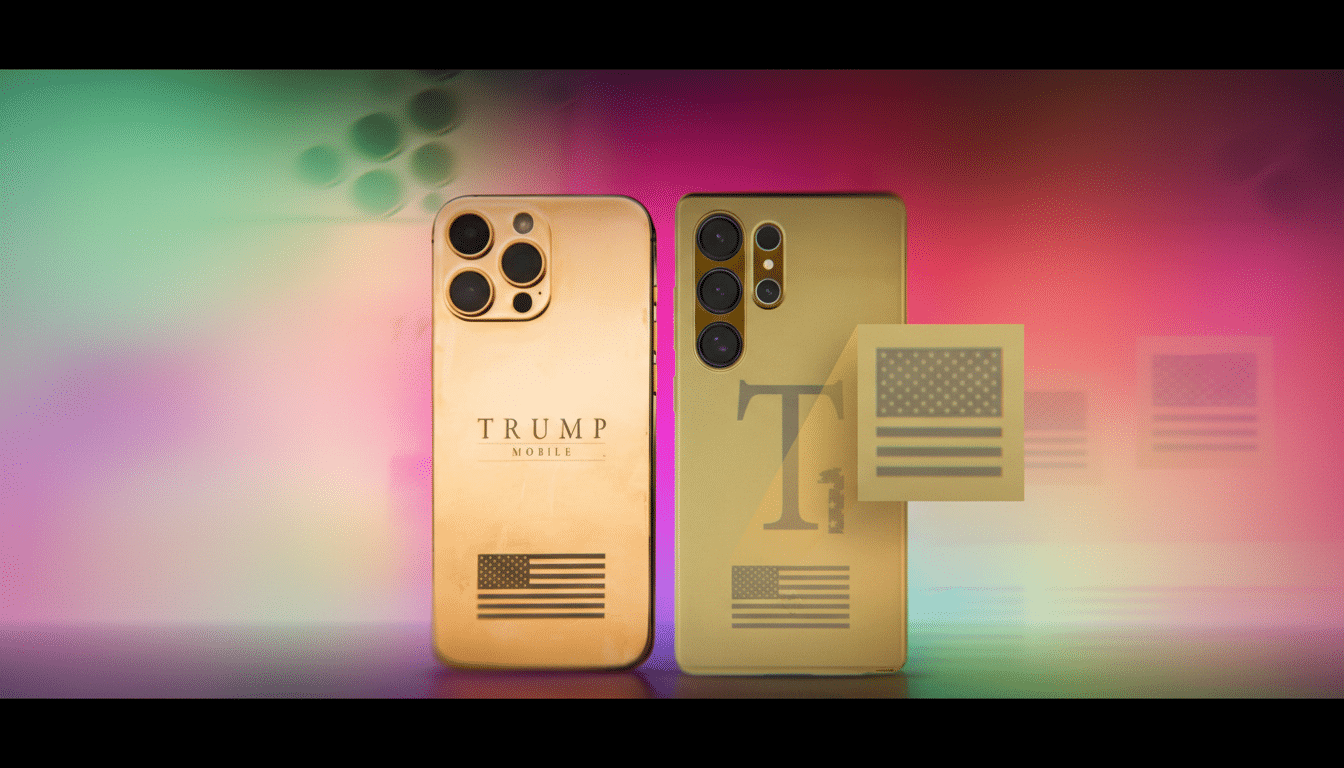
Executives Don Hendrickson and Eric Thomas described a design that diverges from earlier digital renders, some of which mimicked popular phones. The live unit features a curved back and a glossy gold finish with a prominent American flag motif. A large T1 logo seen in past imagery is slated for removal on the final device, signaling a cleaner rear aesthetic.
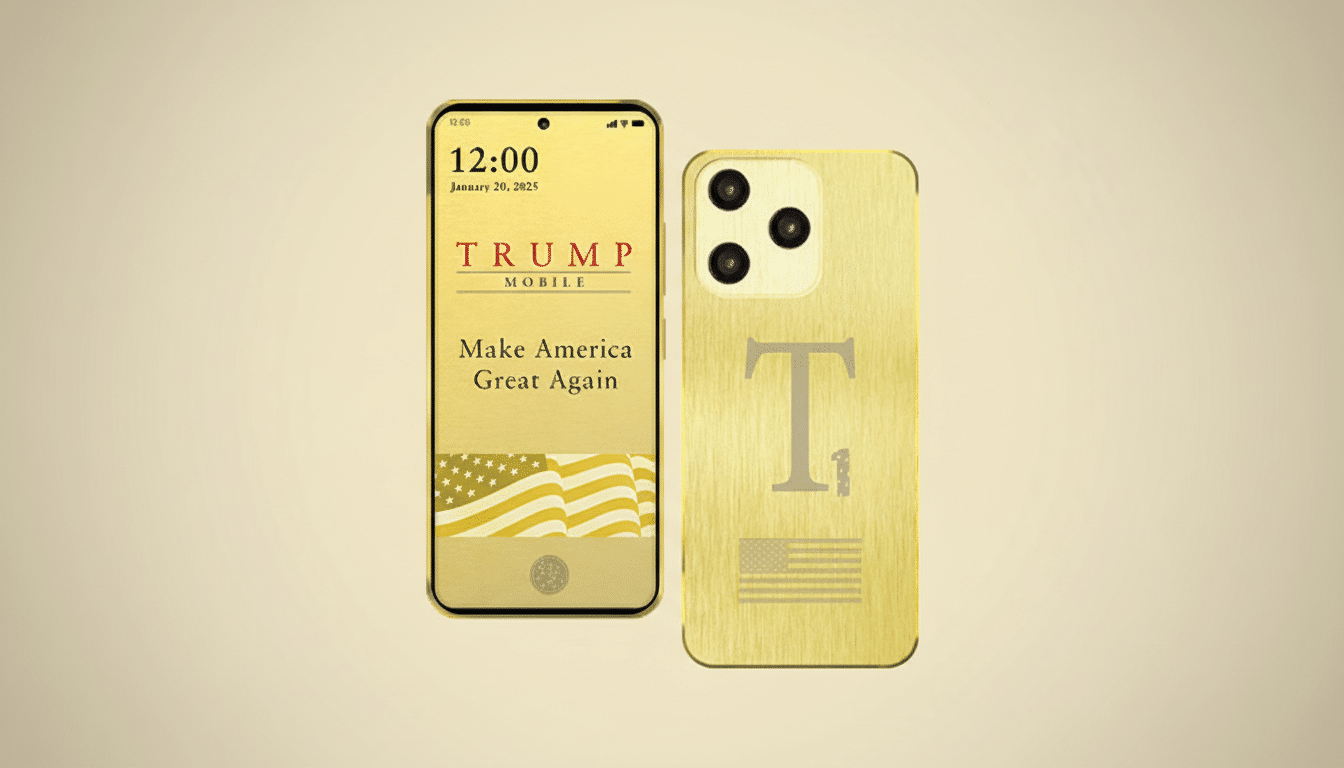
On the back, three cameras sit in a vertical housing. Company representatives said both the primary rear camera and the selfie shooter use 50MP sensors. Based on the camera app’s interface shown during the demo, the remaining rear lenses appear to be ultrawide and telephoto. That setup, if executed well, would be competitive with the multi-sensor arrays common in upper-midrange phones from established brands.
The display wasn’t fully revealed, but the team characterized it as a “waterfall” screen. That suggests aggressive side curves and likely a small notch for the front camera, rather than the punch-hole cutout hinted at in earlier mockups. Given the chassis size, a panel close to the previously floated 6.78 inches remains plausible.
Specs Pivot Toward Midrange Power And Storage Gains
Under the hood, the device is moving to a Qualcomm Snapdragon 7 series processor. While short of the top-tier Snapdragon 8 line, recent 7 series chips balance efficiency and performance well, often matching or exceeding older flagships in everyday tasks. Paired with a 5,000mAh battery, the phone should have solid stamina on paper, especially if software optimization is competent.
Storage gets a notable bump: 512GB onboard, up from earlier promises, plus support for microSD expansion up to 1TB. That’s increasingly rare in the U.S. market, where expandable storage has been phased out on many premium models from Samsung and Apple. If these specs hold, the Trump Phone could appeal to power users who hoard photos and offline media.
Camera hardware is only half the story. Image quality will hinge on sensor choice, lens quality, and computational photography. Established rivals invest heavily in tuning; for context, firms like Google and Apple lean on multi-frame processing and AI-driven HDR to extract consistency across scenes. Any newcomer will need to show it can deliver reliable results across daylight, low light, and video stabilization to earn trust.
Pricing And Certification Milestones For U.S. Launch
The company says early backers who reserved with a $100 deposit will pay $499 in total. New buyers are told to expect a price below $1,000, placing the handset against devices like the Pixel 8, Galaxy S24, and OnePlus 12R. The storage advantage and expandable memory could be differentiators, but long-term software support, carrier performance, and camera credibility will weigh just as heavily for shoppers.
On the regulatory front, executives say the device has cleared the Federal Communications Commission, a prerequisite for U.S. retail. They also indicated carrier certification is in progress. That step, often conducted with lab partners and carrier engineering teams, tests everything from 5G band performance to emergency calling and network features like VoLTE and Wi-Fi Calling. Without carrier certification, even FCC-approved phones can stumble in real-world connectivity.
From Made In America To Made For America
One of the project’s notable shifts has been its positioning: early language around domestic manufacturing has softened to emphasize serving the U.S. market. That’s not surprising. According to supply chain analyses from research firms like Counterpoint and Canalys, the global smartphone ecosystem is deeply concentrated in Asia, with highly optimized component sourcing and assembly. Even large incumbents have struggled to localize production at scale, making a fully U.S.-built phone an uphill climb.
Promises Versus Proof In Final Hardware And Reviews
The project’s evolution—multiple design overhauls, spec swaps, and marketing pivots—has fueled skepticism. Still, the appearance of a physical pre-production unit is a meaningful step beyond renders. The real test will arrive with retail-ready hardware and independent reviews that vet performance, camera quality, network reliability, and the company’s software update policy.
History is instructive here. Ambitious newcomers like RED with the Hydrogen One and Essential with the PH-1 discovered that hardware alone rarely sustains momentum without polished software, consistent updates, and carrier support. Conversely, brands like Nothing have found traction by tightening execution and focusing on user experience. The Trump Phone will need the latter playbook to convert buzz into sustained adoption.
What To Watch Next As Specs And Pricing Finalize
Executives say updated images and full specifications will be published on the company’s website, and a higher-end T1 Ultra remains on the roadmap. Key unknowns include the exact Snapdragon model, display refresh rate, charging wattage, IP rating, and 5G band support. Until those details are locked—and verified—cautious optimism is warranted. For now, the Trump Phone’s first real images mark progress after months of moving targets, but delivery will define the story.
