


The Trump administration has moved to dismantle a cornerstone of federal clean air oversight, formally repealing the Environmental Protection Agency’s 2009 endangerment finding that declared greenhouse gases a threat to public health and welfare. The decision, announced by EPA Administrator Lee Zeldin, immediately targets vehicle tailpipe standards and is widely seen as the opening shot in a broader campaign to roll back Clean Air Act enforcement on climate pollution. Analysts estimate the shift could slow the U.S. emissions decline by about 10%, according to reporting by Axios.
What the Endangerment Finding Anchored in Law
Born of the Supreme Court’s Massachusetts v. EPA ruling, the endangerment finding created EPA’s legal obligation to regulate carbon dioxide, methane, and other climate-warming gases under the Clean Air Act. Revoking it doesn’t merely change policy—it attempts to erase the statutory trigger that made greenhouse gas controls enforceable across vehicles, power plants, oil and gas operations, and industrial sources. That invites immediate court challenges from states and public health groups and sets up a high-stakes test of how far agencies can reinterpret science and statute after the Court’s recent “major questions” doctrine ruling in West Virginia v. EPA.
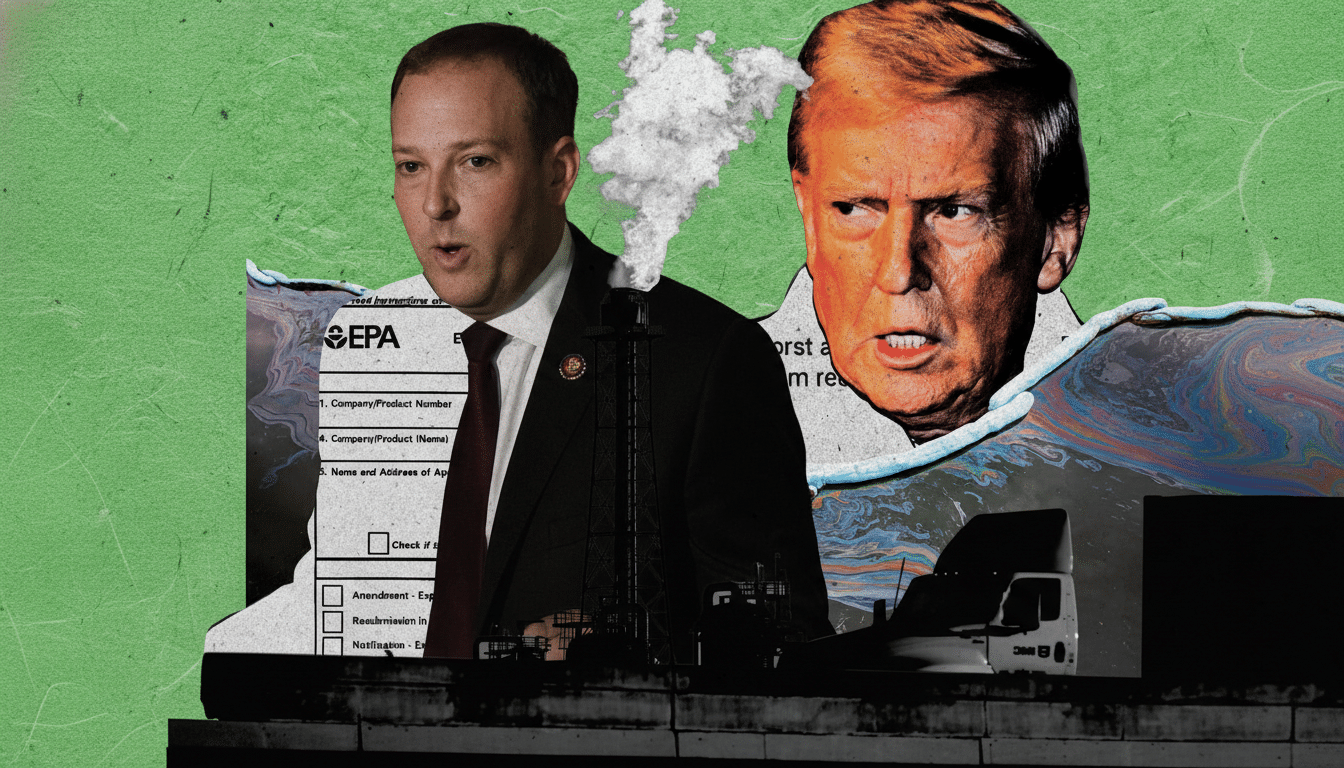
EPA officials say the repeal will initially apply to mobile sources, but industry lawyers and state regulators are bracing for follow-on actions aimed at stationary sources. The agency must still navigate a formal rulemaking process and a voluminous scientific record—originally built on assessments from the National Academies and the U.S. Global Change Research Program—before any repeal becomes fully operative nationwide.
From Policy Shift To Enforcement Retreat
Policy rewrites matter, but enforcement muscle determines real-world emissions. During the first Trump term, EPA inspections, civil referrals, and criminal pollution cases fell to multidecade lows, according to agency data compiled by the Environmental Integrity Project and reported by major outlets that track federal enforcement. The Government Accountability Office likewise documented fewer on-site inspections and a heavier reliance on informal actions, a trend that weakens deterrence and lets chronic violators linger longer.
Expect a similar pattern now: narrower interpretations of what constitutes a violation, relaxed monitoring and reporting requirements, and settlement policies that reduce injunctive relief—the expensive fixes that actually cut pollution. Taken together, these steps blunt the Clean Air Act’s core leverage: the credible threat of timely inspections, tough cases, and corrective projects that deliver measurable air quality gains.
Health Stakes and Economic Signals of the Repeal
The public health stakes are not abstract. The American Lung Association’s State of the Air reports have repeatedly found tens of millions of Americans—disproportionately in low-income and minority communities—living amid unhealthy ozone and particle pollution. Unabated climate change is projected to raise U.S. mortality by around 2%, while slashing global GDP by an estimated 17% by midcentury, compounding the costs of heat, wildfire smoke, and extreme weather on top of routine urban smog days.
Industry response will be mixed. Automakers have already invested heavily in cleaner engines and electrification; several previously aligned with state-led standards to avoid regulatory whiplash. Power companies continue to add wind, solar, and storage because they’re often the least-cost option, a market trend that tempers any regulatory rollback. But weakening the legal foundation for greenhouse gas rules injects uncertainty into long-lived capital planning, especially for refineries, petrochemicals, and gas-fired power plants that rely on predictable compliance pathways.
Legal and State Counterweights to EPA Rollback
State attorneys general are poised to challenge the repeal, arguing that EPA cannot disregard an extensive scientific record without running afoul of administrative law. California’s unique authority to set vehicle standards—and the ability of other states to adopt them—remains a powerful backstop, though federal preemption fights are likely to intensify. Environmental groups are preparing citizen suits under the Clean Air Act’s enforcement provisions, a tactic that historically fills gaps when federal oversight recedes.
Courts will scrutinize whether EPA has offered a reasoned explanation for reversing course on settled science and whether the agency respected its own expert assessments. If judges find the scientific basis wanting or the process irregular, the repeal could be stayed, preserving current rules while litigation unfolds.
What to Watch Next in EPA Climate Enforcement
Watch the rulemaking docket for how EPA handles peer-reviewed climate science, public health risk assessments, and economic modeling—especially the social cost of greenhouse gases. Track enforcement metrics that signal on-the-ground resolve, including:
- Numbers of inspections
- Civil referrals
- Criminal filings
- Total injunctive relief
- Follow-through on chronic nonattainment areas for ozone and PM2.5
- Whether the agency curtails supplemental environmental projects in settlements, a move that historically reduces community-level benefits
The endgame is larger than one rule. By striking at the endangerment finding, the administration is attempting to strip climate pollution from the core of the Clean Air Act’s enforcement architecture. The outcome will shape not just the trajectory of U.S. emissions, but the air tens of millions breathe each day—and the credibility of the nation’s marquee public health law.
